


Influence of O2 on structural evolution of biocharBiochar is a carbon-rich material created from biomass decomposition in low-oxygen conditions. It has important applications in environmental remediation, soil improvement, agriculture, carbon sequestration, energy storage, and sustainable materials, promoting efficiency and reducing waste in various contexts while addressing climate change challenges. More in oxidative pyrolysisPyrolysis is a thermochemical process that converts waste biomass into bio-char, bio-oil, and pyro-gas. It offers significant advantages in waste valorization, turning low-value materials into economically valuable resources. Its versatility allows for tailored products based on operational conditions, presenting itself as a cost-effective and efficient More of cellulose. Journal of Analytical and Applied Pyrolysis. https://doi.org/10.1016/j.jaap.2024.106576
A recent study published in the Journal of Analytical and Applied Pyrolysis investigates how oxygen (O2) affects biochar during the oxidative pyrolysis of cellulose. Conducted by Guoming Gao and colleagues, the research explores how biochar evolves when subjected to temperatures between 300 and 600°C in the presence of 11% O2.
The study finds that oxidative pyrolysis begins reacting with organics on cellulose/biochar as low as 300°C, resulting in reduced biochar production but increased bio-oil formation. The oxidation process enhances the carbon-oxygen (C/O) and carbon-hydrogen (C/H) ratios in biochar due to the formation and elimination of oxygen-containing aliphatic structures. This also improves the combustion performance and kinetics of biochar, although it doesn’t necessarily increase thermal stability.
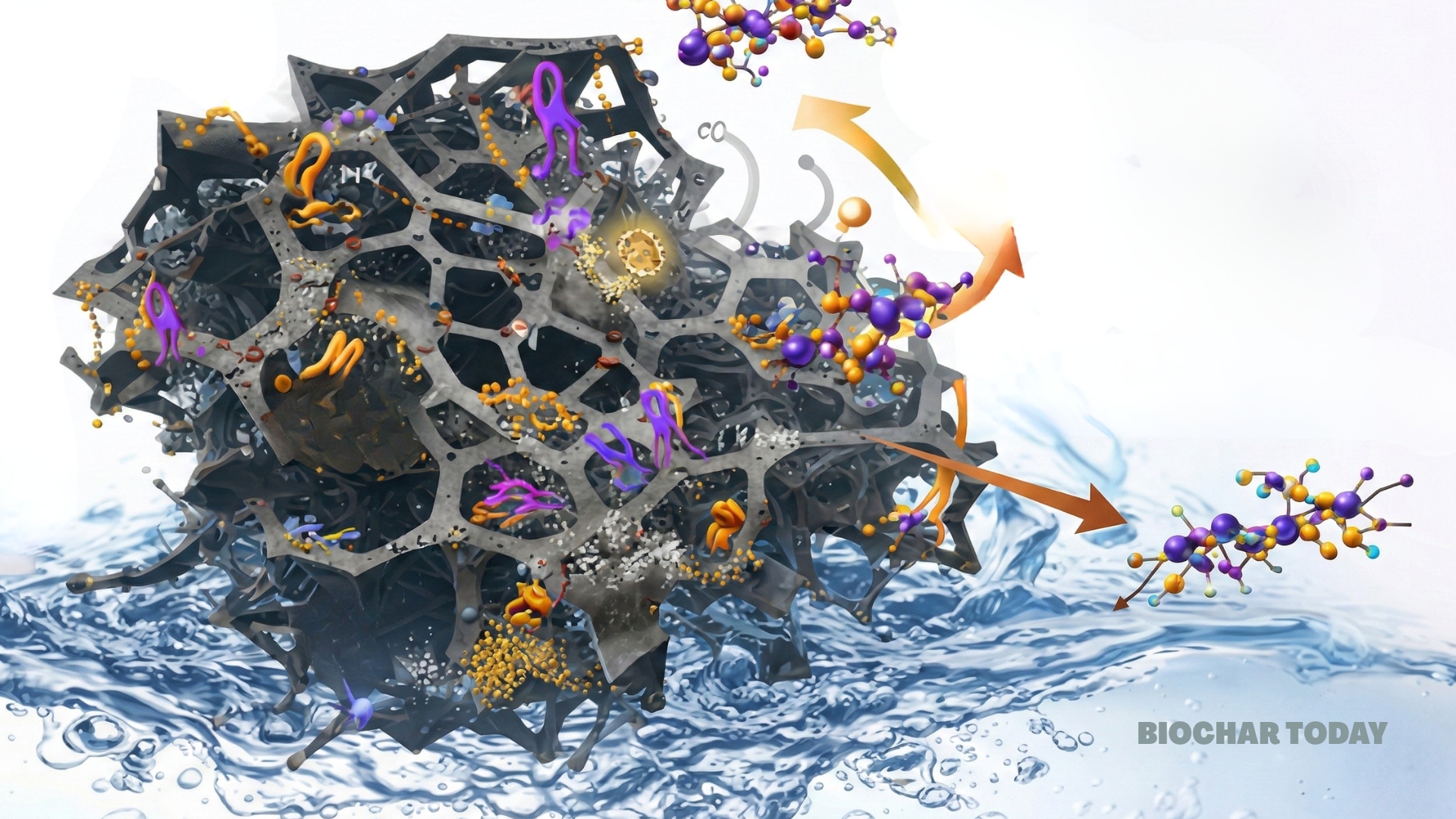
At 600°C, the presence of O2 significantly boosts micropore formation in biochar, with a specific surface area reaching 426.2 m²/g, compared to just 28.9 m²/g in a nitrogen environment. The study highlights that O2 promotes the formation of functional groups like -OH, C=O, and olefinic C=C but not aromatic C=C. These changes are crucial for applications where biochar’s surface properties are important, such as in activated carbonActivated carbon is a form of carbon that has been processed to create a vast network of tiny pores, increasing its surface area significantly. This extensive surface area makes activated carbon exceptionally effective at trapping and holding impurities, like a molecular sponge. It is commonly More production, catalyst carriers, and electrocatalysts.
This research underscores the importance of understanding how O2 impacts the pyrolysis process, offering valuable insights for optimizing biochar production and enhancing its functional properties for various industrial applications.



Leave a Reply