
Kukowska, S., Szewczuk-Karpisz, K. Management of the soil environment using biocharBiochar is a carbon-rich material created from biomass decomposition in low-oxygen conditions. It has important applications in environmental remediation, soil improvement, agriculture, carbon sequestration, energy storage, and sustainable materials, promoting efficiency and reducing waste in various contexts while addressing climate change challenges. More and zeolite in various combinations: impact on soil condition and economical aspects. J Soils Sediments (2024). https://doi.org/10.1007/s11368-024-03927-2
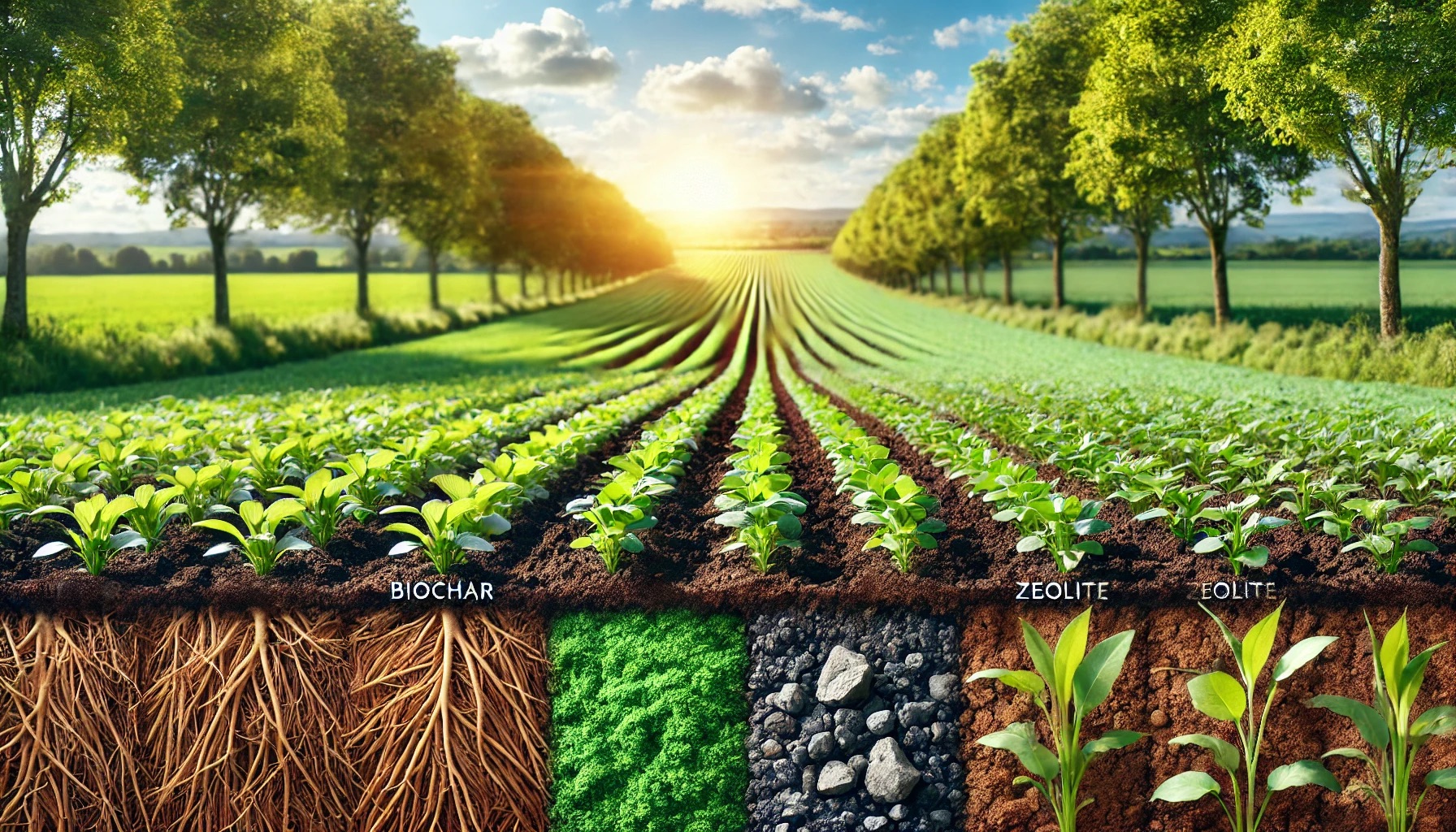
A recent review highlights the potential of biochar (BC) and zeolite (Z) as soil amendments to enhance agricultural productivity and environmental sustainability. Both materials possess unique properties, such as high porosityPorosity of biochar is a key factor in its effectiveness as a soil amendment and its ability to retain water and nutrients. Biochar’s porosity is influenced by feedstock type and pyrolysis temperature, and it plays a crucial role in microbial activity and overall soil health. Biochar More and sorption capacity, that improve soil structure and water retention. The study synthesizes findings from the last five years, providing insights into their application and economic feasibility.
Biochar is a carbon-rich material produced via biomassBiomass is a complex biological organic or non-organic solid product derived from living or recently living organism and available naturally. Various types of wastes such as animal manure, waste paper, sludge and many industrial wastes are also treated as biomass because like natural biomass these More pyrolysisPyrolysis is a thermochemical process that converts waste biomass into bio-char, bio-oil, and pyro-gas. It offers significant advantages in waste valorization, turning low-value materials into economically valuable resources. Its versatility allows for tailored products based on operational conditions, presenting itself as a cost-effective and efficient More. It enhances soil organic matter, improves soil structure, and increases water retention and fertility. Its use also promotes carbon sequestration and reduces greenhouse gas emissions. However, biochar’s efficacy depends on its production conditions, such as feedstockFeedstock refers to the raw organic material used to produce biochar. This can include a wide range of materials, such as wood chips, agricultural residues, and animal manure. More type and pyrolysis temperature.
Zeolites, on the other hand, are aluminosilicate minerals with high water retention capacity, making them particularly useful in arid regions. They stabilize soil pHpH is a measure of how acidic or alkaline a substance is. A pH of 7 is neutral, while lower pH values indicate acidity and higher values indicate alkalinity. Biochars are normally alkaline and can influence soil pH, often increasing it, which can be beneficial More and improve hydrophysical properties but may disrupt soil structure if improperly applied.
The study notes that combining biochar and zeolite can yield complementary benefits, such as improved water retention and nutrient availability. However, limited research exists on their joint application, emphasizing the need for further field studies.
Economically, biochar production is viable when using locally available waste materials, aligning with circular economy principles. Zeolites, particularly synthetic types, also show promise, though production costs can vary significantly based on manufacturing methods.
The review concludes that while both materials hold potential, their effectiveness depends on soil type, application method, and economic considerations. Future research should explore optimized combinations and long-term impacts on soil health and crop productivity.



Leave a Reply