
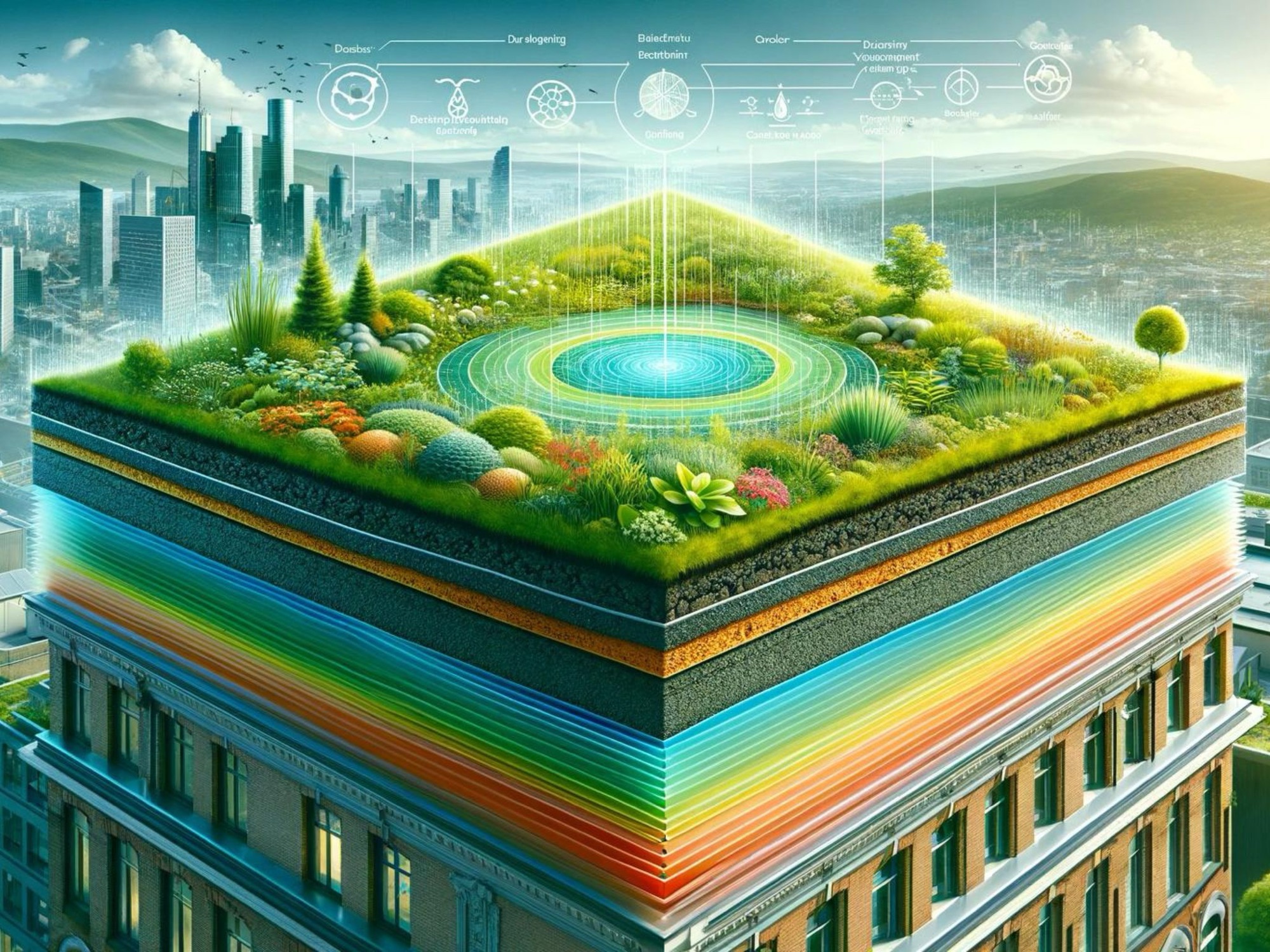

Green roofs are increasingly recognized for their beneficial impacts on urban environments, mitigating the heat island effect and reducing building energy consumption, thus contributing significantly toward sustainable-built environments. A novel approach to enhancing the efficacy of green roofs involves the integration of biochar, a carbon-rich porous material derived from biomassBiomass is a complex biological organic or non-organic solid product derived from living or recently living organism and available naturally. Various types of wastes such as animal manure, waste paper, sludge and many industrial wastes are also treated as biomass because like natural biomass these More. Recent studies underscore the potential of biochar to improve the water and nutrient retention capacities of green roof substrates, essential for plant survival in the typically harsh rooftop conditions.
Biochar’s lightweight nature, high porosityPorosity of biochar is a key factor in its effectiveness as a soil amendment and its ability to retain water and nutrients. Biochar’s porosity is influenced by feedstock type and pyrolysis temperature, and it plays a crucial role in microbial activity and overall soil health. Biochar More, and resistance to degradation make it an excellent additive for green roof substrates. It notably enhances water retention and plant-available water, reduces nutrient leachingLeaching is the process where nutrients are dissolved and carried away from the soil by water. This can lead to nutrient depletion and environmental pollution. Biochar can help reduce leaching by improving nutrient retention in the soil. More, and decreases substrate erosion and bulk density. These benefits are influenced primarily by the particle size and the rate of biochar amendment.
The introduction of biochar to green roof systems aligns with United Nations Sustainable Development Goals, particularly those focused on sustainable cities and responsible consumption. Despite its benefits, the application of biochar in green roofs faces challenges including limited long-term field studies and a need for optimized application strategies to maximize its effectiveness.
Current research highlights the importance of systematic studies to explore further the interaction of biochar with green roof systems. It is suggested that future research should focus on multi-year studies to better understand biochar’s long-term benefits and impacts. By addressing these gaps, the integration of biochar into green roofs could be optimized, making this innovative approach a standard practice in urban sustainability efforts.
Overall, biochar presents a promising enhancement for green roof substrates, offering to improve urban resilience, reduce environmental footprints, and facilitate the development of zero-energy buildings through sustainable urban infrastructure solutions. As cities continue to expand, the strategic use of biochar in green roofs could play a crucial role in enhancing urban environmental quality and sustainability.





Leave a Reply