

Arandara, K.P., Paranavithana, G.N., Priyadarshana, S.T. et al. Investigating coconut shell biocharBiochar is a carbon-rich material created from biomass decomposition in low-oxygen conditions. It has important applications in environmental remediation, soil improvement, agriculture, carbon sequestration, energy storage, and sustainable materials, promoting efficiency and reducing waste in various contexts while addressing climate change challenges. More as a sustainable solution for removing iron residues in recycled concrete aggregates. Clean Techn Environ Policy (2024). https://doi.org/10.1007/s10098-024-03029-0
Recycled Concrete Aggregate (RCA), made from construction and demolition waste, is a sustainable alternative to natural aggregates. However, its use is hindered by the presence of iron residues from corroded reinforcements in the original concrete. These iron residues can affect the physical properties, durability, and structural integrity of both RCA and Recycled Aggregate Concrete (RAC).
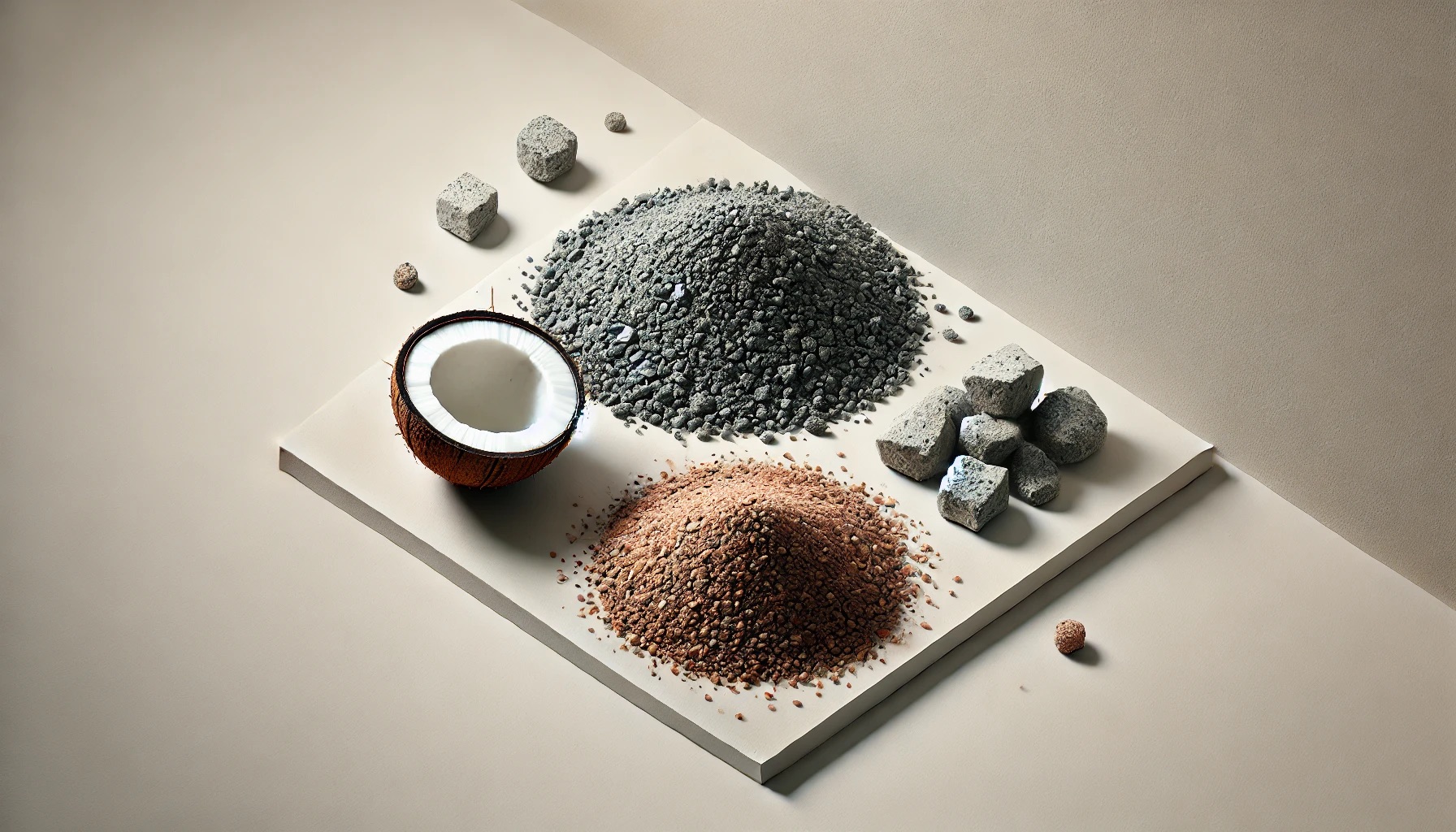
A recent study sought to address this challenge by exploring the potential of coconut shell biochar (CSB) as an additive to improve RCA’s performance. Using petrographic analysis and Scanning Electron Microscopy with Energy Dispersive X-ray Spectroscopy (SEM–EDS), researchers examined cement mortar containing RCA and CSB. The results showed that residual iron particles in RCA were effectively adsorbed onto CSB particles.
Additionally, the study found that finer CSB particles acted as fillers, helping to occupy cracks and pore spaces in the cement matrix. This dual effect—removing iron residues and improving the structural integrity of RAC—highlights CSB’s potential as a sustainable solution for enhancing recycled concrete materials.
This research not only addresses a critical issue with RCA but also emphasizes the value of biochar in sustainable construction practices. Further development of this approach could make RCA a more reliable and eco-friendly choice for future building projects.



Leave a Reply