
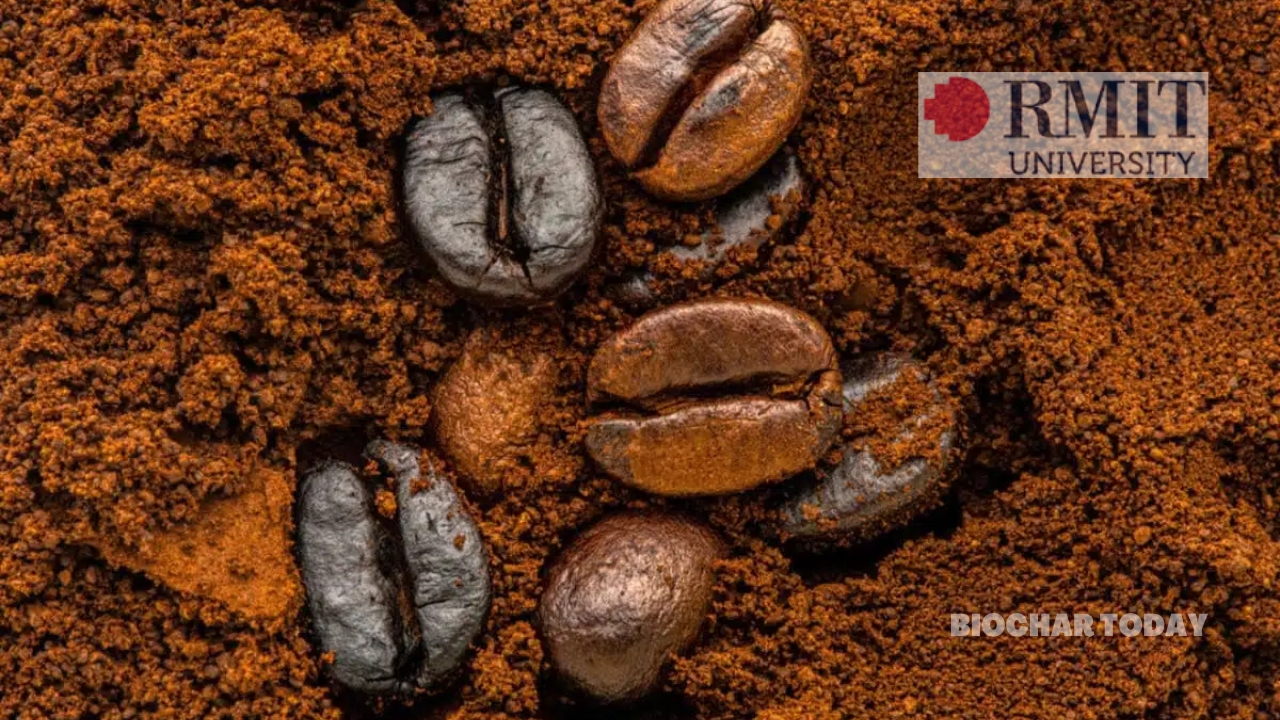
Researchers at RMIT University in Australia have developed a specialized technique to convert spent coffee grounds into biocharBiochar is a carbon-rich material created from biomass decomposition in low-oxygen conditions. It has important applications in environmental remediation, soil improvement, agriculture, carbon sequestration, energy storage, and sustainable materials, promoting efficiency and reducing waste in various contexts while addressing climate change challenges. More, creating a high-performance additive for the construction industry. By incorporating this biochar into concrete mixes, the team has successfully demonstrated a method to increase the material’s structural integrity while simultaneously reducing its environmental footprint. This innovation recently transitioned from laboratory settings to real-world applications, including a major infrastructure project in Pakenham and a world-first footpath trial in Gisborne.
The primary challenge addressed by this research is the environmental degradation caused by the disposal of organic waste and the intensive extraction of natural resources. Globally, approximately 10 billion kilograms of coffee waste is generated annually, much of which ends up in landfills where it decomposes and releases methane, a potent greenhouse gas. Furthermore, the construction industry faces a critical shortage of natural sand, with 50 billion tonnes used annually. Adding raw organic waste directly to concrete is not a viable solution, as the organic matter decomposes within the cement matrix, significantly weakening the final product.
To resolve these issues, the RMIT team utilized a low-energy pyrolysisPyrolysis is a thermochemical process that converts waste biomass into bio-char, bio-oil, and pyro-gas. It offers significant advantages in waste valorization, turning low-value materials into economically valuable resources. Its versatility allows for tailored products based on operational conditions, presenting itself as a cost-effective and efficient More process to transform the coffee waste into stable biochar. By heating the grounds to 350 degrees Celsius in an oxygen-deprived environment, they created a porous, carbon-rich material that forms a strong bond with the cement matrix. The researchers discovered that replacing 15% of natural sand with this specific biochar optimization creates a more durable composite. This thermochemical conversion prevents the organic decomposition that typically compromises concrete strength, instead leveraging the biochar’s physical properties to reinforce the material.
The outcomes of these actions are significant for both the circular economy and structural engineering. Laboratory results and life-cycle analyses indicate that the coffee-biochar concrete is up to 30% stronger than conventional mixes. Furthermore, the implementation of this material can reduce carbon dioxide emissions by up to 26% and decrease fossil fuel utilization by 31%. Collaborative efforts with partners such as Earth Systems, BildGroup, and the Macedon Ranges Shire Council have validated these results in the field, proving that biochar-integrated concrete can meet the rigorous demands of mainstream infrastructure.




Leave a Reply