
Zaman, Q.u., Rehman, M., Feng, Y. et al.Combined application of biocharBiochar is a carbon-rich material created from biomass decomposition in low-oxygen conditions. It has important applications in environmental remediation, soil improvement, agriculture, carbon sequestration, energy storage, and sustainable materials, promoting efficiency and reducing waste in various contexts while addressing climate change challenges. More and peatmoss for mitigation of drought stress in tobacco.BMC Plant Biol24, 862 (2024). https://doi.org/10.1186/s12870-024-05576-6
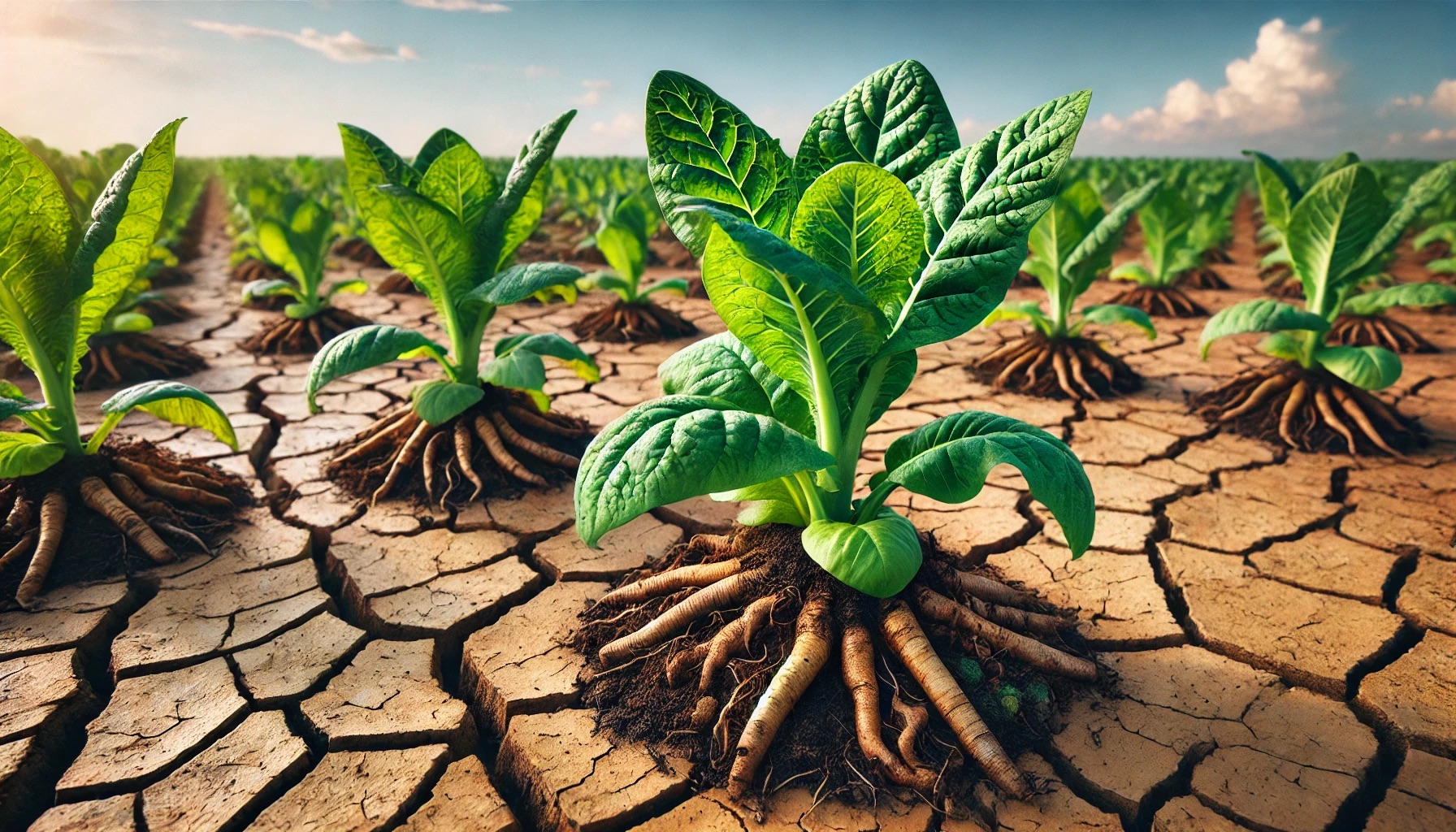
Drought stress is a critical challenge for crop production globally, significantly affecting plant growth, nutrient uptake, and photosynthesis. A recent study evaluated the combined effects of biochar (BC) and peatmoss (PM) on the growth and physiological traits of tobacco plants under drought conditions. The experiment included different levels of biochar and peatmoss applied to soil, both under well-watered and drought-stressed conditions.
Results demonstrated that drought stress severely impacted tobacco plants, reducing plant height, leaf area, biomassBiomass is a complex biological organic or non-organic solid product derived from living or recently living organism and available naturally. Various types of wastes such as animal manure, waste paper, sludge and many industrial wastes are also treated as biomass because like natural biomass these More, and photosynthetic activity. However, the addition of biochar and peatmoss substantially mitigated these negative effects. Biochar improved soil quality, enhanced water retention, and increased nutrient uptake, while peatmoss reduced water loss and improved soil structure. Together, these amendments increased chlorophyll content and antioxidant activity, helping plants to better manage oxidative stress induced by drought.
The study highlighted that the combination of biochar and peatmoss improved the overall growth, biomass production, and biochemical properties of tobacco plants. Specifically, there was a significant increase in soluble sugars and proteins, enhanced leaf potassium content, and reduced proline and malondialdehyde (MDA) accumulation, indicators of improved drought tolerance.
This research provides evidence that biochar and peatmoss, as eco-friendly soil amendments, can enhance drought resilience in tobacco. The findings support the potential of integrating such practices into sustainable agriculture to mitigate the impacts of climate-induced water scarcity.


Leave a Reply