
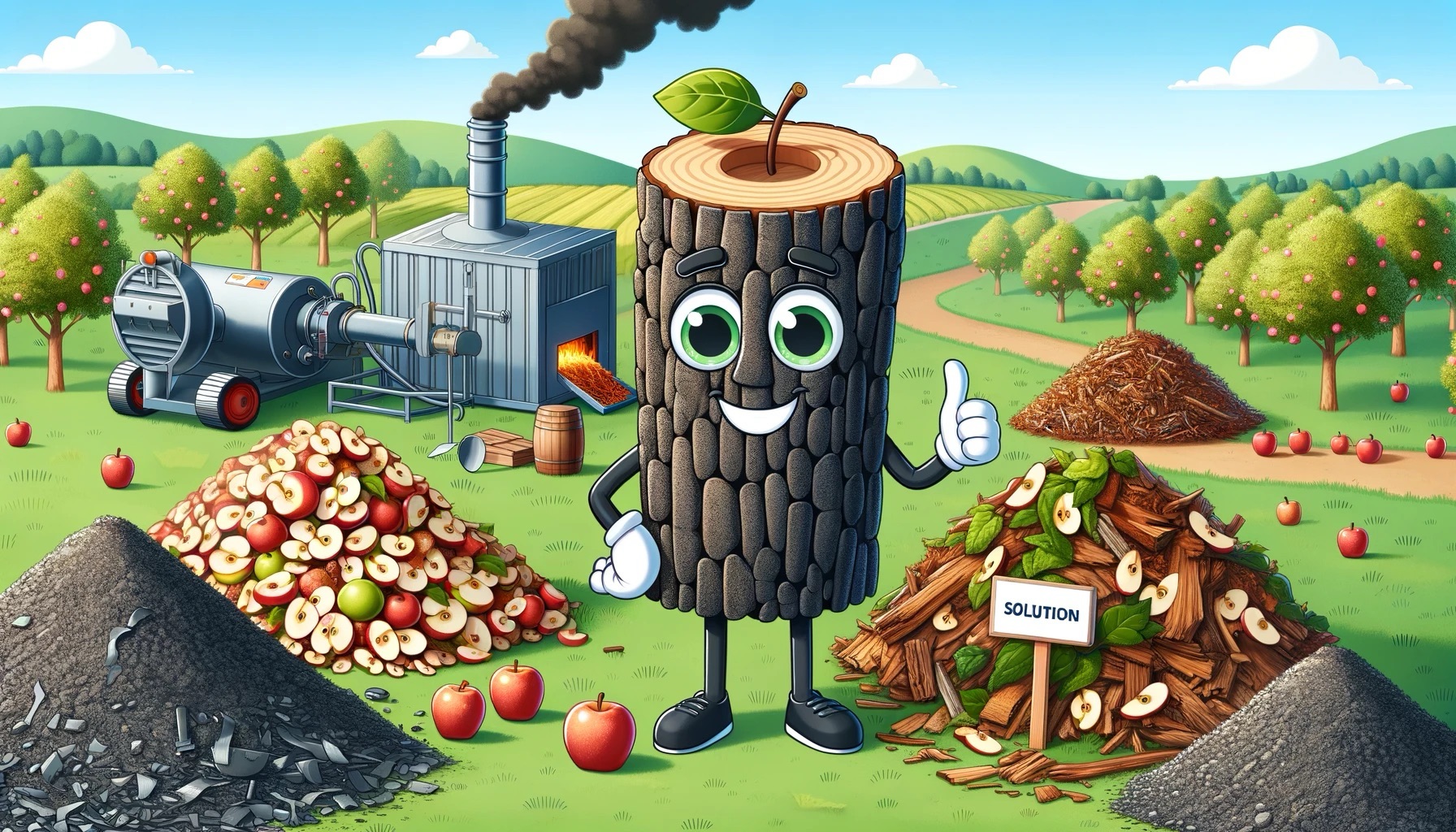
Barszcz, et al (2024) Impact of pyrolysisPyrolysis is a thermochemical process that converts waste biomass into bio-char, bio-oil, and pyro-gas. It offers significant advantages in waste valorization, turning low-value materials into economically valuable resources. Its versatility allows for tailored products based on operational conditions, presenting itself as a cost-effective and efficient More process conditions on the structure of biocharBiochar is a carbon-rich material created from biomass decomposition in low-oxygen conditions. It has important applications in environmental remediation, soil improvement, agriculture, carbon sequestration, energy storage, and sustainable materials, promoting efficiency and reducing waste in various contexts while addressing climate change challenges. More obtained from apple waste. Scientific Reports. https://doi.org/10.1038/s41598-024-61394-8
Biochar, a versatile carbon material, is gaining prominence for its environmental applications, particularly in wastewater treatment and soil remediation. A recent study by Wioletta Barszcz, Monika Łożyńska, and Jarosław Molenda investigates how pyrolysis conditionsThe conditions under which pyrolysis takes place, such as temperature, heating rate, and residence time, can significantly affect the properties of the biochar produced. More influence the structural properties of biochar derived from apple waste. The research, published in Scientific Reports, explores the effects of temperature and steam activation during the pyrolysis process.
The study highlights that the temperature of the pyrolysis process significantly affects the biochar’s characteristics. Lower temperatures (around 300°C) favor the formation of biochar with functional groups and a more ordered structure, ideal for chemical sorption of pollutants. In contrast, higher temperatures (up to 800°C) combined with steam activation enhance the microporosity and specific surface area of biochar, which are crucial for physical sorption processes.
The researchers utilized various analytical techniques, including SEM/EDS microscopy, FTIR, and Raman spectroscopy, to assess the biochar’s surface morphology, porosityPorosity of biochar is a key factor in its effectiveness as a soil amendment and its ability to retain water and nutrients. Biochar’s porosity is influenced by feedstock type and pyrolysis temperature, and it plays a crucial role in microbial activity and overall soil health. Biochar More, and structural order. The findings indicate that steam activation at high temperatures effectively increases the biochar’s specific surface area, making it more suitable for applications requiring high adsorption capacity.
One of the key takeaways from the study is the potential of using apple waste, a byproduct of the food industry, to produce high-quality biochar. This approach aligns with the principles of a circular economy, promoting the reuse of waste materials to create valuable products. The research underscores the importance of optimizing pyrolysis conditions to tailor biochar properties for specific environmental applications, thereby enhancing its effectiveness in pollutant removal.
In conclusion, this study provides valuable insights into the production of biochar from apple waste, demonstrating that careful control of pyrolysis conditions can significantly improve its structural properties. This advancement not only offers an eco-friendly solution for waste management but also enhances the efficiency of biochar in environmental remediation efforts.



Leave a Reply