
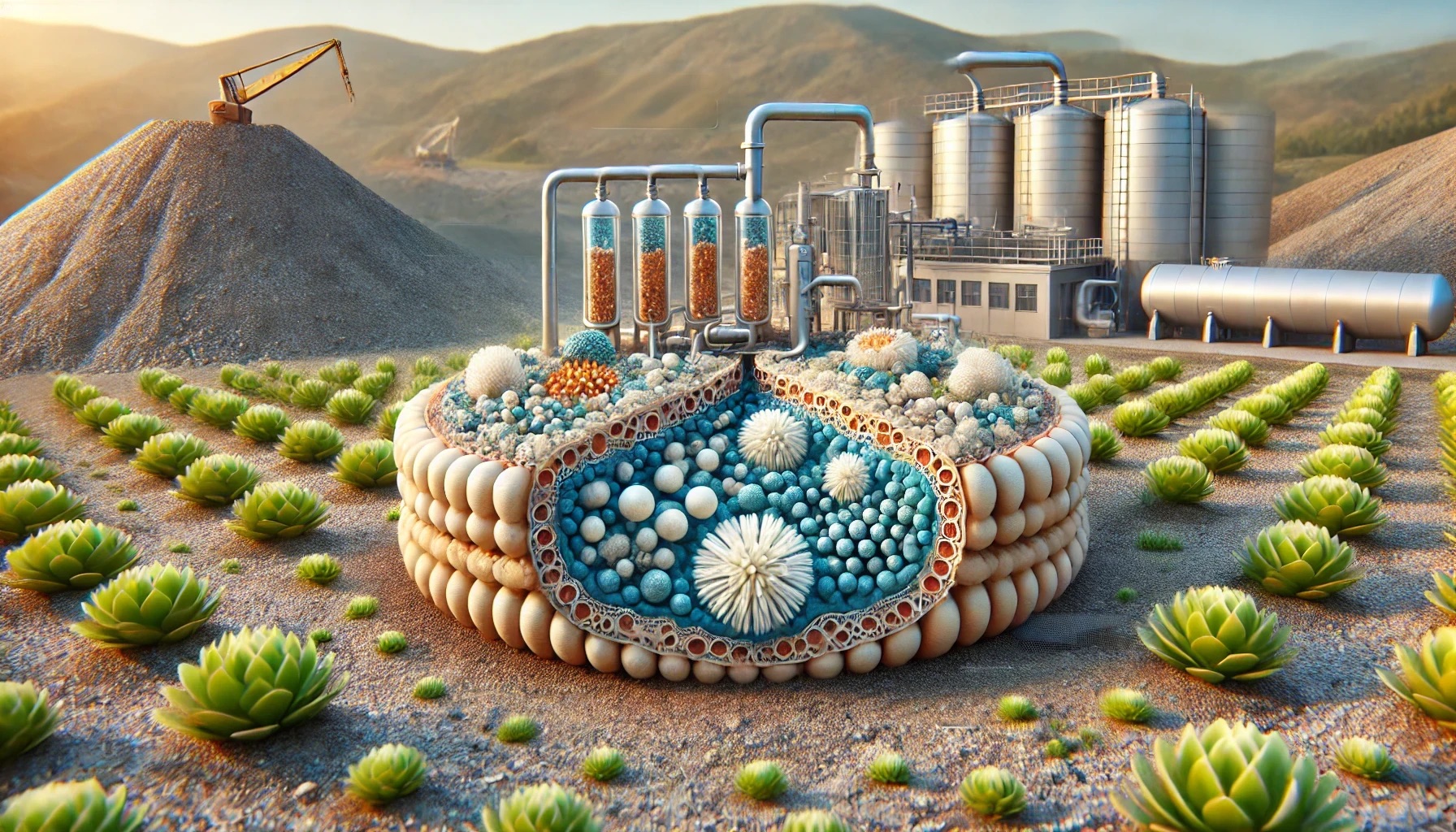

Deciphering the role and mechanism of rare earth element-rich biocharBiochar is a carbon-rich material created from biomass decomposition in low-oxygen conditions. It has important applications in environmental remediation, soil improvement, agriculture, carbon sequestration, energy storage, and sustainable materials, promoting efficiency and reducing waste in various contexts while addressing climate change challenges. More during anaerobic digestion of Dicranopteris pedatabiomassBiomass is a complex biological organic or non-organic solid product derived from living or recently living organism and available naturally. Various types of wastes such as animal manure, waste paper, sludge and many industrial wastes are also treated as biomass because like natural biomass these More. Fuel. https://doi.org/10.1016/j.fuel.2024.133720
A recent study explores the potential of rare earth element (REE)-rich biochar to enhance high-solid anaerobic digestion (HSAD) of Dicranopteris pedata biomass (DPB), a hyperaccumulator plant used in phytoremediationThis is a technique that uses plants to clean up contaminated soil or water. Biochar can enhance phytoremediation by improving soil conditions and promoting plant growth, allowing plants to absorb and break down pollutants more effectively. More of rare earth tailings. By converting DPB into biochar through pyrolysisPyrolysis is a thermochemical process that converts waste biomass into bio-char, bio-oil, and pyro-gas. It offers significant advantages in waste valorization, turning low-value materials into economically valuable resources. Its versatility allows for tailored products based on operational conditions, presenting itself as a cost-effective and efficient More at varying temperatures (300°C, 500°C, 800°C), researchers assessed its effects on methane production and microbial dynamics.
Biochar produced at 800°C (B800) exhibited superior properties, including increased specific surface area, electrical conductivity, and REE content. These enhancements facilitated a 60% increase in methane yield compared to untreated DPB and boosted maximum methane production rates by up to 21%. Microbial analysis revealed that B800 enriched acidogenic bacteria and electroactive microbes, improving electron transfer and metabolic activity during digestion.
The study identified two key mechanisms for B800’s effectiveness: its graphitic structure and REE oxides, which promoted electron transfer, and its ability to coordinate microbial interactions via quorum sensing. These properties alleviated volatile fatty acid accumulation, a common challenge in HSAD, while maintaining reactor stability without requiring additional co-digestion materials.
This research offers a sustainable pathway for managing REE-laden biomass while enhancing biogas production. It highlights the potential of REE-rich biochar as a functional material to improve HSAD performance, offering environmental and economic benefits for rare earth mining regions.



Leave a Reply