
Anoop, et al (2024) Long-lasting Bacillus safensis CG1 and Bacillus cereus DKBovi-5 based coconut shell biocharBiochar is a carbon-rich material created from biomass decomposition in low-oxygen conditions. It has important applications in environmental remediation, soil improvement, agriculture, carbon sequestration, energy storage, and sustainable materials, promoting efficiency and reducing waste in various contexts while addressing climate change challenges. More spore composites as self-healing additives for bio-mortar production. Industrial Crops and Products. https://doi.org/10.1016/j.indcrop.2024.120074
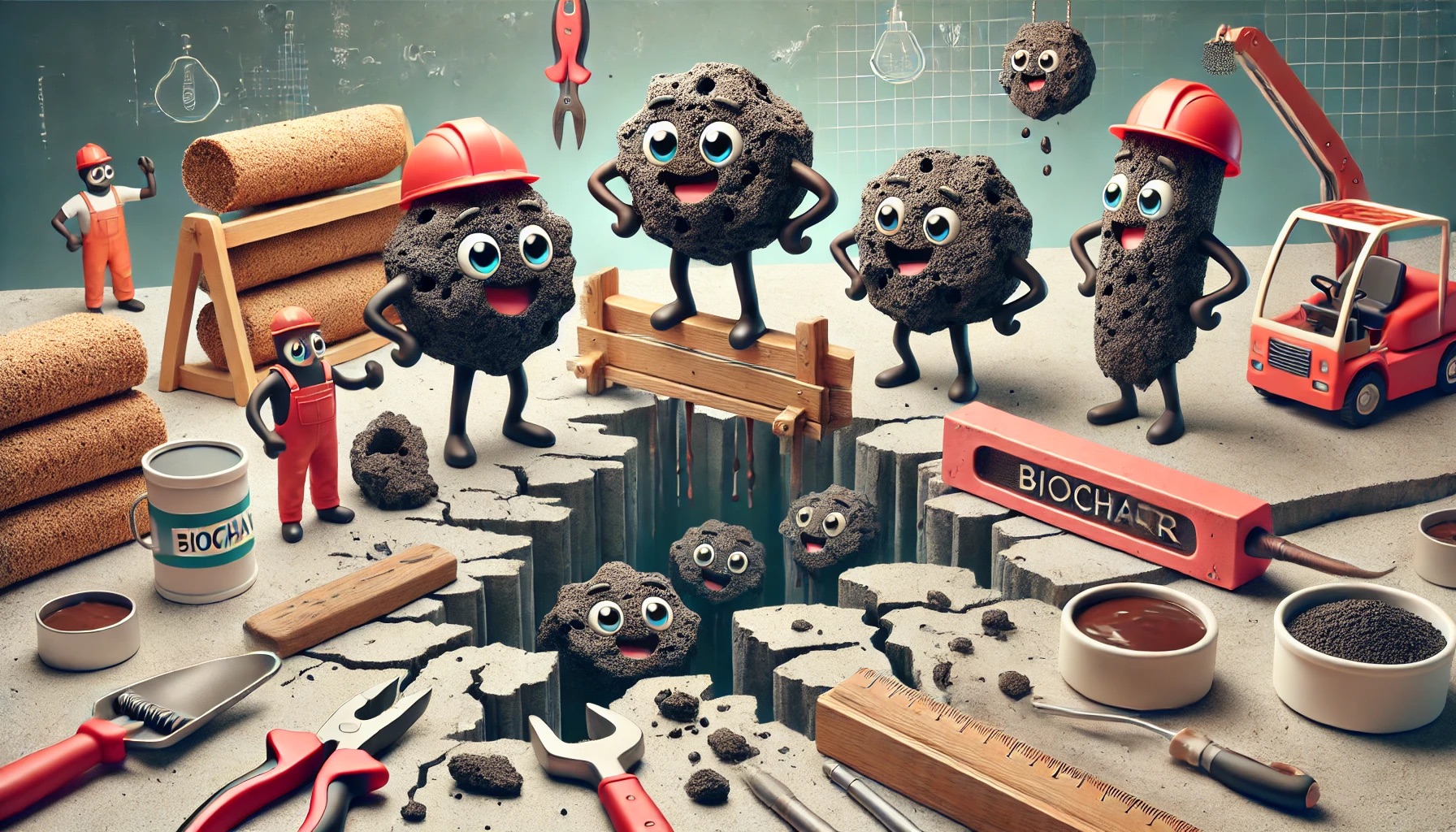
Researchers have developed a sustainable method for enhancing self-healing in bio-mortars by using coconut shell biochar as a carrier for bacterial spores. This innovative approach addresses challenges in maintaining bacterial viability in harsh cementitious environments, offering a practical and eco-friendly solution for the construction industry.
The study tested two bacterial strains, Bacillus safensis CG1 and Bacillus cereus DKBovi-5, immobilized in coconut shell biochar and stored at 4°C and 25°C for 120 days. Results showed that biochar stored at 4°C preserved bacterial viability effectively. Microscopic analyses confirmed that bacterial spores adhered firmly to the biochar pores, aided by the secretion of extracellular polymeric substances. When added to mortar, the biochar composites demonstrated significant self-healing potential, with cracks up to 0.888 mm healing in 56 days.
Among the tested strains, biochar with Bacillus cereus outperformed, exhibiting a smaller pore size of 3.086 nm, enhanced healing efficiency, and biogenic calcium carbonate formation in the repaired cracks. These findings highlight the dual benefits of coconut shell biochar: reducing agricultural waste and providing an effective microbial carrier for self-healing mortars.
By utilizing coconut shell biochar, this approach aligns with sustainable construction goals, sequestering carbon and minimizing waste. With its long-term storage capability and crack-healing performance, this bio-based additive has strong potential for large-scale applications in the construction industry.



Leave a Reply