
Chen, et al (2024) Mechanism of nano-scale zero-valent iron modified biocharBiochar is a carbon-rich material created from biomass decomposition in low-oxygen conditions. It has important applications in environmental remediation, soil improvement, agriculture, carbon sequestration, energy storage, and sustainable materials, promoting efficiency and reducing waste in various contexts while addressing climate change challenges. More for enhancing low-nitrogen anammox process resistance to low temperatures. Journal of Environmental Sciences. https://doi.org/10.1016/j.jes.2024.05.049
In a groundbreaking study, researchers have demonstrated a novel way to enhance the efficiency of the anaerobic ammonia oxidation (anammox) process in low-nitrogen wastewater treatment, particularly in cold climates. The study, published in the Journal of Environmental Sciences, focuses on the use of nano-scale zero-valent iron modified biochar (nZVI@BC) to bolster the resilience of anammox systems at low temperatures.
The anammox process, a key biochemical pathway where ammonia is converted into nitrogen gas by specialized bacteria, offers a more energy-efficient alternative to traditional nitrogen removal methods. However, these anammox bacteria struggle in cold environments, resulting in reduced nitrogen removal efficiency.
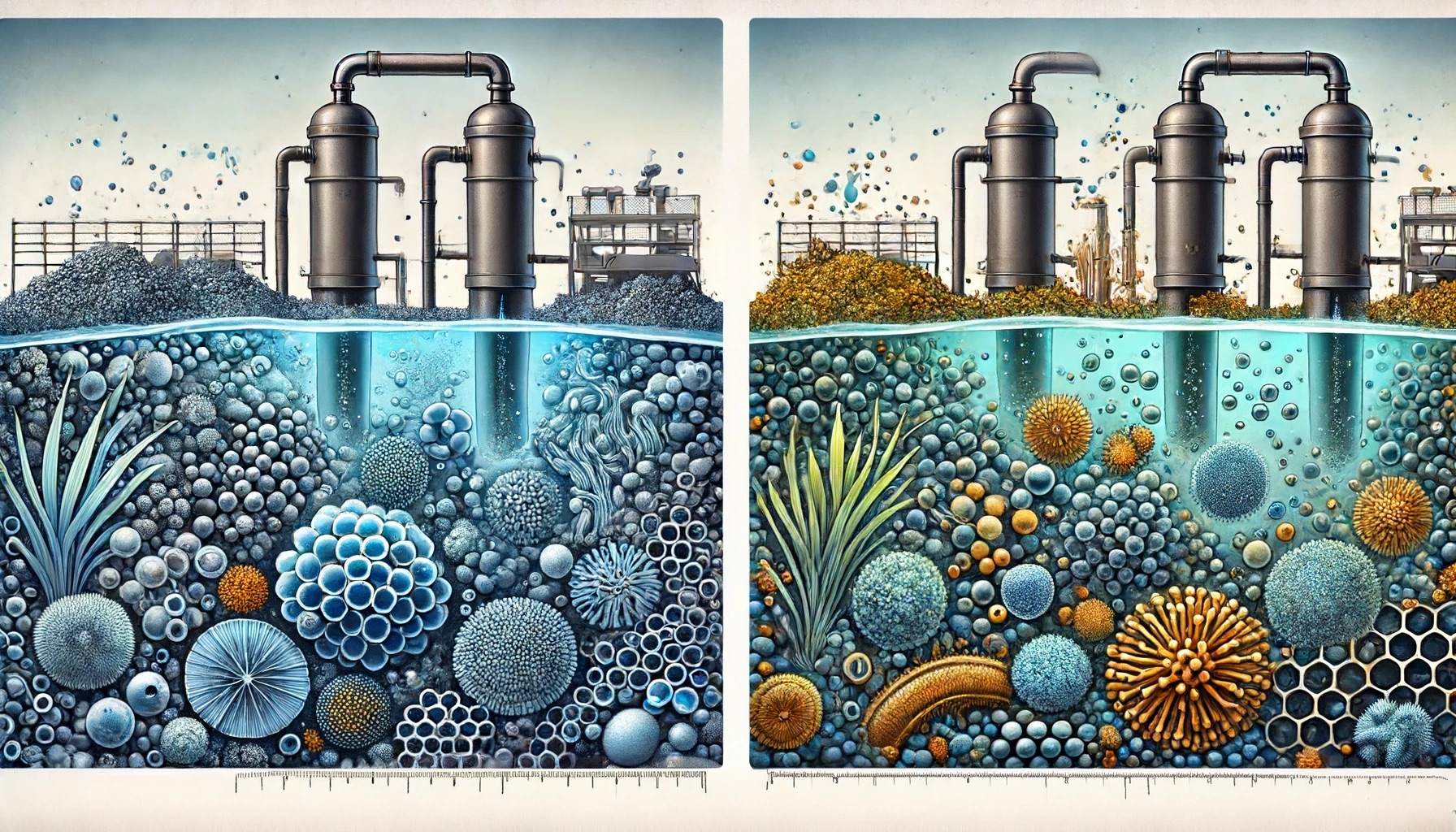
To address this challenge, the researchers constructed two anammox systems: one with nZVI@BC and another with regular biochar. They found that the system incorporating nZVI@BC maintained an impressive nitrogen removal efficiency of around 80% at low temperatures, compared to the 69.49% efficiency of the system with only biochar.
The success of nZVI@BC can be attributed to several factors. It significantly increased the heme-c content in the biomassBiomass is a complex biological organic or non-organic solid product derived from living or recently living organism and available naturally. Various types of wastes such as animal manure, waste paper, sludge and many industrial wastes are also treated as biomass because like natural biomass these More, a crucial component for bacterial activity, by 36.60% to 91.45%. Moreover, it enhanced the secretion of extracellular polymeric substances (EPS), promoting better biomass granulation and a higher abundance of anammox bacteria. Importantly, key anammox genes such as hzsA/B/C, hzo, and hdh were more active, ensuring sustained nitrogen removal at 15°C.
This innovative approach highlights the potential of nZVI@BC to improve the performance of low-nitrogen anammox processes in cold conditions, making it a promising solution for wastewater treatment in low-temperature environments. The findings pave the way for more efficient and reliable wastewater treatment methods, crucial for regions with harsh winters.



Leave a Reply