
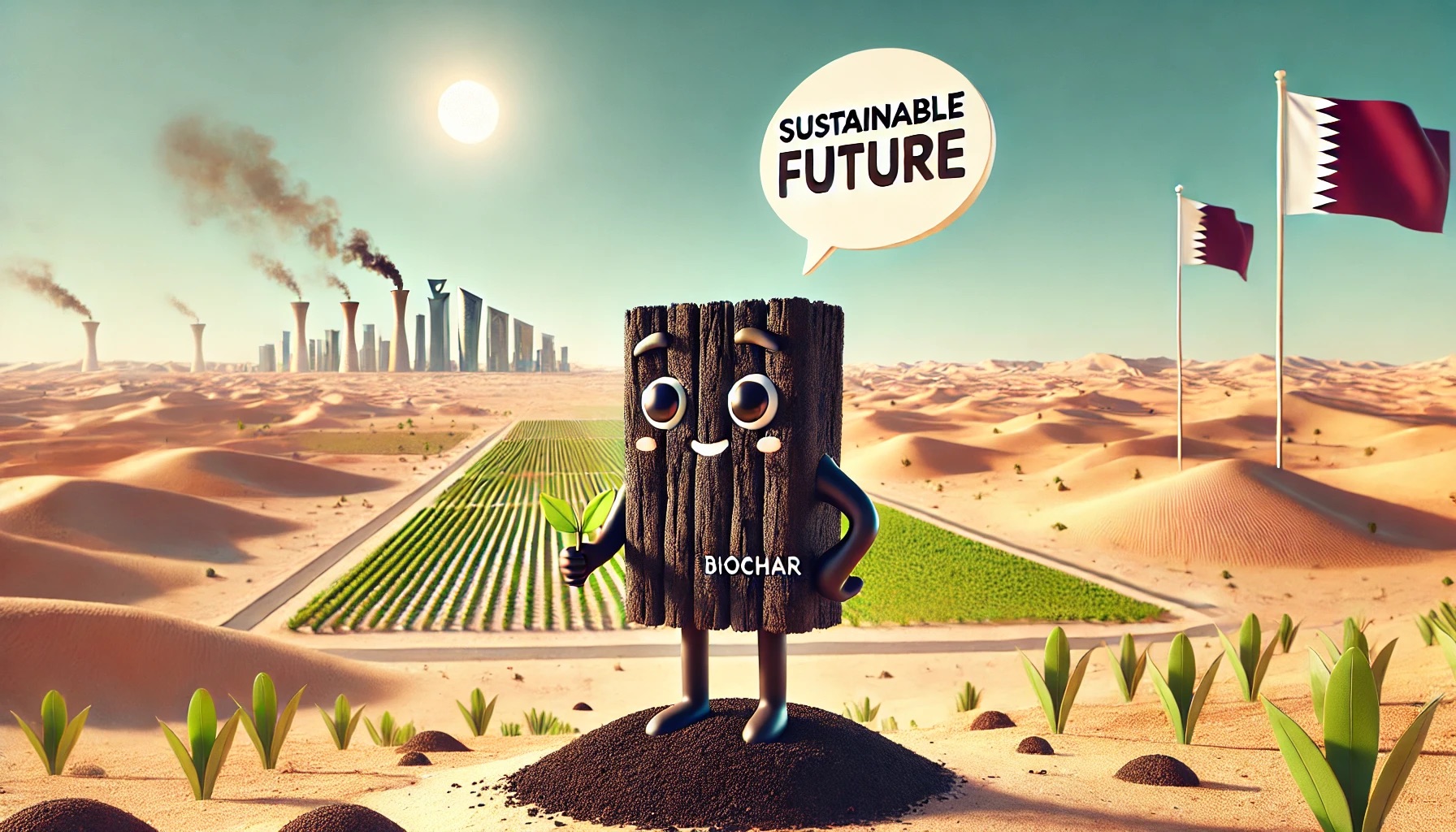

BiocharBiochar is a carbon-rich material created from biomass decomposition in low-oxygen conditions. It has important applications in environmental remediation, soil improvement, agriculture, carbon sequestration, energy storage, and sustainable materials, promoting efficiency and reducing waste in various contexts while addressing climate change challenges. More Production Potential Through PyrolysisPyrolysis is a thermochemical process that converts waste biomass into bio-char, bio-oil, and pyro-gas. It offers significant advantages in waste valorization, turning low-value materials into economically valuable resources. Its versatility allows for tailored products based on operational conditions, presenting itself as a cost-effective and efficient More in Qatar, Chemical Engineering Transactions, 109, 229-234 https://www.cetjournal.it/index.php/cet
Qatar produces approximately 830,000 tons of poultry litter annually, necessitating a sustainable waste management solution. A recent study investigates the feasibility of converting this litter into biochar through pyrolysis, focusing on its physicochemical properties and economic potential. Pyrolysis, which involves heating the litter in an oxygen-deficient environment, was examined at two temperatures: 250°C and 500°C. Results indicate that at 250°C, biochar yields can reach up to 50%, while at 500°C, yields drop to 31% due to increased bio-oil and syngasSyngas, or synthesis gas, is a fuel gas mixture consisting primarily of hydrogen and carbon monoxide. It is produced during gasification and can be used as a fuel source or as a feedstock for producing other chemicals and fuels. More production.
Poultry litter’s composition, including 60% volatile matterVolatile matter refers to the organic compounds that are released as gases during the pyrolysis process. These compounds can include methane, hydrogen, and carbon monoxide, which can be captured and used as fuel or further processed into other valuable products. More and 16% fixed carbon, makes it a viable candidate for biochar production. The study’s economic analysis suggests that Qatar could potentially generate up to 346,628 tons of biochar annually at 250°C, translating to approximately $69 million in revenue. At 500°C, despite lower biochar yields, the higher production of bio-oil, which has a greater market value, could result in a more profitable outcome with an estimated revenue of $43.9 million annually.
This research highlights the significant potential for biochar production from poultry litter in Qatar, offering an environmentally and economically beneficial waste management solution. Future investigations are encouraged to optimize pyrolysis conditionsThe conditions under which pyrolysis takes place, such as temperature, heating rate, and residence time, can significantly affect the properties of the biochar produced. More and assess other influencing factors such as feedstockFeedstock refers to the raw organic material used to produce biochar. This can include a wide range of materials, such as wood chips, agricultural residues, and animal manure. More size, reactor design, and residence timeResidence time refers to the duration that the biomass is heated during the pyrolysis process. The residence time can influence the properties of the biochar produced. More to enhance biochar quality and yield. The findings support the viability of adopting pyrolysis for sustainable poultry litter management, contributing to soil enrichment and carbon sequestration in arid regions like Qatar.




Leave a Reply