
Lu, et al (2024) Biochar–water–soil interactions: Implications for soil desiccation cracking behavior in subtropical regions. Journal of Rock Mechanics and Geotechnical Engineering. https://doi.org/10.1016/j.jrmge.2024.05.058
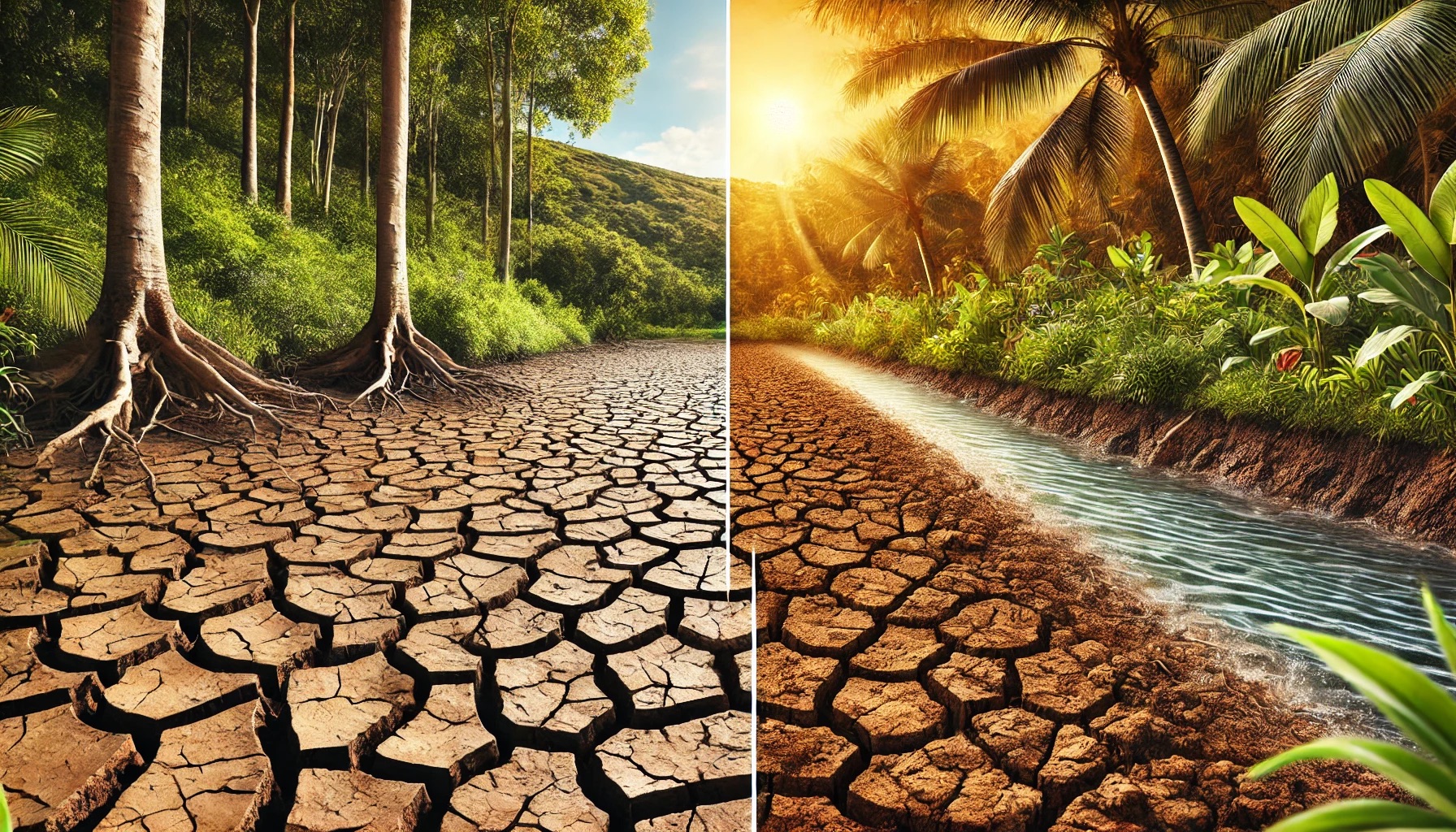
BiocharBiochar is a carbon-rich material created from biomass decomposition in low-oxygen conditions. It has important applications in environmental remediation, soil improvement, agriculture, carbon sequestration, energy storage, and sustainable materials, promoting efficiency and reducing waste in various contexts while addressing climate change challenges. More, a carbon-rich material derived from biomassBiomass is a complex biological organic or non-organic solid product derived from living or recently living organism and available naturally. Various types of wastes such as animal manure, waste paper, sludge and many industrial wastes are also treated as biomass because like natural biomass these More, is often applied to soil to improve its structure, water retention, and resistance to cracking. However, its effectiveness varies significantly depending on soil type, biochar properties, and the soil’s unique interactions with biochar and water. A recent study explored these variables by testing three clayey soil types common in subtropical China: Pukou expansive soil (PKE), Xiashu soil (XS), and Zhongshan lateritic soil (ZSL).
Researchers incorporated woody biochar at different dosages and particle sizes into these soils and evaluated crack formation under drying conditions. The results showed biochar effectively reduced cracking in PKE and XS by creating physical barriers that limited soil shrinkage. However, in ZSL, biochar unexpectedly increased cracking due to the soil’s unique chemical composition, which intensified the expansion of the bound water layer around clay particles. This chemical interaction, termed the “indirect chemical effect,” could override the structural benefits of biochar in specific soil types.
These findings emphasize the importance of soil-specific strategies for biochar applications. In particular, biochar may be more suitable for soils rich in illite and montmorillonite (like PKE and XS) but may be less effective or even counterproductive in kaolin-rich soils (like ZSL). This research provides valuable insights for applying biochar in subtropical regions, highlighting that the type, particle size, and dosage of biochar must be carefully considered to prevent unintended soil degradation.



Leave a Reply