
de Benedicto, et al (2024) β-CYCLODEXTRIN-FUNCTIONALIZED COFFEE HUSK BIOCHARBiochar is a carbon-rich material created from biomass decomposition in low-oxygen conditions. It has important applications in environmental remediation, soil improvement, agriculture, carbon sequestration, energy storage, and sustainable materials, promoting efficiency and reducing waste in various contexts while addressing climate change challenges. More FOR SURFACTANT ADSORPTION. Colloids and Surfaces A: Physicochemical and Engineering Aspects. https://doi.org/10.1016/j.colsurfa.2024.134921
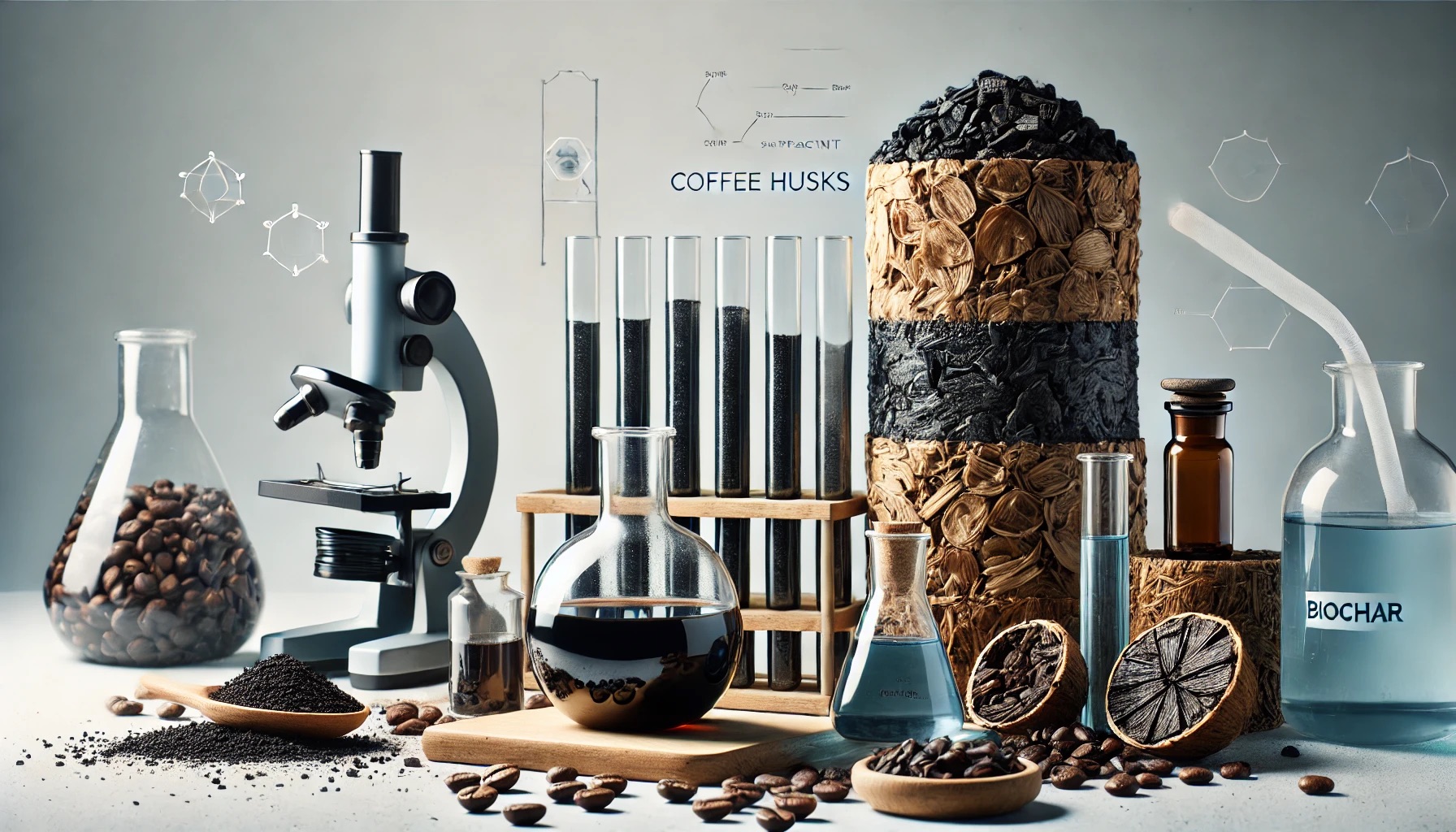
A recent study explores the use of biochar produced from coffee husks, functionalized with β-cyclodextrin, to remove harmful surfactants from water. Coffee husks, a cheap and abundant byproduct of coffee production, were transformed into biochar through pyrolysisPyrolysis is a thermochemical process that converts waste biomass into bio-char, bio-oil, and pyro-gas. It offers significant advantages in waste valorization, turning low-value materials into economically valuable resources. Its versatility allows for tailored products based on operational conditions, presenting itself as a cost-effective and efficient More. This biochar was then modified with β-cyclodextrin, a substance known for its ability to form inclusion complexes with various pollutants.
The researchers aimed to evaluate the effectiveness of this functionalized biochar in adsorbing two specific surfactants: sodium dodecylbenzenesulfonate (SDBS) and cetylpyridinium chloride (CPC). They investigated the effects of pre-treating the coffee husks with NaOH and using different crosslinking agents, glutaraldehyde and epichlorohydrin, during the functionalization process.
The study found that while SDBS adsorption was not significantly improved, the functionalized biochar showed a marked increase in CPC adsorption capacity. The best results were achieved with biochar functionalized using epichlorohydrin, which removed 113.6 mg of CPC per gram of biochar, compared to just 35.1 mg per gram for non-functionalized biochar. This indicates that β-cyclodextrin functionalization significantly enhances the biochar’s ability to adsorb CPC.
Thermodynamic studies revealed that CPC adsorption is an endothermic process, driven primarily by entropy. These findings suggest that functionalizing biochar with β-cyclodextrin is a promising strategy for developing effective adsorbents for surfactant removal in wastewater treatment, offering a sustainable solution for managing agricultural waste and improving water quality.





Leave a Reply