

Rice is a staple food for over half the global population, but its cultivation often faces the challenge of arsenic contamination. Arsenic, a naturally occurring element, can enter rice paddies through contaminated water and soil, posing significant health risks to consumers. This article examines the potential of biocharBiochar is a carbon-rich material created from biomass decomposition in low-oxygen conditions. It has important applications in environmental remediation, soil improvement, agriculture, carbon sequestration, energy storage, and sustainable materials, promoting efficiency and reducing waste in various contexts while addressing climate change challenges. More, a carbon-rich material produced from biomassBiomass is a complex biological organic or non-organic solid product derived from living or recently living organism and available naturally. Various types of wastes such as animal manure, waste paper, sludge and many industrial wastes are also treated as biomass because like natural biomass these More pyrolysisPyrolysis is a thermochemical process that converts waste biomass into bio-char, bio-oil, and pyro-gas. It offers significant advantages in waste valorization, turning low-value materials into economically valuable resources. Its versatility allows for tailored products based on operational conditions, presenting itself as a cost-effective and efficient More, as a sustainable approach to mitigate arsenic uptake in rice.
Biochar for Arsenic Reduction
The article reviews 25 research studies investigating the effectiveness of biochar in reducing arsenic levels in rice. The studies employed various biochar types and application methods, and their findings provided compelling evidence for biochar’s efficacy. Overall, biochar application resulted in a significant decrease in arsenic concentrations in rice grains. Additionally, several studies observed enhanced rice yields, highlighting the potential of biochar for improving agricultural productivity alongside its environmental benefits.
Mechanisms and Optimization
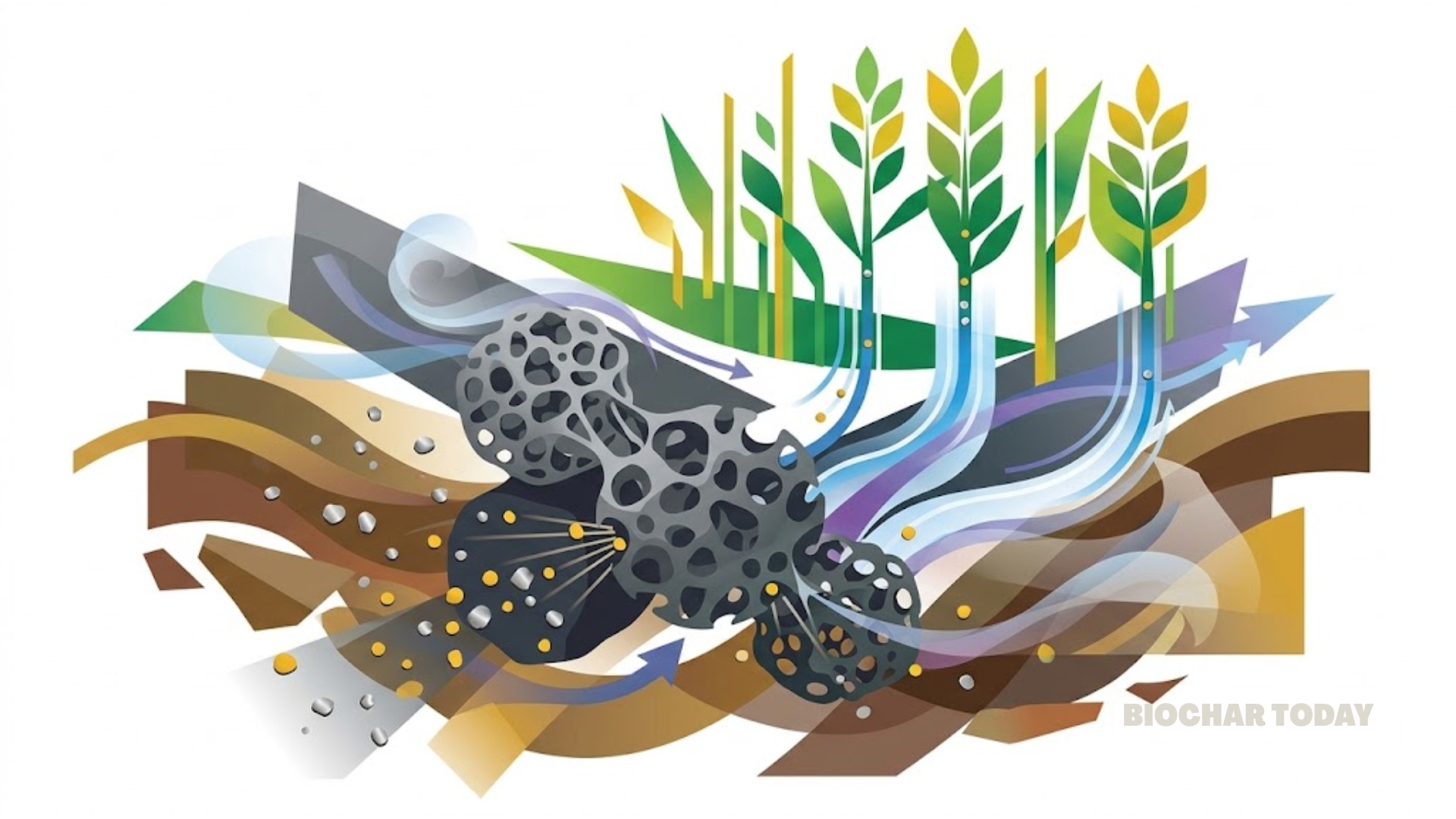
The mechanisms underlying biochar’s arsenic reduction involve adsorption, complexation, and precipitation. Biochar’s porous structure and high surface area effectively adsorb arsenic from the soil solution, preventing its uptake by rice plants. Furthermore, biochar can promote the formation of stable arsenic complexes and precipitates, further reducing its bioavailability. However, the effectiveness of biochar can be influenced by various factors, including its properties, application rates, and soil characteristics. Therefore, optimizing biochar application strategies for specific environmental conditions is crucial for maximizing its arsenic reduction potential.
Conclusion and Future Directions
This review article provides a comprehensive overview of the promising potential of biochar for mitigating arsenic contamination in rice. Biochar’s effectiveness in reducing arsenic levels in rice grains, coupled with its ability to enhance yields, makes it a valuable tool for sustainable rice production. Nevertheless, further research is needed to refine biochar application methods and tailor them to diverse environmental settings. Continued exploration of biochar’s mechanisms and interactions with arsenic will be essential for optimizing its use as a sustainable solution to arsenic contamination in rice paddies.
READ MORE
Mandal, et al (2024) Meta-Analysis of Biochar as an Amendment for Arsenic Mitigation in Paddy Soils. Current Pollution Reports. https://doi.org/10.1007/s40726-023-00288-1




Leave a Reply