
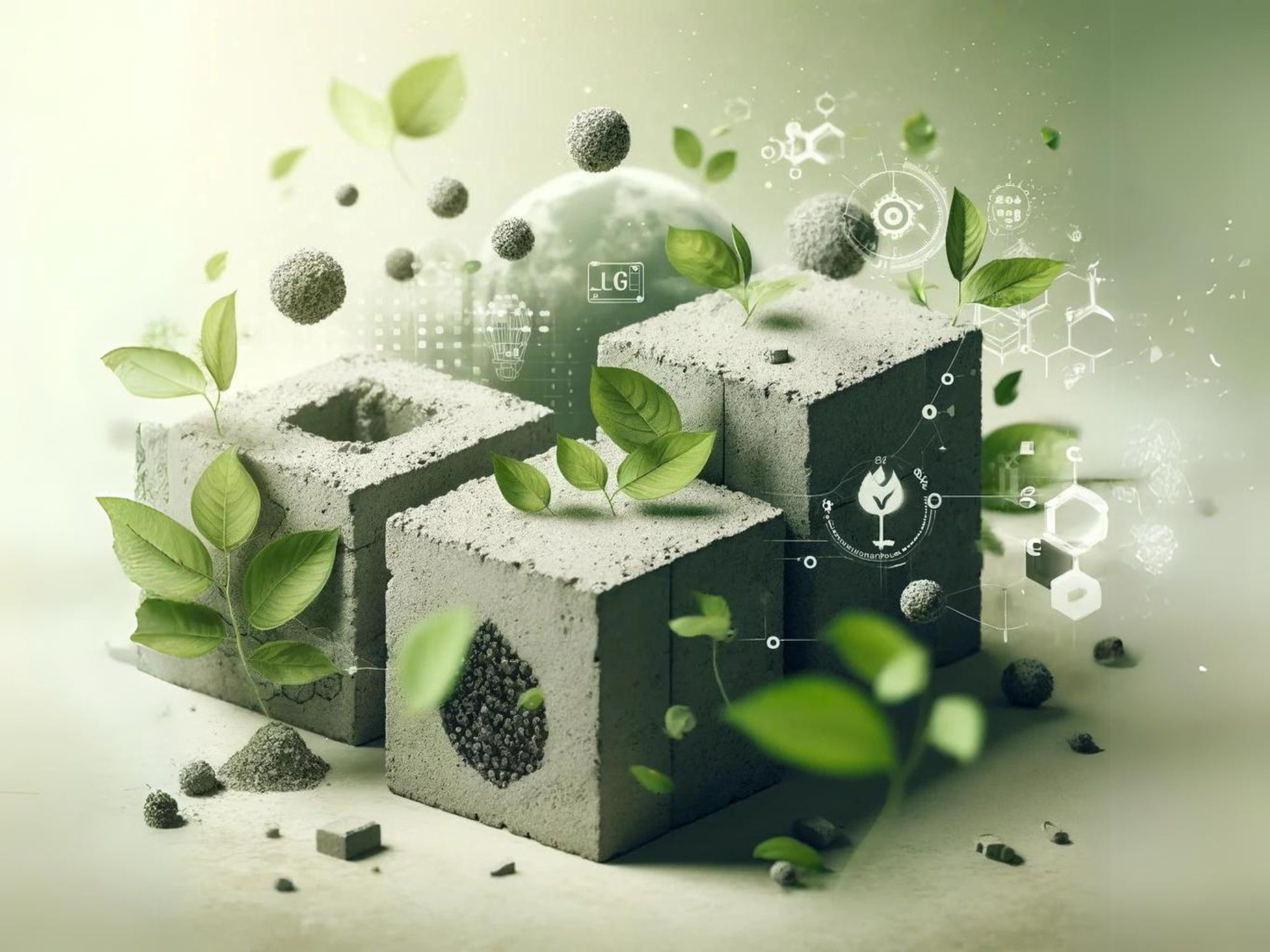

In recent advancements in sustainable construction materials, researchers have developed a new type of lightweight concrete that significantly contributes to CO2 sequestration, highlighting a greener alternative for non-structural components within buildings. This innovative material utilizes reactive magnesia cement (RMC) and incorporates high dosages of biochar aggregates, making up to 61% volume of the concrete. The incorporation of biochar, a product derived from bio-wastes, not only aids in reducing the concrete’s density but also enhances its ability to capture CO2 from the atmosphere.
The study showcases the concrete’s substantial capability to sequester CO2 during both its curing phase under high CO2 concentrations and its service life under ambient CO2 levels. A novel methodology was employed to separately quantify the CO2 sequestration attributable to both the RMC and the biochar, allowing for a deeper understanding of the material’s carbon capture mechanisms. The research found that the relationship between CO2 sequestration and factors such as biochar content, concrete age, and humidity is significant. Additionally, an unconventional depth-dependency in RMC carbonation, influenced by the biochar, was discovered.
The results indicate that these lightweight concretes are not only capable of achieving the mechanical properties required for non-structural applications but also offer the advantage of permanently sequestering a considerable amount of CO2. This is achieved during the curing phase (0.2–0.3 g per gram of RMC) and continues at a noticeable rate during the service phase (1–12 mg per gram of RMC and 1 mg per gram of biochar). The study’s findings present a promising step towards the development of construction materials that are not only structurally viable but also environmentally beneficial, by actively contributing to the reduction of atmospheric CO2 levels.



![Eucalyptus Wood Waste-Derived Biochar Achieves a Ninety-Eight Percent Removal Efficiency for Benzo[ghi]perylene in Vehicle-Wash Wastewater](https://biochartoday.com/wp-content/uploads/2026/10/SCIENCE-BLOGS-2026-2026-10-19T160523.703.jpg)


Leave a Reply