
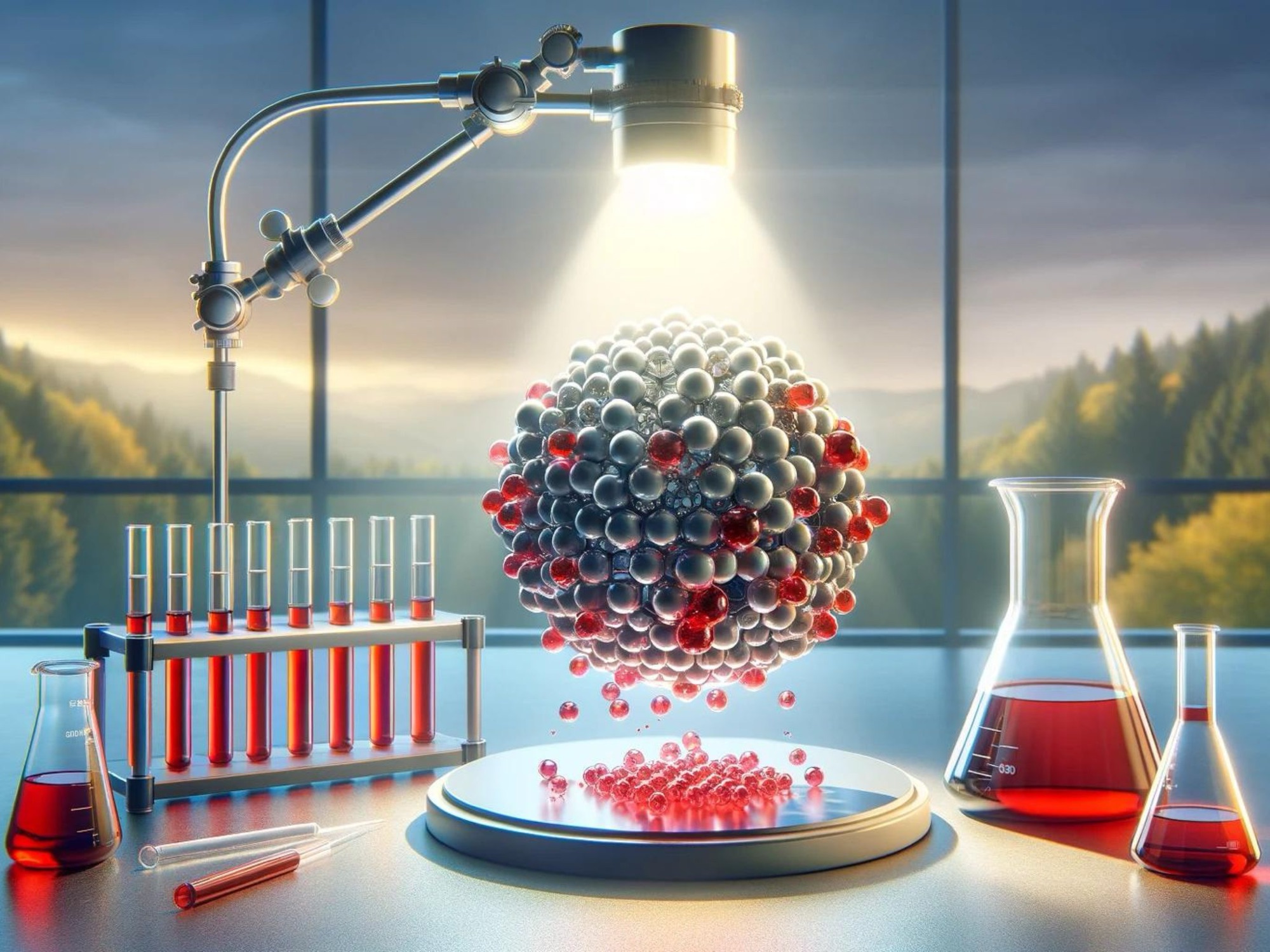

In the textile and printing industries, azo dyes are predominant due to their vibrant colors and cost-effectiveness but pose significant environmental threats when released into water bodies. Conventional water treatment methods falter in effectively removing these dyes, prompting the need for advanced solutions such as photocatalysis, which offers a sustainable alternative with minimal environmental impact.
Recent studies have focused on enhancing the photocatalytic efficiency under visible light to address the limitations of ultraviolet light dependency. The integration of hexagonal boron nitride (h-BN) and biocharBiochar is a carbon-rich material created from biomass decomposition in low-oxygen conditions. It has important applications in environmental remediation, soil improvement, agriculture, carbon sequestration, energy storage, and sustainable materials, promoting efficiency and reducing waste in various contexts while addressing climate change challenges. More (BC) with graphitic carbon nitride (g-C3N4) has led to the development of a novel biochar/h-BN/g-C3N4 (BNC) composite with a unique spherical sheet cluster morphology. This ternary composite was synthesized using a combination of one-pot pyrolysisPyrolysis is a thermochemical process that converts waste biomass into bio-char, bio-oil, and pyro-gas. It offers significant advantages in waste valorization, turning low-value materials into economically valuable resources. Its versatility allows for tailored products based on operational conditions, presenting itself as a cost-effective and efficient More and hydrothermal methods, aimed at improving the degradation rates of azo dyes.
The BNC composite showcased an impressive photocatalytic degradation rate of 87.94% for reactive red 120 under simulated solar light within 90 minutes, significantly outperforming pure g-C3N4. This enhancement is attributed to the type II heterojunction structure within the composite, facilitating efficient electron-hole separation and reducing recombination rates. Biochar’s role as an electron shuttle and reservoir further augmented the electron transport processes, thus increasing the photocatalyst’s activity under visible light.
Detailed characterizations and density functional theory (DFT) calculations were employed to elucidate the band structure and electron transfer pathways in BNC. The presence of biochar not only promoted light absorption through doping-induced optical density modifications but also provided sites for oxygen vacancy, enhancing the overall photocatalytic mechanism. Moreover, the calculation of the six-flux radiation absorption–scattering model (SFM) confirmed the optimal photocatalyst dosage and light penetration, essential for practical applications.
The biochar/h-BN/g-C3N4 composite represents a significant advancement in photocatalytic materials for environmental remediation, particularly in the degradation of resistant azo dyes in wastewater. Through strategic material engineering and mechanistic explorations, this study not only underscores the capabilities of BNC composites in visible light utilization but also sets a precedent for future research in sustainable photocatalytic solutions. With its efficient charge carrier dynamics and enhanced light absorption properties, the BNC composite emerges as a promising candidate for next-generation photocatalysts in the fight against water pollution.





Leave a Reply