
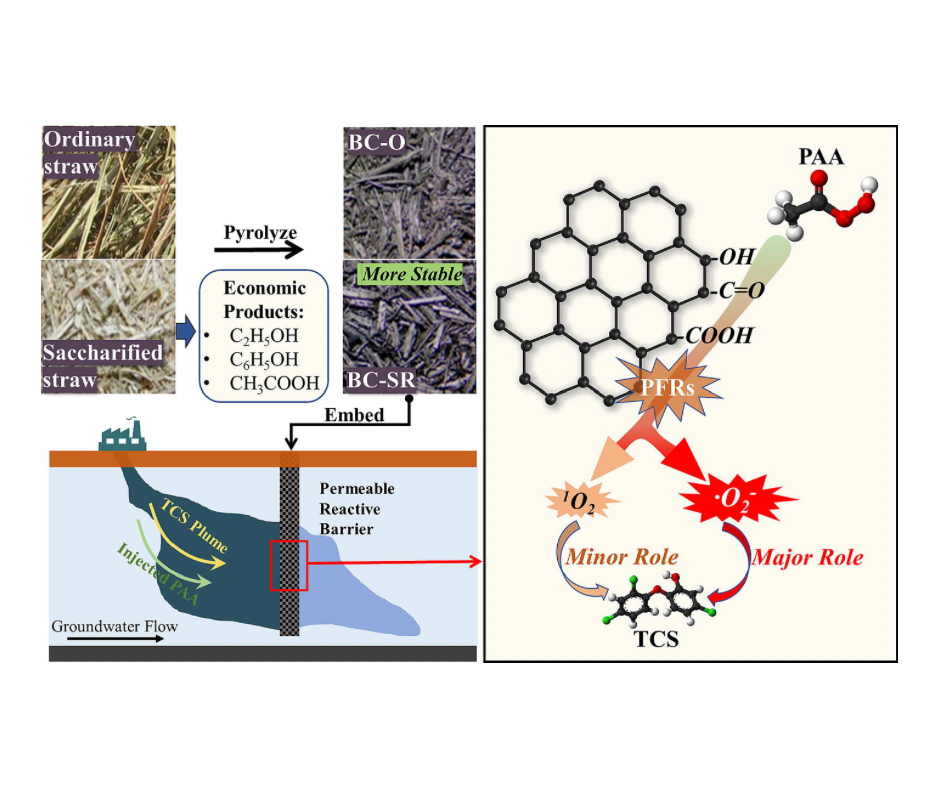
Article Summary: Tong, et al. (2023) Eco-friendly and stable triclosan removal from groundwater using peroxyacetic acid activated with biocharBiochar is a carbon-rich material created from biomass decomposition in low-oxygen conditions. It has important applications in environmental remediation, soil improvement, agriculture, carbon sequestration, energy storage, and sustainable materials, promoting efficiency and reducing waste in various contexts while addressing climate change challenges. More produced from saccharification residues, In Press. https://doi.org/10.1016/j.cej.2023.148422
Environmental contamination by emerging pollutants like triclosan poses a significant challenge. This study presents a novel approach using a modified biochar, saccharification residue-based biochar (BC-SR), to effectively remove triclosan from groundwater.
Traditional biochar suffers from limited activation efficiency and potential secondary pollution. BC-SR overcomes these obstacles by its unique microporous structure and enhanced stability. This biochar, in combination with peracetic acid (PAA), achieved a remarkable 90% removal rate of triclosan – 33% higher than standard biochar.
Interestingly, BC-SR’s activation mechanism differs from typical carbonaceous materials. Its persistent free radicals and the generation of specific reactive oxygen species play a crucial role in triclosan degradation. This “de-burdening” of biochar activation represents a new concept compared to the usual “burdening” approach.
Column tests simulating real-world conditions further validate the effectiveness of BC-SR/PAA. This system demonstrates strong removal capabilities even in complex environments, highlighting its potential for in-situ groundwater remediation. Moreover, analysis reveals that the degradation products of triclosan are less toxic, adding to the environmental benefits of this approach.
Overall, this study offers a promising solution to address the growing concern of triclosan contamination in groundwater. By harnessing the unique properties of modified biochar and understanding its novel activation mechanism, researchers have paved the way for a more efficient and sustainable approach to cleaning up polluted water.



Leave a Reply