

Key Takeaways
- Replacing 20% of cement with rice husk biocharBiochar is a carbon-rich material created from biomass decomposition in low-oxygen conditions. It has important applications in environmental remediation, soil improvement, agriculture, carbon sequestration, energy storage, and sustainable materials, promoting efficiency and reducing waste in various contexts while addressing climate change challenges. More (RHB) can increase a concrete block’s flexural (bending) strength by 30%.
- When using a specific water-superplasticizer pre-mix method, a 20-30% RHB replacement can also increase the block’s compressive (crushing) strength by up to 15%.
- Pre-soaking the biochar before mixing is a critical step that can reduce the final block’s water absorption by as much as 41%, improving its durability.
- The RHB blocks are better insulators. Thermal conductivity (heat transfer) steadily decreases as more biochar is added, making them ideal for energy-efficient construction.
- The material is a sustainable “win-win” that uses agricultural waste (rice husks) and sequesters carbon, locking it into the building for its entire lifespan.
The construction industry faces a significant environmental challenge: cement. The production of this essential building block is a primary contributor to global CO2 emissions. In response, researchers are in a global race to develop greener, more sustainable building materials. A new study published in the Spectrum of Engineering Sciences by Muhammad Fareed Javed, Nijah Akram, and their colleagues demonstrates a high-performance solution that is both sustainable and practical: concrete blocks made with rice husk biochar. Their findings show this new material isn’t just a greener substitute; in several key metrics, it’s actually better than the original.
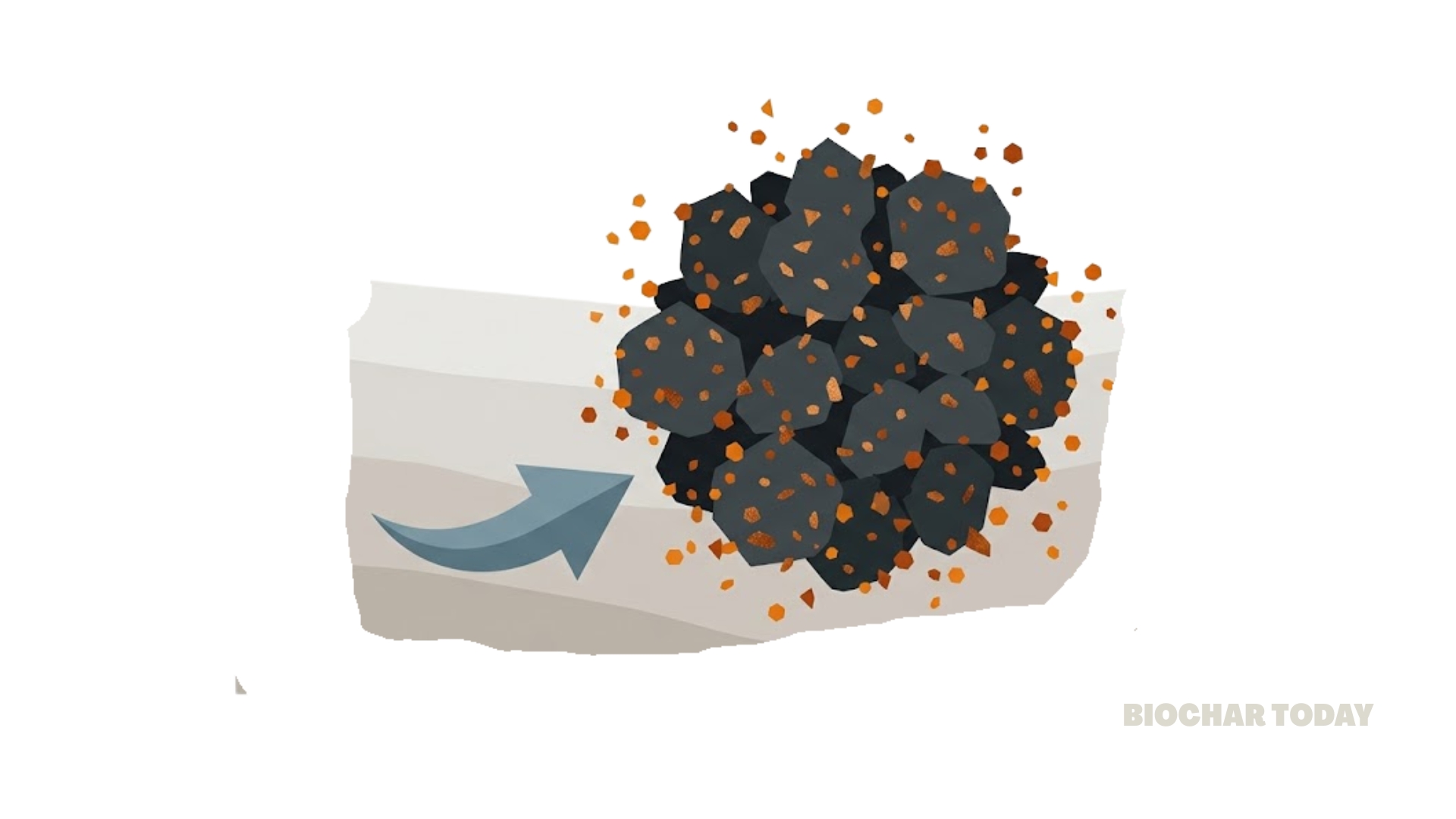
The team’s solution starts with a common agricultural residue: rice husks. Through pyrolysis—heating the husks in an oxygen-limited environment—they create a lightweight, porous, and carbon-rich material called rice husk biochar (RHB). This process provides a “win-win” for sustainability. First, it upcycles agricultural waste that would otherwise be landfilled or burned. Second, the carbon from the rice husks is locked into the stable biochar, which is then permanently sequestered within the concrete blocks. This effectively turns the building material into a carbon sink, reducing the structure’s overall embodied carbon. The study notes that literature reports a mitigation potential of up to 870 kg of CO2-equivalent per ton of dry feedstockFeedstock refers to the raw organic material used to produce biochar. This can include a wide range of materials, such as wood chips, agricultural residues, and animal manure. More.
But green materials must also be strong. The researchers tested concrete mixes replacing 5-30% of the cement with RHB and found impressive performance gains. At a 20% replacement level, the RHB blocks showed a 30% increase in flexural strength, which is the material’s ability to resist bending before it cracks. The authors suggest the porous biochar particles help create more tortuous paths for cracks, effectively stopping them from propagating easily. Compressive (crushing) strength, the most common metric for concrete, also saw improvements. When the RHB was prepared in a water-superplasticizer pre-mix, a 20-30% replacement level yielded a compressive strength increase of up to 15% over standard concrete. This result directly challenges the common assumption that sustainable additives must come with a strength penalty.
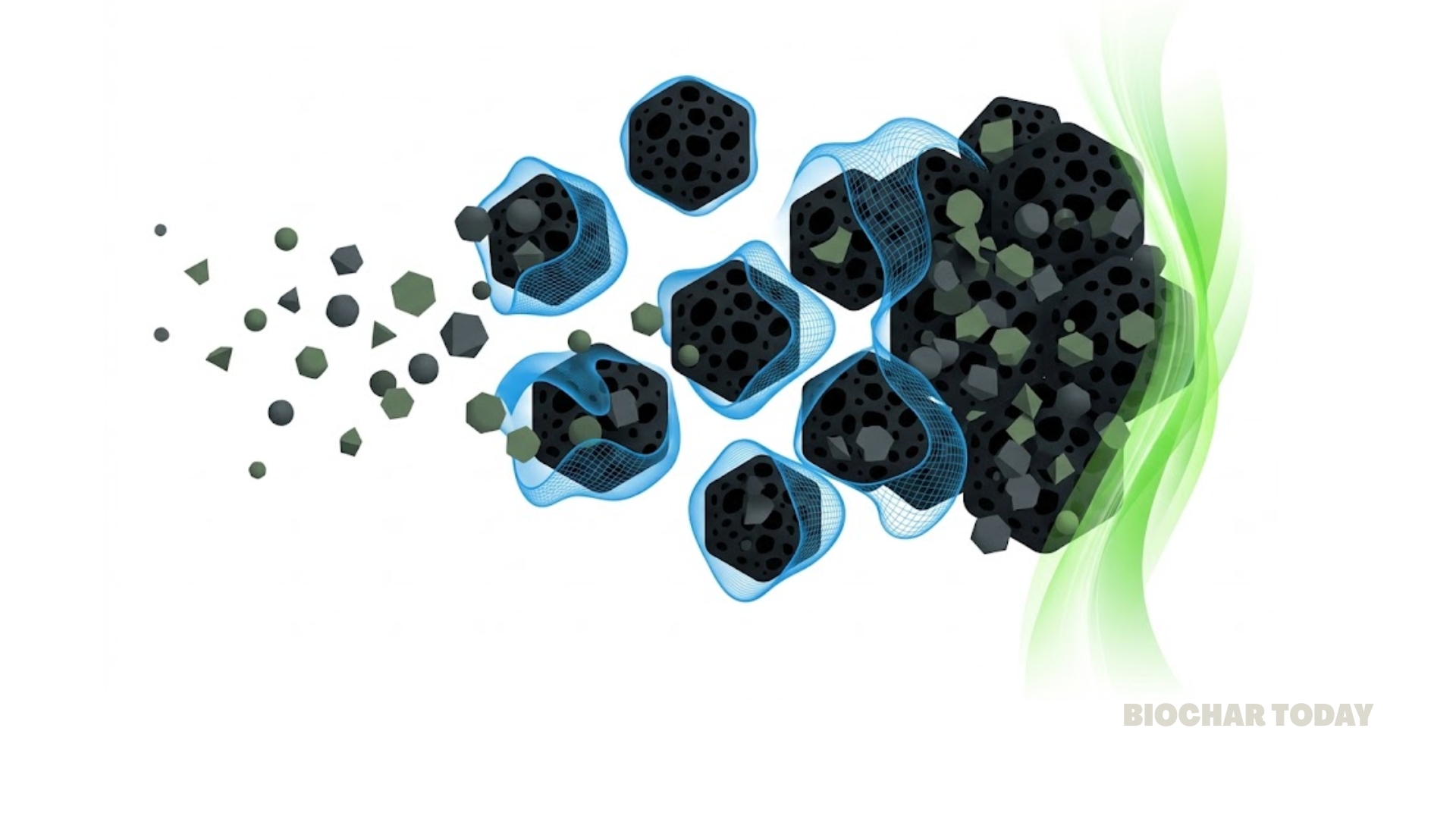
The benefits of RHB extended to durability and energy efficiency as well. Water absorption, a key factor in a material’s long-term durability, was dramatically improved. The study found that pre-soaking the biochar before mixing it into the concrete reduced water absorption by up to 41% at a 30% replacement level. This pre-soaking fills the biochar’s internal pores, preventing it from stealing water needed for the cement’s hydration and resulting in a denser, less porous final block. Furthermore, the blocks became significantly better insulators. The study confirmed that thermal conductivity decreased steadily as more biochar was added. This makes the blocks an ideal choice for energy-efficient buildings, as they can help reduce the operational energy needed for heating and cooling.
The study concludes with practical guidelines for adoption. For non-load-bearing and thermal insulation uses, like interior walls, a 15-25% RHB replacement offers the best balance of high insulation, improved flexural strength, and a low carbon footprint. For load-bearing structures, a more conservative replacement of 10% or less is recommended to ensure compressive strength is maintained. Critically, the researchers note that these new mix designs require no specialized equipment, meaning the industry could adopt this greener, higher-performance block immediately. This research provides a clear, data-driven path to turn a common agricultural waste product into a valuable, carbon-sequestering building material.
Source: Javed, M. F., Akram, N., Malik, A. M., Khan, W. R., Asim, Z., & Rashid, M. (2025). BIOCHAR-BASED CONCRETE BLOCKS FROM RICE HUSK: A SUSTAINABLE SOLUTION FOR LOW-CARBON CONSTRUCTION. Spectrum of Engineering Sciences, 3(8), 687-706.


Leave a Reply