
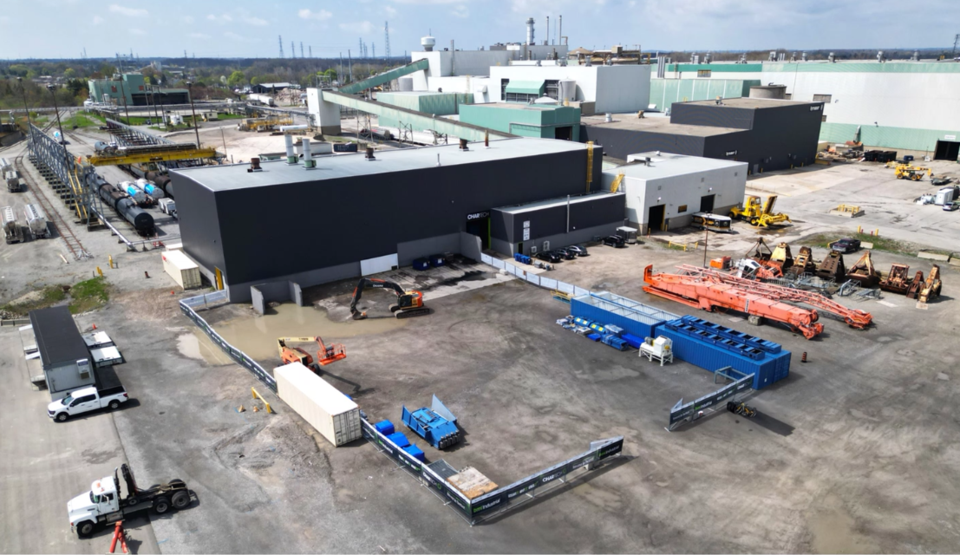
CHAR Technologies’ new partnership with BMI Group marks a strategic step in scaling biocharBiochar is a carbon-rich material created from biomass decomposition in low-oxygen conditions. It has important applications in environmental remediation, soil improvement, agriculture, carbon sequestration, energy storage, and sustainable materials, promoting efficiency and reducing waste in various contexts while addressing climate change challenges. More and renewable natural gas production by repurposing idle industrial assets in Northern Ontario. The first focus of this collaboration is the former Domtar pulp and paper mill in Espanola, now rebranded as Bioveld North. This follows the model established at CHAR’s Thorold facility, which is expected to begin commercial production later this year and serves as a prototype for future developments.
The Espanola site offers significant advantages, including existing wood processing infrastructure and access to a substantial regional biomassBiomass is a complex biological organic or non-organic solid product derived from living or recently living organism and available naturally. Various types of wastes such as animal manure, waste paper, sludge and many industrial wastes are also treated as biomass because like natural biomass these More supply. While detailed engineering studies will determine the final production scale later this year, early indicators suggest the facility could surpass the Thorold plant’s capacity of 75,000 tonnes of biomass annually. The region’s forestry sector, impacted by the closure of the Domtar mill, stands to benefit from renewed demand for low-grade wood residuals such as treetops, limbs, and sawdust. However, CHAR representatives caution that consumption levels may not match the historic 500,000 tonnes previously processed by Domtar.
Using its proprietary high-temperature pyrolysisPyrolysis is a thermochemical process that converts waste biomass into bio-char, bio-oil, and pyro-gas. It offers significant advantages in waste valorization, turning low-value materials into economically valuable resources. Its versatility allows for tailored products based on operational conditions, presenting itself as a cost-effective and efficient More technology, CHAR will convert woody biomass into renewable natural gas and biocarbon pellets. The biocarbon product, already validated by ArcelorMittal Dofasco for use in both blast and electric arc furnaces, plays a key role in steel industry decarbonization. With ArcelorMittal as a major shareholder and offtake partner, CHAR is well positioned to meet the growing demand for low-carbon alternatives to metallurgical coal.
While job creation at the facility will be modest due to high levels of automation—Thorold’s two-kiln operation employs just 12 workers—the broader economic impact is expected upstream in the biomass supply chain. The partnership also supports BMI Group’s strategy to redevelop former industrial sites across Ontario, Quebec, and Michigan into productive clean energy assets.
With robust demand from utilities and heavy industry, CHAR’s model reflects a pragmatic approach to industrial decarbonization and economic renewal. Engineering and feedstockFeedstock refers to the raw organic material used to produce biochar. This can include a wide range of materials, such as wood chips, agricultural residues, and animal manure. More sourcing decisions will be finalized in the coming months, determining whether Espanola becomes a key node in Ontario’s emerging low-carbon energy economy.




Leave a Reply