
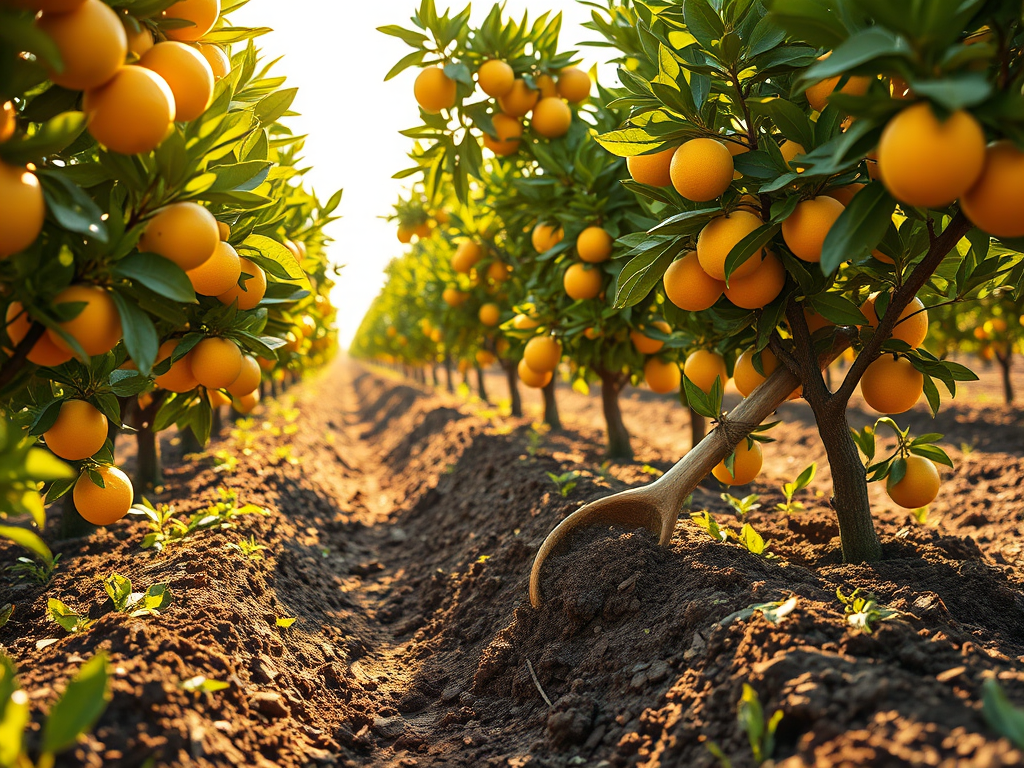
In a recent mini-review published in the proceedings of the Eleventh International Conference on Remote Sensing and Geoinformation of the Environment (RSCy2025), E. Nikolaou and a team of researchers from the Eratosthenes Centre of Excellence and the Cyprus University of Technology examined various carbon farming practices and their potential to improve soil health and increase carbon sequestration in citrus cultivation. The review synthesizes findings from 20 selected papers, highlighting how specific agricultural methods can help citrus growers enhance soil organic carbon (SOC) levels, a crucial component for soil fertility and a key indicator in the global carbon cycle. This research is particularly relevant in the European Union, which has adopted ambitious goals to achieve climate neutrality by 2050, relying heavily on sectors like Land Use, Land Use Change, and Forestry (LULUCF) to remove carbon from the atmosphere.
The review explored several carbon-conscious agricultural practices, including cover cropping, reduced or no-tillage, and the use of biocharBiochar is a carbon-rich material created from biomass decomposition in low-oxygen conditions. It has important applications in environmental remediation, soil improvement, agriculture, carbon sequestration, energy storage, and sustainable materials, promoting efficiency and reducing waste in various contexts while addressing climate change challenges. More and compost. Studies consistently showed that these methods can significantly improve soil quality and increase carbon sequestration. For example, one 17-year study in a lemon tree orchard in Spain found that a reduced tillage system with incorporated pruning residues and drip irrigation led to an 82.3% increase in SOC stocks in the top 0-5 cm of soil and a 95.2% increase at the 5-15 cm depth, compared to intensive tillage. Similarly, a 13-year comparison of Sicilian orange groves found that a regenerative management system sequestered SOC at a rate of 1.68 Mg CO₂-eq ha⁻¹ yr⁻¹, resulting in a negative carbon balance, effectively turning the grove into a carbon sink. In contrast, a conventional system lost SOC at a rate of 1.23 Mg CO₂-eq ha⁻¹ yr⁻¹.
Organic amendments like biochar and compost stood out as particularly effective. Biochar, which is created by heating organic material in a low-oxygen environment, has a stable structure that resists microbial breakdown, allowing it to act as a long-term carbon sink. A four-year pot experiment showed that co-applying biochar and potassium fertilizer increased the storage of organic carbon by 1.8-fold and soil available potassium by 2.9-fold. Other studies supported this, with biochar applications significantly improving soil pHpH is a measure of how acidic or alkaline a substance is. A pH of 7 is neutral, while lower pH values indicate acidity and higher values indicate alkalinity. Biochars are normally alkaline and can influence soil pH, often increasing it, which can be beneficial More, increasing nutrient availability, and boosting SOC content by as much as 230% in one 35-day incubation study. Compost also proved highly beneficial. In a pomelo cultivation study, applying compost over three years increased soil organic matter (SOM) to 4.12% in the sub-surface layer, compared to 3.04% in the control. Another study in Egypt found that a mixture of moringa seed cake and compost increased Valencia orange fruit yield by about 27-28% and soil available water by approximately 66-70%.
The review also touched on the use of remote sensing (RS) technologies for monitoring and verifying these carbon farming efforts. Remote sensing offers a way to monitor soil organic carbon (SOC) levels over large areas, providing a valuable complement to traditional soil sampling. However, challenges remain, including factors like photosynthetic vegetation, soil moisture, and surface roughness that can interfere with accurate measurements. The authors suggested that the most accurate results from satellite data are achieved when the soil is exposed and in a “seedbed condition,” such as after tillage, when it’s smooth and dry.
In conclusion, the mini-review provides a compelling overview of how various carbon farming practices can create a more sustainable and climate-friendly citrus industry. The authors emphasize that continued research, especially through long-term field experiments, is needed to further validate these findings and address uncertainties related to carbon storage duration and soil respiration responses. The findings from projects like CARBONICA, which is currently evaluating compost and biochar in citrus plots in Cyprus, are expected to provide crucial insights to inform the design of effective agri-environmental policies under the Common Agricultural Policy (CAP) and globally.
Source: Nikolaou, E., Christoforou, M., Dimitriadi, S., Efstathiou, S., Eliades, M., Hatjimitsis, D., Neophytou, E., Papadavid, G., Stavrinides, M., Tzouvaras, M., Varvaris, I., & Papoutsa, C. (2025). Evaluating Carbon Farming Practices for Sustainable Soil Management in Citrus Cultivation. Proceedings of SPIE, 13816, 138161P-1–138161P-10




Leave a Reply