
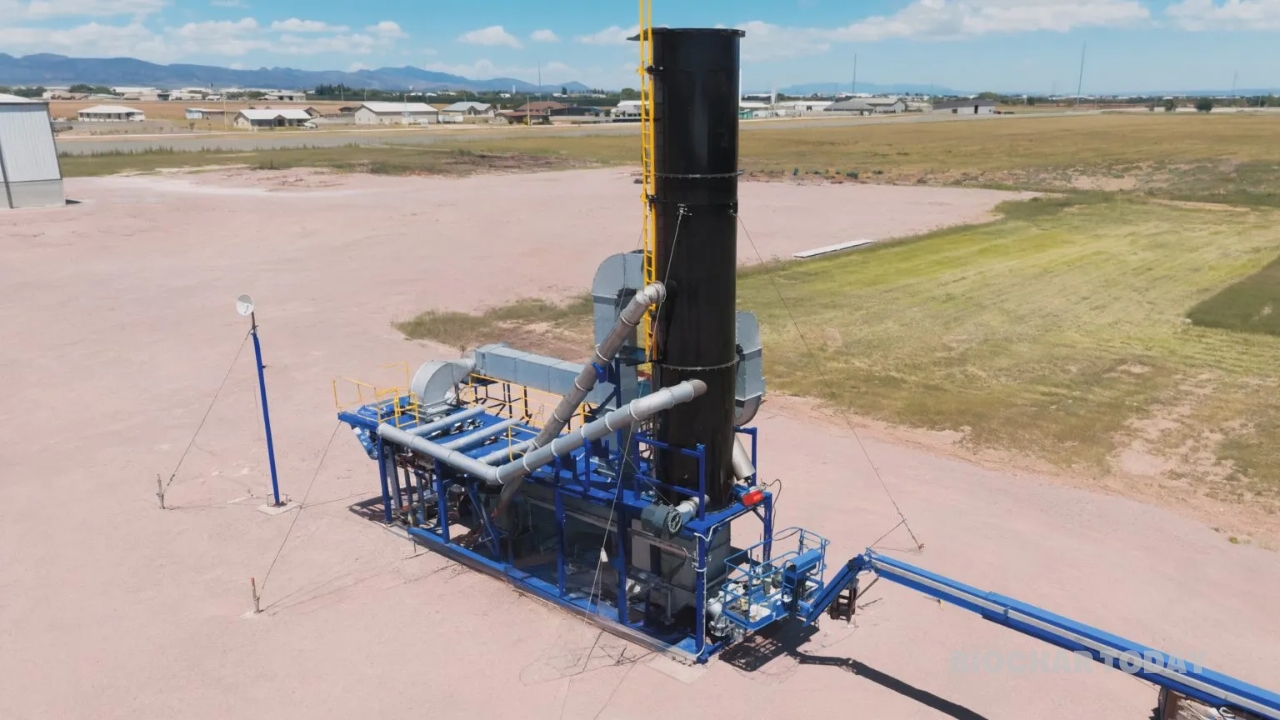
A economic analysis published by Pyronexus evaluates the financial parameters driving commercial biocharBiochar is a carbon-rich material created from biomass decomposition in low-oxygen conditions. It has important applications in environmental remediation, soil improvement, agriculture, carbon sequestration, energy storage, and sustainable materials, promoting efficiency and reducing waste in various contexts while addressing climate change challenges. More facility feasibility, focusing on projects across the United States. The analysis demonstrates that project viability extends far beyond reactor capital expenditure, depending instead on an integrated value chain encompassing feedstockFeedstock refers to the raw organic material used to produce biochar. This can include a wide range of materials, such as wood chips, agricultural residues, and animal manure. More acquisition, plant scale, labor requirements, energy recovery, product sales, carbon credit generation, and structured financing. Highlighting data from agricultural and forestry studies, the synthesis emphasizes that financial performance requires balancing physical production variables with realistic commercial assumptions.
The primary challenge addressed in the analysis is the high vulnerability of facilities that rely on a single revenue stream or underestimate non-equipment operational costs. For instance, a 2026 Corn Belt study of small-scale agricultural residue kilns revealed that labor accounted for over 95% of operational costs, while capital expenditure represented less than 3%. Conversely, larger industrial installations face major cost accumulation from feedstock drying, material handling, emissions controls, utility connections, and debt service. Additionally, fluctuations in feedstock quality, seasonal availability, high moisture content, and transportation logistics present ongoing risks to operational throughput and profit margins.
To mitigate these economic and operational risks, Pyronexus highlights a multi-layered financial framework centered on a diversified revenue stack and comprehensive pre-construction testing. Key elements of the solution include securing multi-revenue streams—combining physical biochar sales, process heat or electricity recovery, gate fees for waste disposal, and carbon credit sales. The framework requires site-specific installed capital estimates, conservative utilization assumptions (adjusting for maintenance and downtime), and rigorous feedstock testing to verify moisture, yield, and biochar quality before committing capital.
The adoption of this multi-faceted economic framework provides developers, investors, and lenders with a bankable approach to evaluating project returns. By conducting sensitivity analyses on key parameters—such as delivered biomassBiomass is a complex biological organic or non-organic solid product derived from living or recently living organism and available naturally. Various types of wastes such as animal manure, waste paper, sludge and many industrial wastes are also treated as biomass because like natural biomass these More costs, labor productivity, product pricing, and carbon credit issuance timelines—operators can identify critical break-even thresholds prior to construction. Ultimately, aligning operational throughput with verified carbon accounting and targeted market off-takes establishes a defensible foundation for long-term commercial scalability within the biochar sector.





Leave a Reply