
Can there be a symbiotic relationship between the infrastructure of New York City and the farms of rural New York?
Emily Majewski, the visionary behind Phytostone, firmly believes in a collaborative future where urban development and rural agriculture can mutually benefit. Her company, Phytostone, is at the forefront of this idea, developing innovative natural building materials that offer a sustainable solution for the modern built environment.
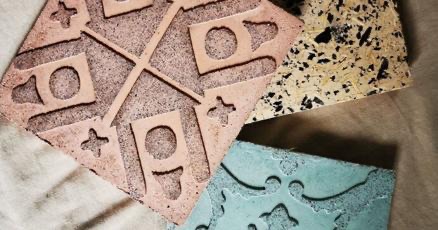
Thanks to a significant $1.5 million grant from the Natural Carbon Solutions Innovation Challenge, Phytostone is poised to launch its groundbreaking tile material, “cast carbon,” in New York City. This material is a unique blend, combining a proprietary mineral binder with an aggregate of biocharBiochar is a carbon-rich material created from biomass decomposition in low-oxygen conditions. It has important applications in environmental remediation, soil improvement, agriculture, carbon sequestration, energy storage, and sustainable materials, promoting efficiency and reducing waste in various contexts while addressing climate change challenges. More and raw agricultural residues. Think corn cobs, walnut husks, or straw—materials that often go to waste. This innovative composition results in a durable building product capable of sequestering carbon, yet designed to decompose responsibly at the end of its life cycle.
The concept behind cast carbon draws inspiration from historical practices of combining plant-based and mineral-based materials for enhanced performance. Phytostone aims to integrate the best qualities of both kingdoms to create a superior product. While not yet widely available, the cast carbon material is on track for a soft launch next year, having successfully passed extensive feasibility and fire-rating tests during its development. This year marks the second phase of the grant project, focusing on further testing, obtaining necessary certifications, and conducting demonstrations.
Majewski, a New York native, envisions small-scale production in Brooklyn, with aspirations for corporate partnerships to scale up manufacturing and distribution. She sees the built environment, especially in a dynamic urban center like New York City, as an enormous opportunity for agriculturally-infused products. The city’s frequent renovation cycles for commercial buildings create a continuous demand, and a compostable tile offers a substantial reduction in waste. Essentially, cast carbon tiles function like a compressed soil amendmentA soil amendment is any material added to the soil to enhance its physical or chemical properties, improving its suitability for plant growth. Biochar is considered a soil amendment as it can improve soil structure, water retention, nutrient availability, and microbial activity. More, allowing them to be returned to farms or forests to break down once their urban utility is complete.
This closed-loop system is a key motivator for Phytostone: strengthening rural economies by transforming agricultural waste into valuable building components for urban renewal. While the goal is to source as much agricultural waste from New York farms as possible, practical challenges, such as the specialized sizing requirements for residues, sometimes make immediate local sourcing difficult for a startup. However, securing the necessary equipment for processing remains a long-term objective.
Beyond their environmental benefits, cast carbon tiles offer practical advantages. They are significantly lighter and less expensive than traditional concrete or ceramic alternatives. Their unique texture, softer than stone but harder than wood, achieves Majewski’s vision of combining the lightweight, carbon-storing properties of plants with the stability and resistance to decay found in minerals. With New York City’s growing focus on low-carbon and zero-waste initiatives in construction, Phytostone’s products are well-positioned for the future.




Leave a Reply