
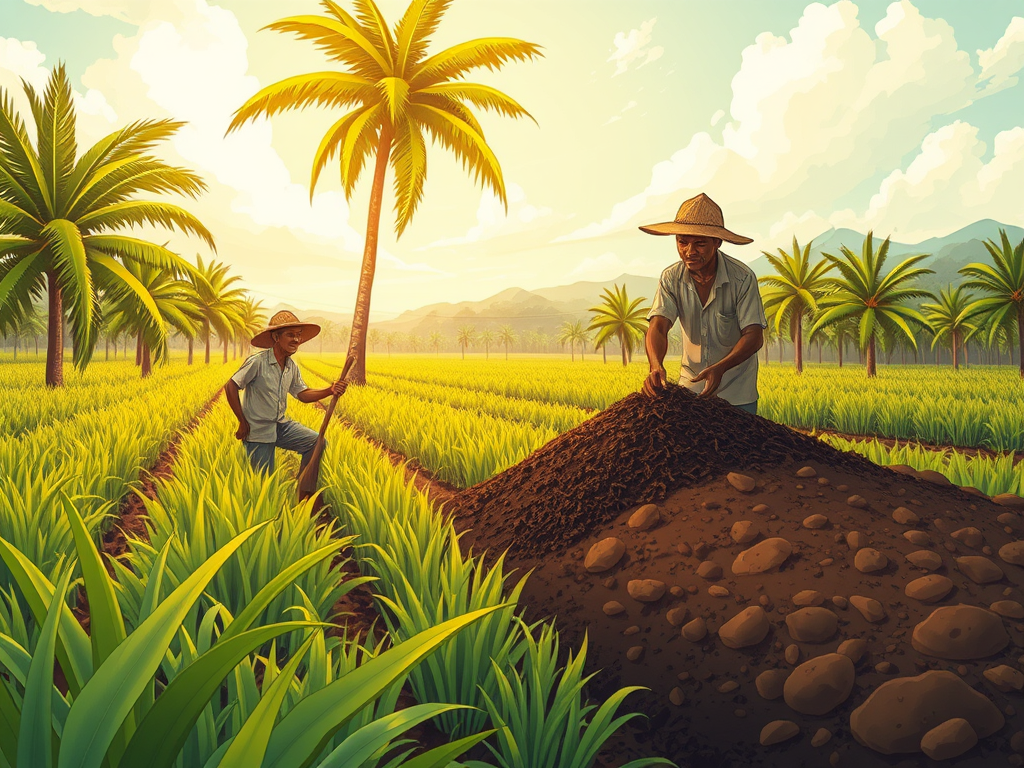
A new initiative in Malaysia is demonstrating the potential for palm oil producers to convert a major source of agricultural waste, empty fruit bunches (EFB), into biocharBiochar is a carbon-rich material created from biomass decomposition in low-oxygen conditions. It has important applications in environmental remediation, soil improvement, agriculture, carbon sequestration, energy storage, and sustainable materials, promoting efficiency and reducing waste in various contexts while addressing climate change challenges. More, a valuable soil amendmentA soil amendment is any material added to the soil to enhance its physical or chemical properties, improving its suitability for plant growth. Biochar is considered a soil amendment as it can improve soil structure, water retention, nutrient availability, and microbial activity. More. This pilot program represents a convergence of waste management and agricultural sustainability, offering an alternative to traditional disposal methods.
Empty Fruit Bunches are a significant byproduct of the palm oil industry, and this process provides a pathway for their valorization. By using a controlled thermal process, the EFB is transformed into biochar, which is a carbon-rich material. According to reports on the pilot projects, the conversion process can achieve a biochar yield of approximately 20% to 30% by weight of the initial EFB feedstockFeedstock refers to the raw organic material used to produce biochar. This can include a wide range of materials, such as wood chips, agricultural residues, and animal manure. More.
The resulting biochar is then applied to fields, serving as a soil conditioner that can help retain nutrients and water, which is highly relevant to increasing farm productivity, especially for smallholders. The shift is gaining traction, with increasing interest from both large palm oil millers and independent farmers looking for sustainable ways to handle waste while simultaneously improving the health of their land.
This effort supports Malaysia’s national objectives for sustainable development, as it directly contributes to waste reduction and explores innovative ways for resource utilization within the country’s key agricultural sector. By providing a new, high-value product from what was previously considered waste, the initiative is helping to establish a circular economy model in the region. The process offers not only environmental benefits but also a new potential revenue stream for farmers, positioning biochar as an increasingly relevant part of the region’s agricultural future.
SOURCE: Waste to Wealth: Palm Oil Farmers Use Empty Fruit Bunches to Produce Biochar

Leave a Reply