
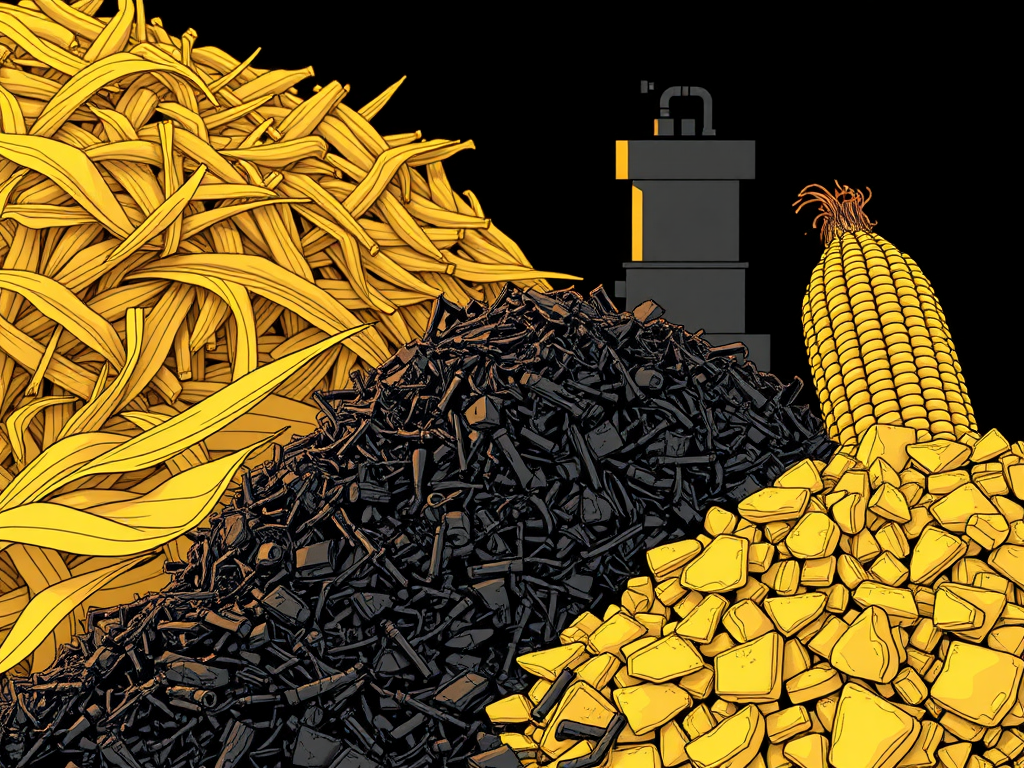
In the journal Energy 360, Nakum Divyangkumar and N.L. Panwar explore the optimization of biocharBiochar is a carbon-rich material created from biomass decomposition in low-oxygen conditions. It has important applications in environmental remediation, soil improvement, agriculture, carbon sequestration, energy storage, and sustainable materials, promoting efficiency and reducing waste in various contexts while addressing climate change challenges. More derived from sugarcane bagasse and corncob through vacuum pyrolysisPyrolysis is a thermochemical process that converts waste biomass into bio-char, bio-oil, and pyro-gas. It offers significant advantages in waste valorization, turning low-value materials into economically valuable resources. Its versatility allows for tailored products based on operational conditions, presenting itself as a cost-effective and efficient More. This research highlights biochar’s pivotal role in enhancing soil health and combating climate change by converting agricultural waste into a valuable resource. The study investigates how different pyrolysis temperatures affect biochar’s yield and properties, ultimately aiming to provide sustainable agricultural and environmental solutions.
The authors used a slow pyrolyzer to create biochar at three temperature ranges and conducted various characterization methods to analyze the biochar’s surface and elemental composition. The study found that higher pyrolysis temperatures led to a decrease in biochar yield. Specifically, biochar yield decreased from 30.21% to 25.4% for corncob and from 34.59% to 24.28% for sugarcane bagasse as the temperature increased from 500°C to 700°C. However, the biochar produced at higher temperatures exhibited an increased proportion of elemental carbon, from 43.9-45.2% in the original materials to 90-91% in the biochar. Sugarcane bagasse biochar had a higher maximum surface area compared to corncob biochar.
The research also demonstrated that biochar consistently showed increased potency compared to its original form. Optimal conditions for biochar production were identified using the response surface method. The study highlights the potential of converting agricultural residues like sugarcane bagasse and corncob into biochar, a carbon-rich material with numerous environmental and agronomic benefits. Biochar production through pyrolysis offers a sustainable waste management solution, improves soil fertility, sequesters carbon, and enhances water retention. The porous structure and high carbon content of biochar make it resistant to microbial decomposition and improve crop nutrient use efficiencyNutrient use efficiency refers to how effectively plants can take up and utilize nutrients from the soil. Biochar can improve nutrient use efficiency by enhancing nutrient availability and retention in the soil. More.
SOURCE : Divyangkumar, N., & Panwar, N. L. (2025). Optimizing high performance biochar from sugarcane bagasse and corncob via vacuum pyrolysis. Energy 360, 3, 100014.




Leave a Reply