
Key Takeaways
- Agave plant fibers improve the flexibility and crack resistance of concrete.
- BiocharBiochar is a carbon-rich material created from biomass decomposition in low-oxygen conditions. It has important applications in environmental remediation, soil improvement, agriculture, carbon sequestration, energy storage, and sustainable materials, promoting efficiency and reducing waste in various contexts while addressing climate change challenges. More made from organic waste increases the crushing strength of building materials.
- Specific chemical treatments on natural fibers are essential to ensure they bond well with cement.
- Small amounts of these bio-based additives can reduce the environmental carbon footprint of construction.
- Using waste materials in concrete supports a local economy and reduces industrial pollution.
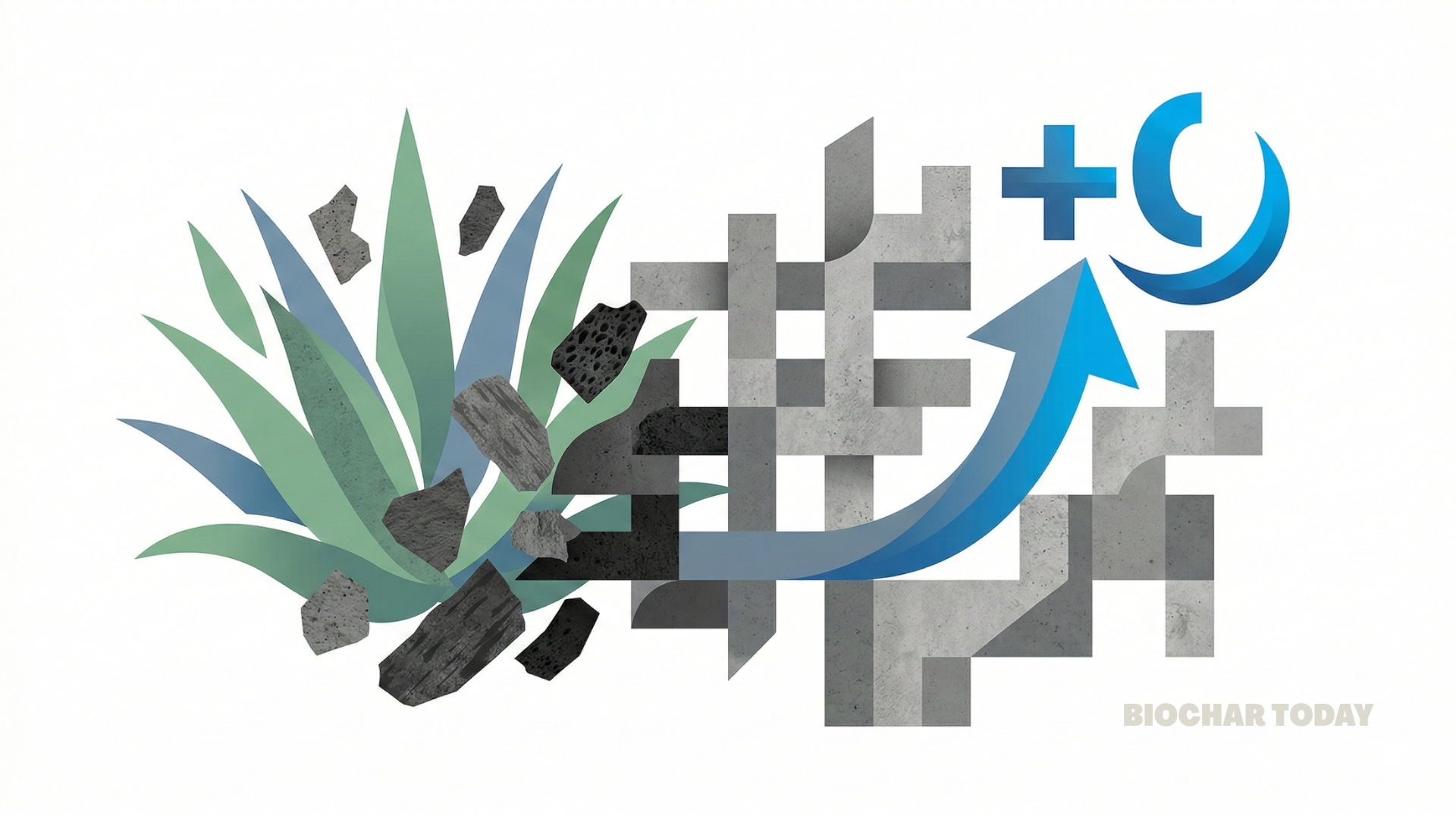
The construction industry is currently searching for ways to reduce its heavy environmental impact, as cement production alone accounts for a significant portion of global carbon dioxide emissions. A comprehensive review published in Advances in Materials Science and Engineering by Yazmin O. Linares González and colleagues explores how natural materials like agave fibers and biochar can serve as sustainable alternatives to traditional synthetic additives. By repurposing agricultural and forestry waste, engineers can create concrete that is not only eco-friendly but also stronger and more durable. The findings suggest that these biodegradable components can effectively improve the mechanical behavior of concrete when used in specific, optimized quantities.
Agave fibers, particularly those from the sisal and americana variants, act as a type of internal reinforcement. When these fibers are added to a concrete mix at a volume of 0.25 to 1.5 percent, they help the material resist breaking when bent or pulled. Specifically, studies showed that adding these fibers can lead to average increases of 20 to 40 percent in flexural strength and more than 30 percent in tensile strength. These improvements are most effective when the fibers are cut to lengths of about 25 millimeters. However, the researchers emphasize that these fibers must be treated before use. Soaking them in a mild sodium hydroxide solution or drying them at high temperatures removes natural waxes and impurities, allowing the cement to grip the fibers tightly and preventing them from rotting over time.
Biochar offers a different set of benefits by working at a microscopic level within the concrete. This charcoal-like substance is created by heating organic waste such as rice husks, coconut shells, or wood in a low-oxygen environment. When biochar is added to concrete at a range of 1 to 5 percent of the cement weight, it fills tiny pores and helps the cement hydrate more efficiently. This process has been shown to increase the compressive strength of the concrete by up to 25 percent. Beyond strength, biochar acts as a permanent carbon sink. For every kilogram of biochar used in a building, more than one kilogram of carbon dioxide can be effectively locked away for the life of the structure, helping to offset the emissions generated during construction.
While the results are promising, the study notes that these materials should currently be used primarily for nonstructural elements like paving blocks, prefabricated panels, and walkways. Because natural materials can vary in quality, standardized protocols for treating fibers and producing biochar are necessary before they can be used in major load-bearing columns or beams. The researchers conclude that integrating these bio-based materials represents a technically and ecologically viable path forward. By turning agricultural waste into high-performance construction resources, the industry can move toward a more circular economy while maintaining the structural integrity required for modern infrastructure.
Source: Linares González, Y. O., Sánchez Tizapa, S., Alonso Silverio, G. A., Salazar, R., & Altamirano de la Cruz, G. (2026). Systematic review of the improvement of the mechanical properties of concrete with agave fibers and biochar. Advances in Materials Science and Engineering, 2026, 5516901.



Leave a Reply