
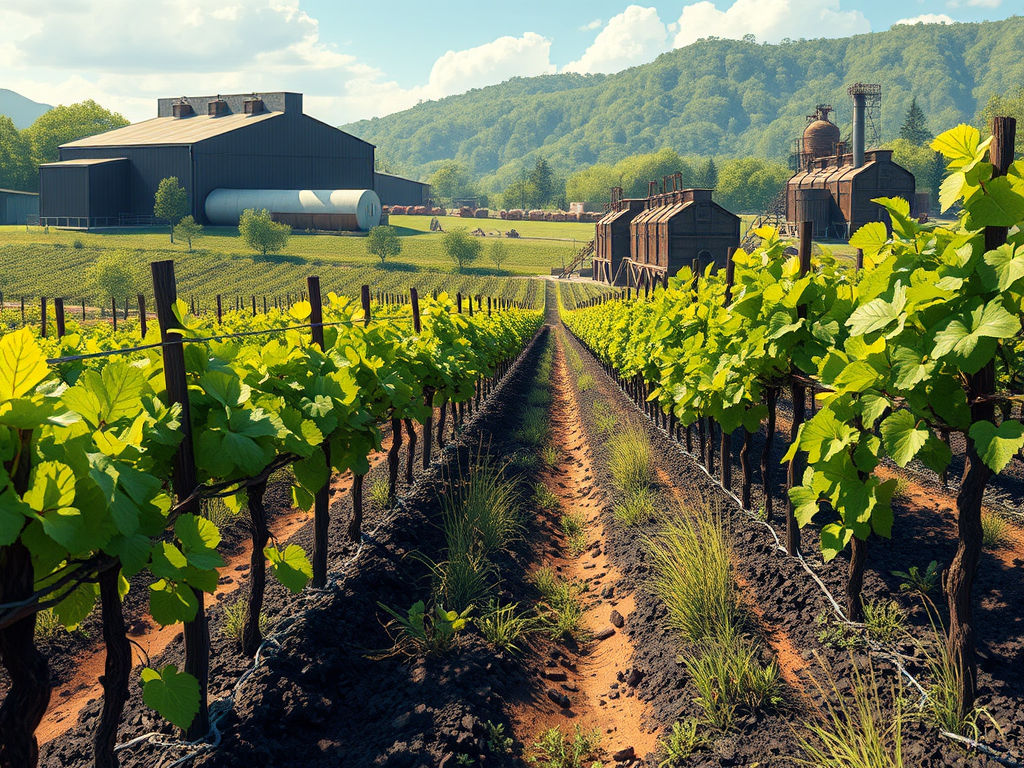
A 4 year biocharBiochar is a carbon-rich material created from biomass decomposition in low-oxygen conditions. It has important applications in environmental remediation, soil improvement, agriculture, carbon sequestration, energy storage, and sustainable materials, promoting efficiency and reducing waste in various contexts while addressing climate change challenges. More trial in Nova Scotia is exploring the potential of biochar, a charcoal-like substance, to transform local agriculture and contribute to significant climate action. The initiative, which is gaining momentum among scientists and businesses, centers on using biochar to improve soil health and sequester carbon. However, with $10,000 spent on 10 tonnes of biochar per hectare for the trial, there is still a large cost barrier for large scale uptake.
Research is being led by scientists like Vicky Lévesque from Agriculture and Agri-Food Canada, who is conducting this 4 year long trial on grapevines to measure the impact of biochar on soil biodiversity, water retention, and its long-term carbon-storing capabilities. This research is critical for providing a scientific basis for biochar’s effectiveness in the region’s specific agricultural context. According to Lévesque, the grape industry is reportedly facing problems with “soil compaction, nitrogen loss and also water retention”, which are all degradation characteristics that Biochar is thought to remedy.
Beyond the lab, the economic and societal potential of biochar is also being realized. BioBurn Pros, for example, are exploring the potential use of portable burners to convert vegetation from disaster preparedness and recovery efforts into biochar. This approach offers a practical way to manage debris while producing a useful soil amendmentA soil amendment is any material added to the soil to enhance its physical or chemical properties, improving its suitability for plant growth. Biochar is considered a soil amendment as it can improve soil structure, water retention, nutrient availability, and microbial activity. More. There is also recognised potential within Nova Scotia’s timber industry. With no offloader for saw mill waste since the closure of Northern Pulp, lumber residuals are either left to rot or burn. This logistical headache can become a substantial feedstockFeedstock refers to the raw organic material used to produce biochar. This can include a wide range of materials, such as wood chips, agricultural residues, and animal manure. More pipeline for biochar production. Companies like RDA Atlantic Inc. are at the forefront, working to establish large-scale biochar production facilities in the province.
This multi-faceted approach, combining scientific research, industrial development, and local application, positions Nova Scotia as a potential leader in harnessing biochar’s dual benefits for both soil revitalization and climate change mitigation. The ongoing work is not only poised to help local farmers, but also to establish a sustainable economic model for the future. There is still a lot to be done in the region before char can be produced at scale, but the foundations are there: a strong timber waste/forest residual supply feed, agricultural land in need of some amendments, and residents with a passion for the environment.
PRESS RELEASE: Can charred wood help Nova Scotia farmers — and the climate?





Leave a Reply