
Key Takeaways
- Modified biocharBiochar is a carbon-rich material created from biomass decomposition in low-oxygen conditions. It has important applications in environmental remediation, soil improvement, agriculture, carbon sequestration, energy storage, and sustainable materials, promoting efficiency and reducing waste in various contexts while addressing climate change challenges. More from agricultural waste significantly speeds up the early hardening process of concrete.
- Adding nitrogen to biochar creates a material that holds water better, providing a built-in internal watering system for stronger buildings.
- This advanced material reduces the natural shrinking of concrete by up to 50 percent, which helps prevent cracks from forming.
- Modified biochar acts as a sponge that actively pulls carbon dioxide from the air and traps it permanently inside the concrete structure.
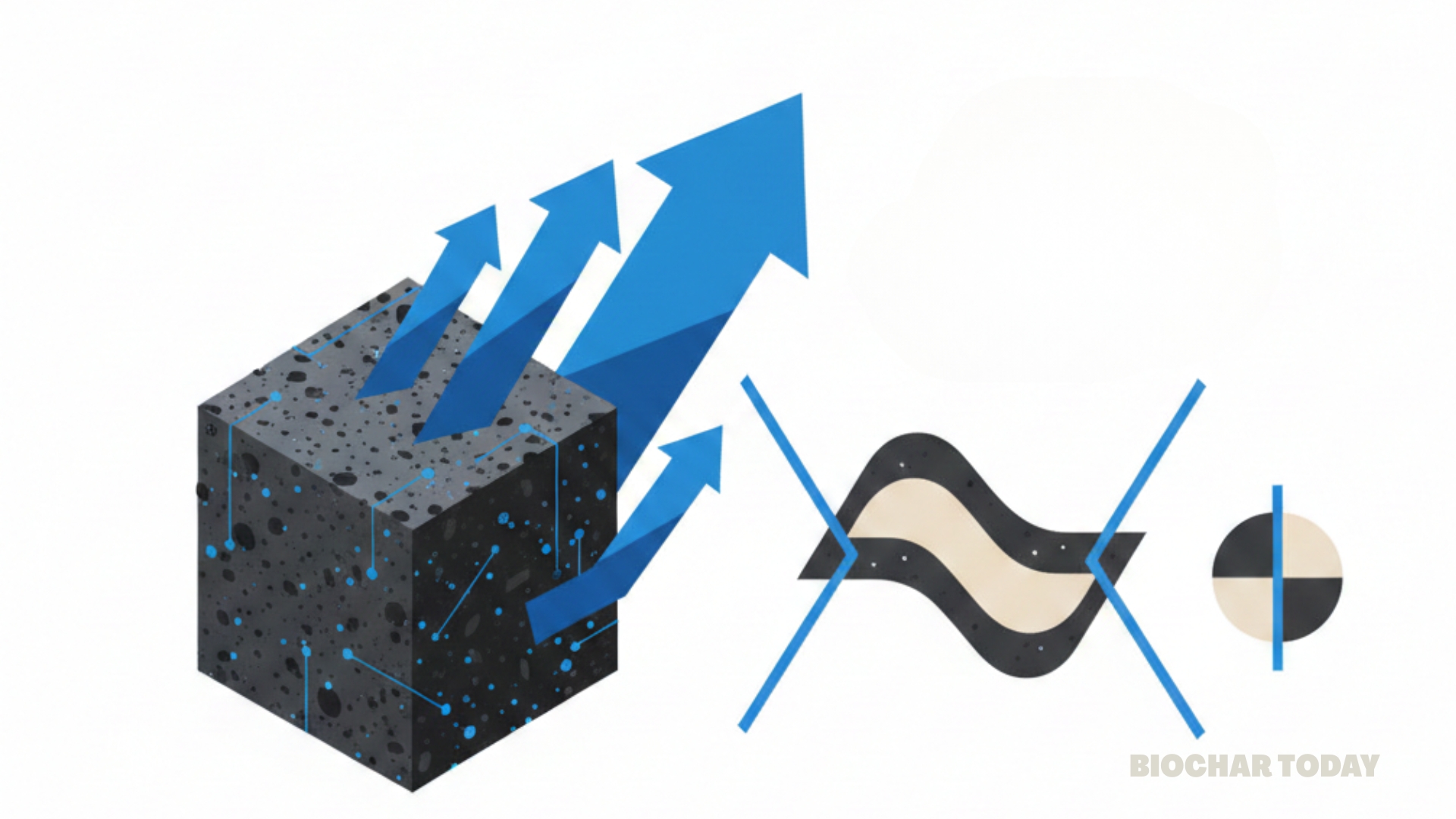
The global construction industry is currently searching for innovative ways to reduce its massive carbon footprint, and a new study published in Case Studies in Construction Materials by Wenjun Cui and colleagues suggests that nitrogen-modified biochar is a powerful tool for this mission. By taking bagasse, a common agricultural waste product, and treating it with nitrogen through a process called doping, the researchers created a high-performance additive that fundamentally changes how concrete cures and performs. This modified material possesses a specific surface area that is 17 times larger than standard biochar, providing a vast network of internal pores that act as a reservoir for water within the cement mix.
One of the most immediate benefits found in the research is a dramatic improvement in how quickly concrete gains its strength. In the first three days of curing, concrete containing this nitrogen-doped biochar showed an increase in compressive strength of approximately 27 percent compared to traditional cement mixtures. This acceleration happens because the nitrogenous functional groups on the biochar surface act as a chemical catalyst, drawing in calcium ions and sparking the hydration process earlier than usual. The study recorded that the peak of the chemical reaction responsible for hardening occurred about 1.5 hours earlier when the modified biochar was present.
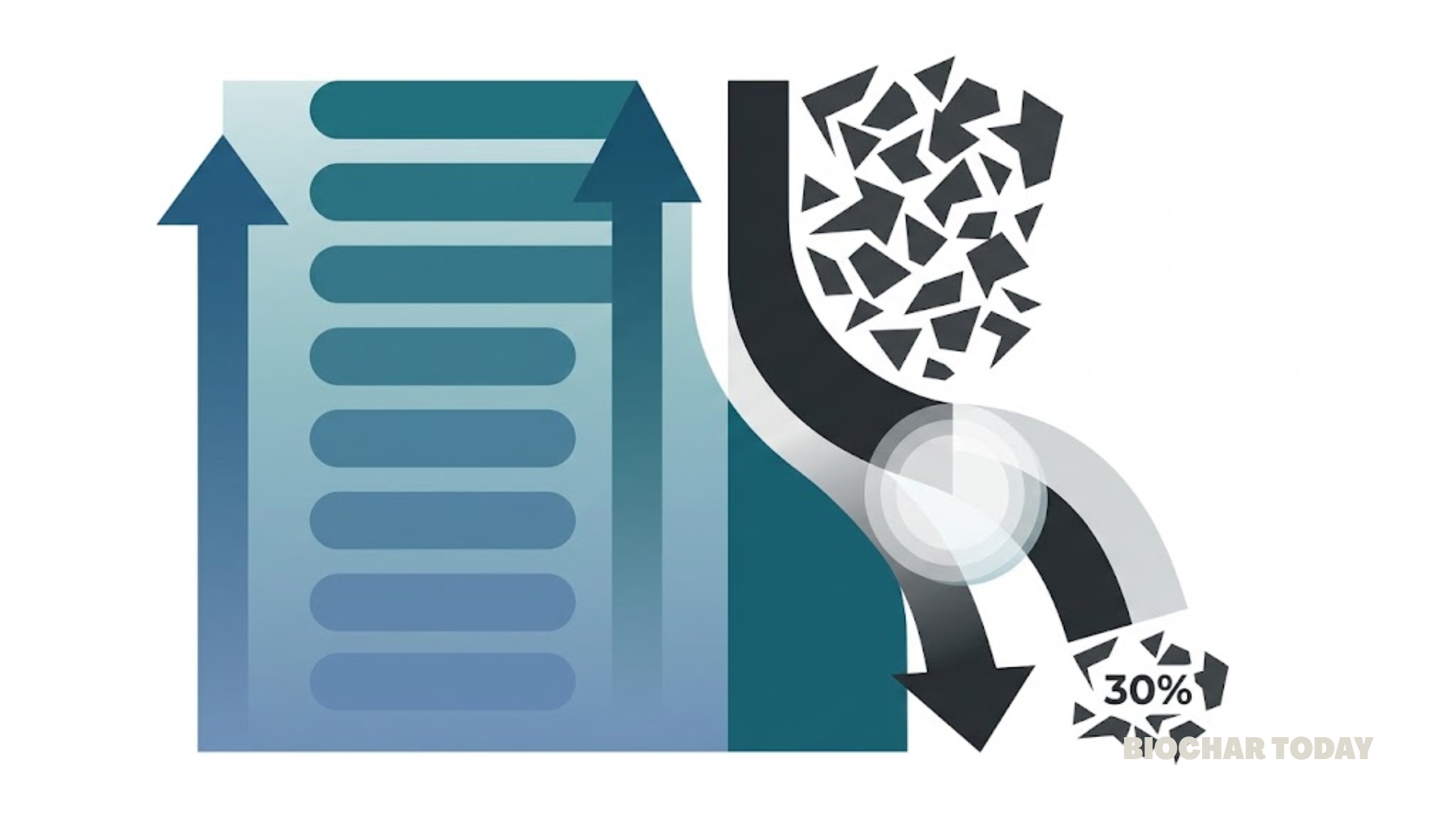
Beyond just gaining strength quickly, the material solves one of the most persistent problems in civil engineering: concrete shrinkage. As concrete dries and hardens, it naturally tends to contract, which often leads to internal stress and unsightly surface cracks. The nitrogen-doped biochar provides a superior internal curing effect by slowly releasing the water it has stored back into the surrounding cement. This process lowered the autogenous shrinkage rate by a staggering 50 percent compared to standard concrete and by 40 percent compared to concrete using unmodified biochar. This internal watering system ensures the concrete stays stable and dense throughout its early life.
The study also highlights a breakthrough in environmental performance through enhanced carbon sequestration. Concrete naturally absorbs some carbon dioxide over time, but the modified biochar acts as a catalyst that speeds up this transformation. The nitrogen groups on the biochar surface help dissolve carbon dioxide into the pore solution, where it quickly reacts with calcium to form stable limestone minerals trapped within the concrete walls. This means the building itself becomes a permanent storage site for greenhouse gases that would otherwise remain in the atmosphere.
Ultimately, the researchers demonstrated that by modifying a simple waste product with nitrogen, they could create a multi-functional additive that improves nearly every aspect of concrete performance. From faster construction timelines due to early strength gains to longer-lasting structures with fewer cracks and a significantly lower carbon footprint, this advanced biochar represents a major step toward a more sustainable and efficient building industry. By turning agricultural leftovers into a high-tech construction material, the study provides a practical roadmap for achieving net-zero emissions goals in the decades to come.
Source: Cui, W., Chen, T., Gao, X., & Liu, H. (2026). Utilization of nitrogen-doped biochar in concrete for carbon footprint reduction and performance improvement. Case Studies in Construction Materials, 24, e05814.




Leave a Reply