
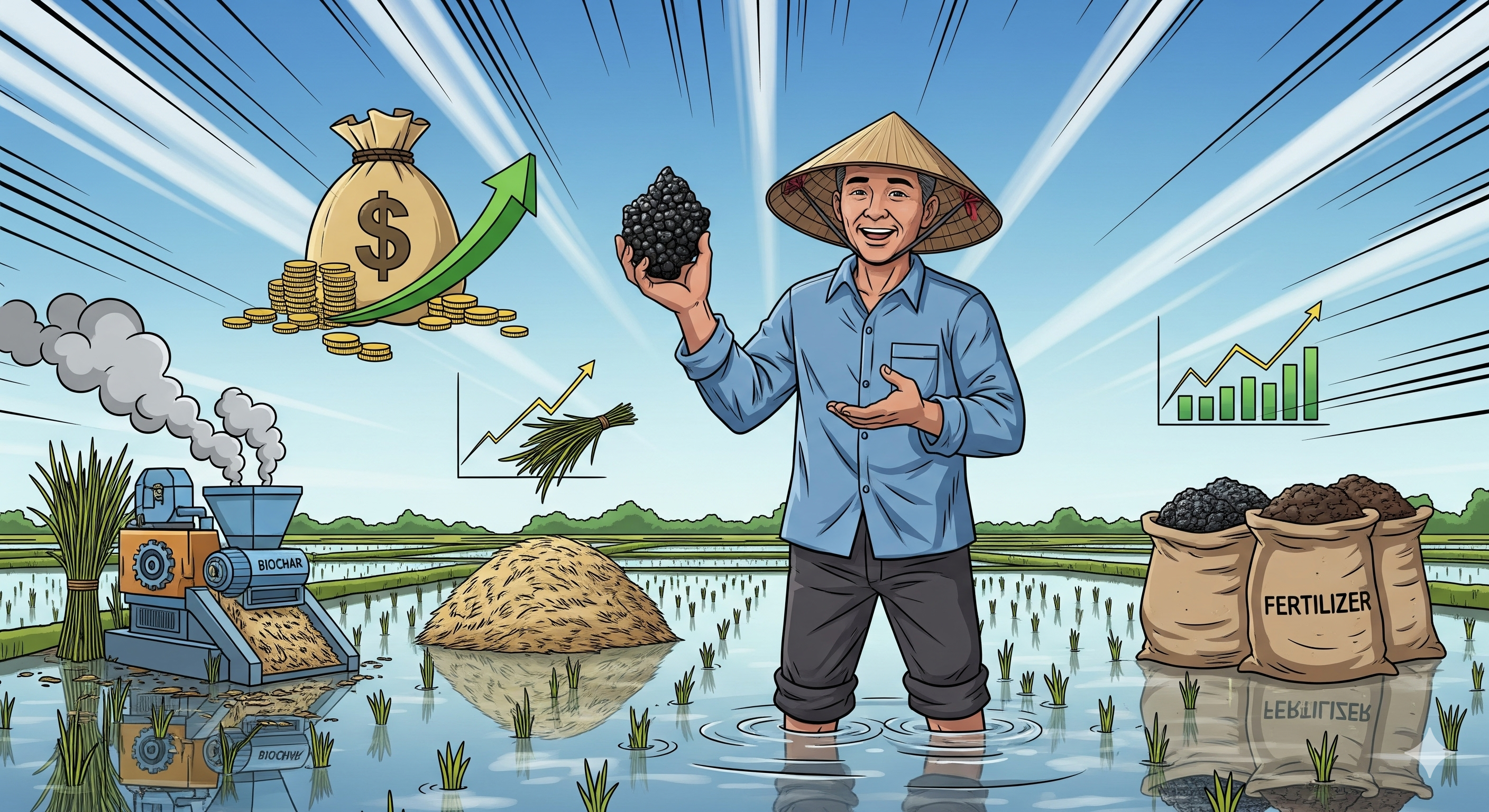
Vietnam is positioned to become a significant player in the voluntary carbon market through the production and sale of biocharBiochar is a carbon-rich material created from biomass decomposition in low-oxygen conditions. It has important applications in environmental remediation, soil improvement, agriculture, carbon sequestration, energy storage, and sustainable materials, promoting efficiency and reducing waste in various contexts while addressing climate change challenges. More carbon credits, a move that could generate billions of dollars in annual revenue. The country’s abundant agricultural by-products, such as rice straw and husks, which are often burned and contribute to significant greenhouse gas emissions, can be converted into a valuable resource. According to Mr. Do Quoc Thai, Chairman of the Board of Bamboo King Vina, the first Vietnamese enterprise to have its biochar carbon credits certified, this “black gold of the soil” is a powerful tool for carbon sequestration. Each tonne of biochar has the capacity to sequester 2.5 to 3 tonnes of CO2 equivalent, mitigating greenhouse gas emissions and reducing air pollution from the widespread practice of open-field burning.
While the potential is vast, unlocking it requires a clear national policy framework. Mr. Nguyen Dang Nghia, an agricultural expert, notes that if even a fraction of the country’s agricultural by-products were utilized for biochar, Vietnam could earn between $3 and $4 billion per year from carbon credits. Despite there being tens of thousands of biochar producers globally, only about 35 factories have received certification for their carbon credits, highlighting the importance of standardized processes.
The application of biochar is seen as a cornerstone of Vietnam’s transition to a low-carbon agricultural economy. By integrating biochar, the country can boost the export value of its agricultural products, labeling them as “carbon-neutral.” This provides a distinct competitive advantage in demanding markets like the EU, the US, and Japan, which are increasingly prioritizing sustainability and reduced carbon footprints in their supply chains. The successful development of a domestic biochar industry and a robust carbon credit market could therefore propel Vietnam’s agricultural sector to a new level of sustainability and economic prosperity.
SOURCE: Vietnam could earn billions of dollars each year from biochar carbon credits



Leave a Reply