
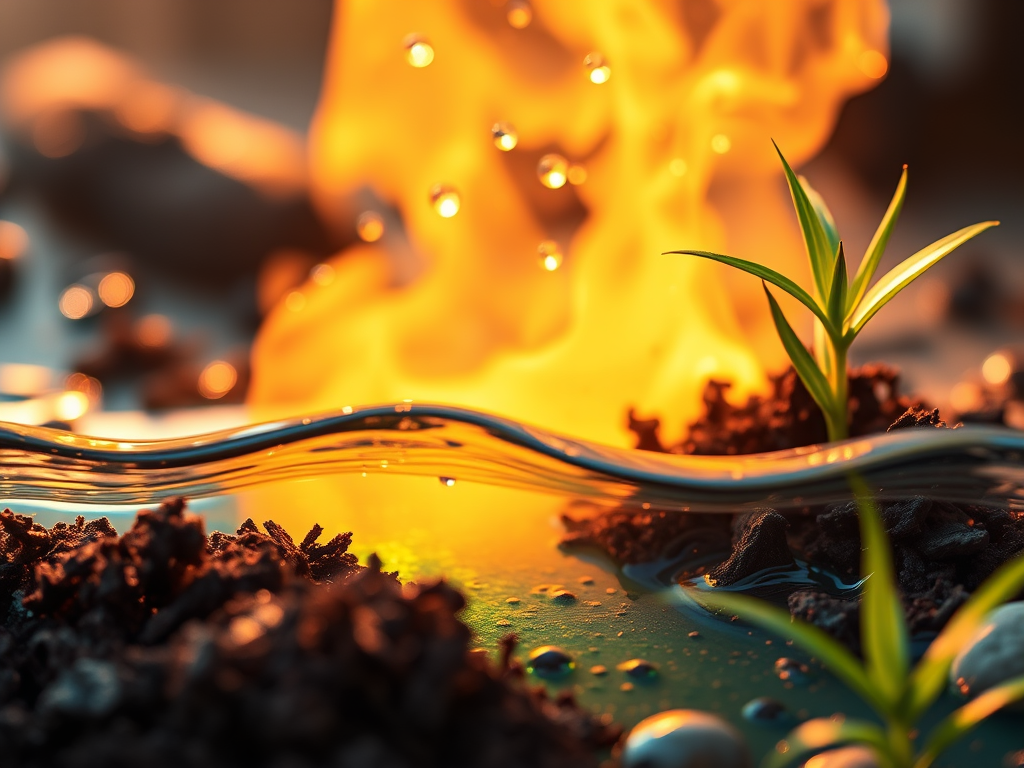
In a recent study published in ACS Sustainable Resource Management, Km Shelly and colleagues introduced an alternative and simpler method for carbonizing hydroxyl-rich biopolymers at low temperatures (100-150°C). This method involves directly heating a mixture of a biopolymer with N-bromosuccinimide (NBS) without a solvent. The carbonization process likely occurs due to the in situ-generated hydrogen bromide, which acts as a dehydrating and reducing/deoxygenating agent.
This method simplifies the carbonization of biomassBiomass is a complex biological organic or non-organic solid product derived from living or recently living organism and available naturally. Various types of wastes such as animal manure, waste paper, sludge and many industrial wastes are also treated as biomass because like natural biomass these More compared to pyrolysisPyrolysis is a thermochemical process that converts waste biomass into bio-char, bio-oil, and pyro-gas. It offers significant advantages in waste valorization, turning low-value materials into economically valuable resources. Its versatility allows for tailored products based on operational conditions, presenting itself as a cost-effective and efficient More, which requires high reaction temperatures, and hydrothermal carbonization, which uses water as a solvent and results in lower output, increased energy needs and costs, additional processing, and waste streams. The resulting biochars show strong potential for environmental remediation, with chitin-derived biocharBiochar is a carbon-rich material created from biomass decomposition in low-oxygen conditions. It has important applications in environmental remediation, soil improvement, agriculture, carbon sequestration, energy storage, and sustainable materials, promoting efficiency and reducing waste in various contexts while addressing climate change challenges. More achieving 98.13% removal of Rhodamine B from a 5 ppm aqueous solution within 1 hour.
This innovative method offers a promising avenue for converting waste materials into valuable resources like biochar, with significant applications in water remediation and environmental sustainability.
SOURCE: Shelly, K., Kartik, R., & Dhamodharan, R. (2025). Preparation of Biochar through Low-Temperature Carbonization of Hydroxyl-Rich Biopolymers Using N-Bromosuccinimide. ACS Sustainable Resource Management.


Leave a Reply