
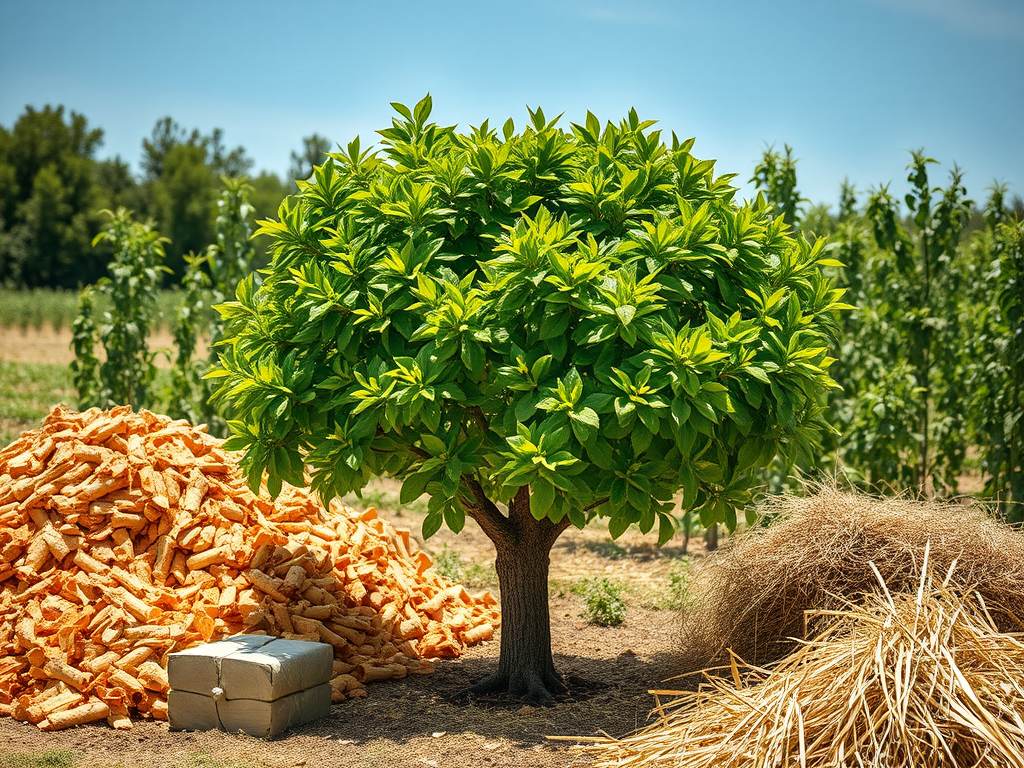
The push for a sustainable future has put a spotlight on renewable energy sources and waste valorization. Agricultural residues, often overlooked, are a plentiful source of biomassBiomass is a complex biological organic or non-organic solid product derived from living or recently living organism and available naturally. Various types of wastes such as animal manure, waste paper, sludge and many industrial wastes are also treated as biomass because like natural biomass these More that can be converted into biochar—a carbon-rich material with applications in soil amendmentA soil amendment is any material added to the soil to enhance its physical or chemical properties, improving its suitability for plant growth. Biochar is considered a soil amendment as it can improve soil structure, water retention, nutrient availability, and microbial activity. More, water treatment, and renewable energy. However, selecting the best biomass for this purpose is complex, requiring a method to weigh multiple factors simultaneously. A new study in Scientific Reports by Ayodeji Raphael Ige and his team addresses this challenge by using a multicriteria decision-making approach to identify optimal agricultural feedstocks for biocharBiochar is a carbon-rich material created from biomass decomposition in low-oxygen conditions. It has important applications in environmental remediation, soil improvement, agriculture, carbon sequestration, energy storage, and sustainable materials, promoting efficiency and reducing waste in various contexts while addressing climate change challenges. More production. Their findings not only provide a clear ranking but also confirm the superior thermal properties of the chosen biomass.
The researchers used a combined Fuzzy Analytical Hierarchy Process (FAHP) and Technique for Order of Preference by Similarity to Ideal Solution (TOPSIS) method to evaluate nine different types of agricultural biomass. These were categorized into wood residues, food waste, and crop residues. The team established a set of criteria, prioritizing high levels of lignin, carbon, and nitrogen as beneficial for biochar quality. Conversely, low levels of cellulose, hemicellulose, hydrogen, sulfur, and oxygen were considered beneficial, with reduced values being preferable for this purpose. Lignin, in particular, was highlighted as a key beneficial factor due to its role as the primary precursor for biochar, which significantly contributes to a higher yield and thermal stability.
The FAHP-TOPSIS model ranked the biomass samples, with Fraxinus excelsior from the wood residue category emerging as the top choice. It was selected alongside potato peels and wheat bran from food waste and triticale straw from crop residues. This ranking was supported by detailed proximate analyses, which showed Fraxinus excelsior to have the lowest moisture content (1.35%) and a high heating value of 20.24 MJ/kg, surpassing other samples. Low moisture content is crucial for pyrolysisPyrolysis is a thermochemical process that converts waste biomass into bio-char, bio-oil, and pyro-gas. It offers significant advantages in waste valorization, turning low-value materials into economically valuable resources. Its versatility allows for tailored products based on operational conditions, presenting itself as a cost-effective and efficient More efficiency, as high levels can reduce biochar yield and increase energy consumption. The study’s results also show that Fraxinus excelsior had a low volatile matterVolatile matter refers to the organic compounds that are released as gases during the pyrolysis process. These compounds can include methane, hydrogen, and carbon monoxide, which can be captured and used as fuel or further processed into other valuable products. More content of 76.87%, which is favorable for solid char production over bio-oil.
Further analysis using Fourier Transform Infrared Spectroscopy (FTIR) confirmed the chemical composition of the selected biomass. The FTIR spectrum for Fraxinus excelsior was consistent with its high carbon (46.77%) and low oxygen (45.42%) content, reflecting its strong lignocellulosic structure. The presence of aromatic ring vibrations in the spectrum confirmed a high lignin content, which is a key indicator for stable biochar. The team also performed Thermogravimetric Analysis (TGA) on the top-ranked materials to validate their biochar production potential. The TGA results showed that a combination of Fraxinus excelsior and Triticale straw exhibited the most favorable thermal behavior. This blend achieved the highest residual mass of 29.26% at 760.5°C. This exceptional char yield is primarily due to the substantial lignin content in Fraxinus excelsior, whose complex, cross-linked structure enhances thermal stability.
The study’s methodology offers a robust and adaptable framework for selecting biomass for various applications, including energy generation, soil amendment, and water treatment. By systematically integrating multiple criteria and validating the results with advanced analytical techniques, the researchers provide valuable insights into optimizing biochar production for sustainability and a circular economy. The findings underscore the importance of choosing biomass with high lignin and carbon content to produce high-quality, stable biochar that can effectively contribute to environmental management and resource efficiency.
Source: Ige, A. R., Łaska, G., Świderski, G., & Zając, G. (2025). Optimizing agricultural biomass selection for biochar production using multicriteria decision-making. Scientific Reports, 15(29140).





Leave a Reply