
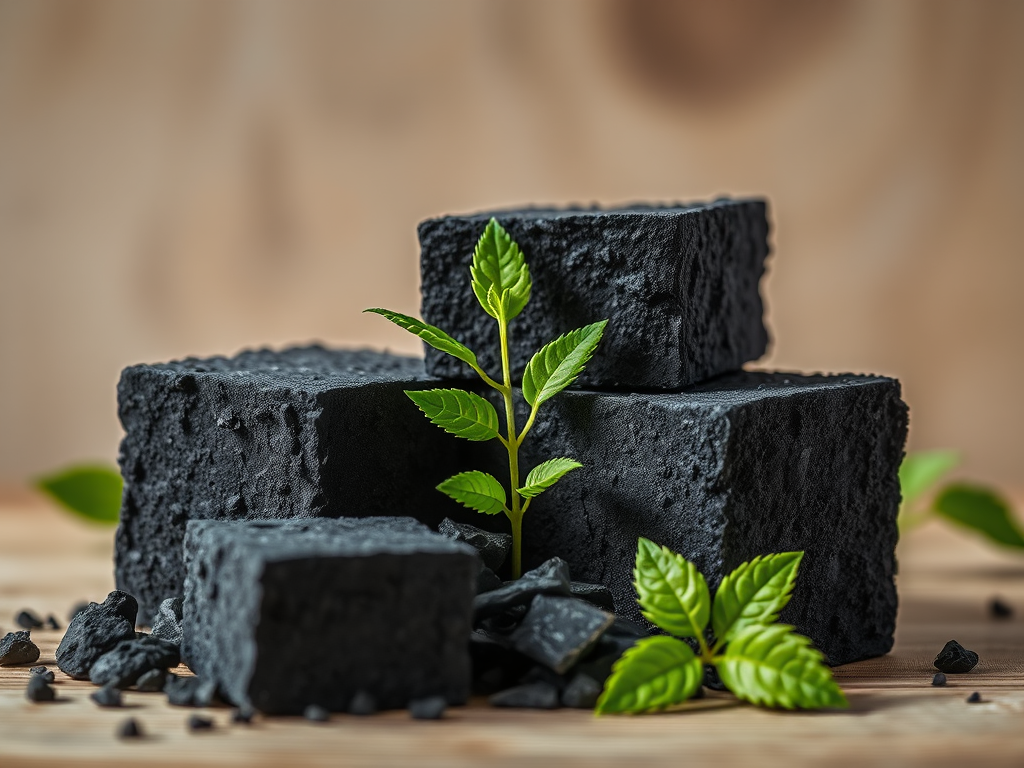
Can a humble plant-based material help fight climate change? A recent study published in Nature’s Scientific Reports explores how cellulose, the primary component of plant biomassBiomass is a complex biological organic or non-organic solid product derived from living or recently living organism and available naturally. Various types of wastes such as animal manure, waste paper, sludge and many industrial wastes are also treated as biomass because like natural biomass these More, can be transformed into biochar—a promising material for CO₂ separation and gas purification technologies.
Think of biocharBiochar is a carbon-rich material created from biomass decomposition in low-oxygen conditions. It has important applications in environmental remediation, soil improvement, agriculture, carbon sequestration, energy storage, and sustainable materials, promoting efficiency and reducing waste in various contexts while addressing climate change challenges. More as a magical sponge made from plants. Scientists created different versions of this sponge by heating cellulose under controlled conditions, then tested how well they could “soak up” gases like carbon dioxide (CO₂), methane (CH₄), and nitrogen (N₂). They found that some versions of biochar, particularly those with a density of 0.351 g/cm³, were excellent at capturing CO₂ while leaving other gases behind.
But there’s a twist: water vapor can sometimes mess up the process by taking over the sponge’s active spots. This means that while biochar works great in dry conditions, its performance might drop when there’s humidity in the air—a common challenge in real-world scenarios. This research doesn’t just stop at “biochar is good.” Scientists used advanced techniques to understand why it works. They looked at how energy and forces between the gases and biochar interact, giving us clues on how to make even better sponges in the future. This means that researchers are one step closer to creating cost-effective, plant-based solutions to capture CO₂ from the air and industrial emissions. Imagine turning waste plant material into a weapon against climate change—that’s the power of biochar.
Our Take
At Biochar Today, we see this as a break through. This study highlights the untapped potential of cellulose-based biochars in mitigating climate change. With further optimization, these materials could revolutionize gas purification and carbon capture technologies.
Behnoush Barzegar & Farzaneh Feyzi. (2025). Designing cellulose based biochars for CO2 separation using molecular simulations. Scientific Reports. 10.1038/s41598-025-86254-x





Leave a Reply