

Key Takeaways
- Scientists have found that changing the surface of biocharBiochar is a carbon-rich material created from biomass decomposition in low-oxygen conditions. It has important applications in environmental remediation, soil improvement, agriculture, carbon sequestration, energy storage, and sustainable materials, promoting efficiency and reducing waste in various contexts while addressing climate change challenges. More can significantly improve its ability to trap and remove tiny plastic particles from water.
- Modified versions of biochar are much more effective than plain versions, sometimes holding over twenty times more plastic waste.
- This material is a much cheaper and more sustainable alternative to expensive filters currently used in large-scale water treatment.
- Using magnets to pull the plastic-filled biochar out of the water makes the cleaning process faster and allows the material to be used multiple times.
- While laboratory results are excellent, more work is needed to see how these filters perform in complicated real-world environments like oceans and soils.
The increasing prevalence of microplastics and nanoplastics in our global water systems has created an urgent need for sustainable and cost-effective cleanup technologies. A recent review published in the journal Water Research X by authors Muhammad Junaid, Stuart Cairns, Iain Robertson, and Peter J. Holliman explores how biochar can serve as a powerful tool in this fight. The study highlights that biochar is not only environmentally friendly but also remarkably efficient at capturing these persistent plastic pollutants. By comparing different types of biochar, the researchers have identified specific modifications that allow the material to perform at much higher levels than previously thought possible.
The core finding of the research is the dramatic difference in performance between pristine biochar and versions that have been chemically or physically modified. While standard biochar has long been known for its filtration properties, its surface area and ability to hold onto plastics are relatively limited. The data analysis showed that modified biochar features a surface area reaching up to nearly 898 square meters per gram, which is substantially higher than the maximum of 540 square meters per gram found in unmodified samples. This increased surface area directly translates to more room for plastic particles to attach, leading to an adsorption capacity that can reach over 1700 milligrams of plastic for every gram of biochar used. In contrast, the best performing pristine biochar topped out at just over 80 milligrams per gram.
One of the most effective modifications discussed is the creation of magnetic biochar. By incorporating iron-containing particles into the carbon structure, scientists have solved one of the biggest logistical hurdles in water treatment: recovering the filter material once it is saturated with pollutants. Magnetic biochar can be quickly pulled from a liquid using magnets, which is much more efficient than traditional settling or filtration methods. Furthermore, these magnetic versions often display better removal efficiencies, frequently hitting between 90 and 99 percent in laboratory tests. This makes the technology particularly attractive for treating large volumes of water where speed and material recovery are essential for keeping costs low.
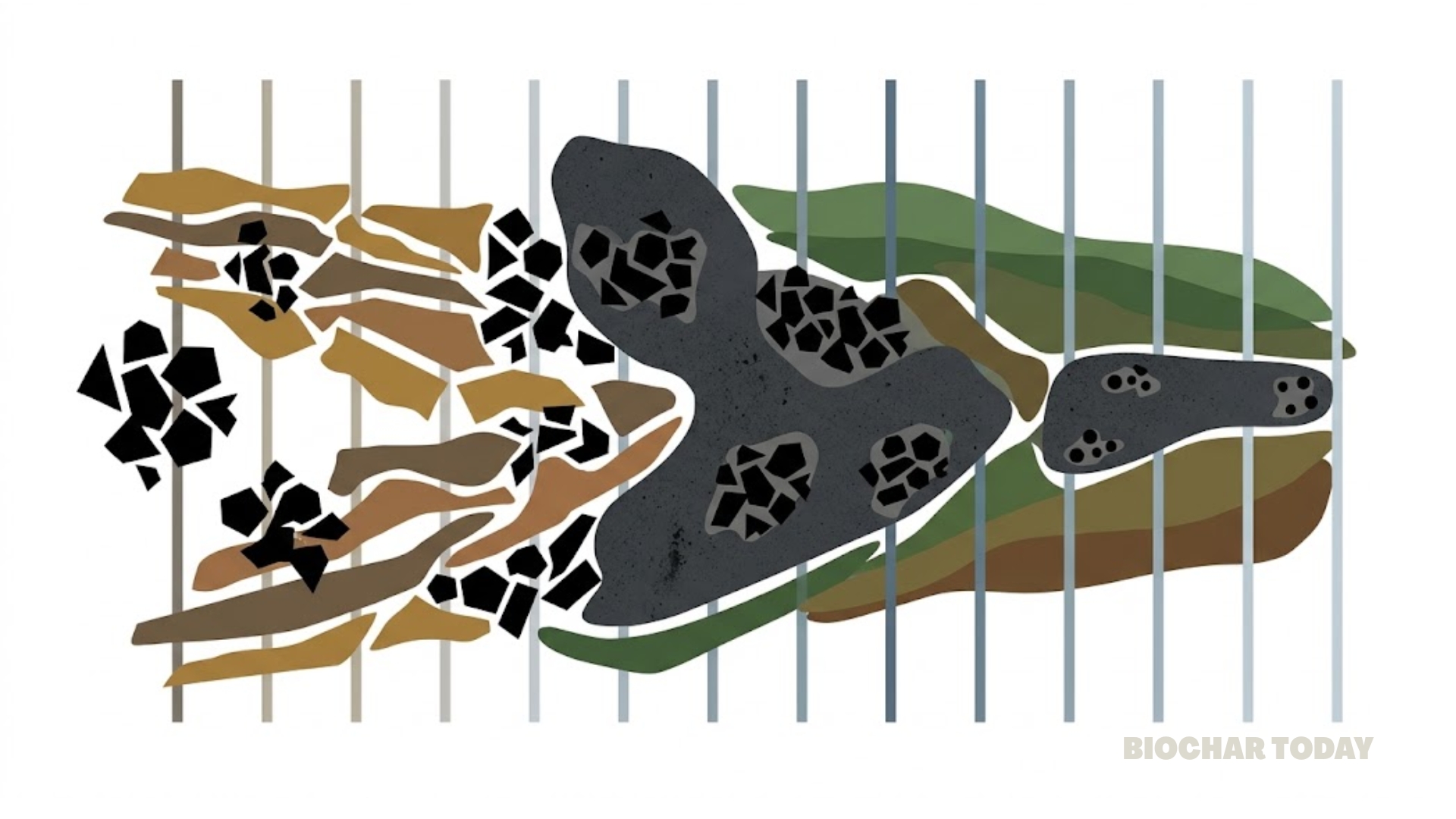
The study also delves into the various ways biochar actually traps plastic. It is not a simple mechanical filter; instead, it uses a combination of complex interactions. These include pore-filling, where tiny nanoplastics settle into the microscopic holes of the biochar, and electrostatic attraction, where the charges on the biochar surface pull in oppositely charged plastic bits. Other forces like hydrogen bonding and hydrophobic interactions also play key roles, essentially “gluing” the plastic to the carbon. The researchers noted that the effectiveness of these mechanisms often depends on the size and shape of the plastic particles. Larger microplastics are frequently caught through physical trapping and entanglement in the biochar’s rough grooves, while smaller nanoplastics rely more on chemical bonding.
Beyond mere removal, the research emphasizes the sustainability of using biochar through regeneration. Because biochar is relatively stable, it can often be cleaned and reused for several cycles. Techniques such as heating the material to high temperatures or using ultrasonic waves can break down the captured plastics, essentially emptying the biochar so it can go back into the water for another round of cleaning. The study found that some modified biochars could be reused for five to seven cycles while losing less than 30 percent of their original efficiency. This longevity, combined with a production cost that is roughly one-sixth that of commercial activated carbonActivated carbon is a form of carbon that has been processed to create a vast network of tiny pores, increasing its surface area significantly. This extensive surface area makes activated carbon exceptionally effective at trapping and holding impurities, like a molecular sponge. It is commonly More, positions biochar as a leading candidate for large-scale environmental rehabilitation.
Despite these promising results, the authors point out that most current research relies on pristine laboratory samples that do not always mimic the complexity of nature. In real-world environments like rivers or wastewater plants, other substances such as dissolved organic matter and various salts can interfere with the biochar’s ability to grab plastic. Some studies showed that removal efficiency could drop significantly when these natural impurities were present. This highlights the necessity for moving research out of the lab and into the field. Developing biochar that can specifically target mixed types of plastics—including common varieties like polyethylene and polypropylene rather than just the frequently studied polystyrene—is the next major frontier for the industry.
Ultimately, the study confirms that modified biochar is a rational and often superior alternative to both conventional and advanced water treatment methods. Its ability to be engineered for specific types of pollution, combined with its low cost and high capacity for reuse, offers a legitimate pathway for cleaning up the millions of tons of plastic waste currently circulating in the environment. By utilizing regional agricultural waste to produce these high-performance materials, society can address waste management and water pollution simultaneously, moving toward a more circular and sustainable economy.
Source: Junaid, M., Cairns, S., Robertson, I., & Holliman, P. J. (2026). Pristine and modified biochar comparison for environmental micro(nano)plastic removal: adsorption dynamics, influencing factors, mechanisms, and regeneration potential. Water Research X, 100527.


Leave a Reply