
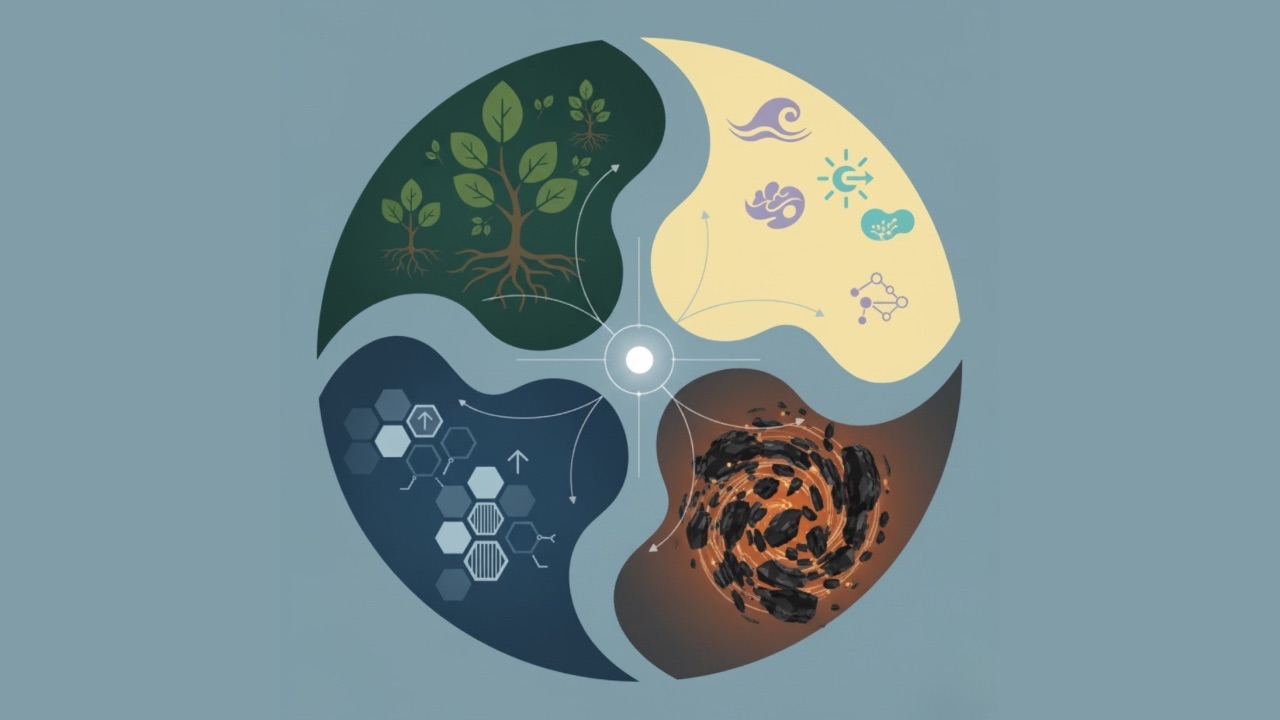
The Major Key Takeaways
- Not all carbon offsets are equal; planting a tree (high-risk, low-permanence) is not the same as storing CO2 underground (low-risk, high-permanence).
- High-risk storage projects, like forestry or biocharBiochar is a carbon-rich material created from biomass decomposition in low-oxygen conditions. It has important applications in environmental remediation, soil improvement, agriculture, carbon sequestration, energy storage, and sustainable materials, promoting efficiency and reducing waste in various contexts while addressing climate change challenges. More, cannot stabilize global temperatures on their own because the stored CO2 eventually leaks back into the atmosphere.
- We can use riskier, nature-based projects if we bundle them into “portfolios” and remove more CO2 than we claim as an offset, creating a buffer to cover future leakage.
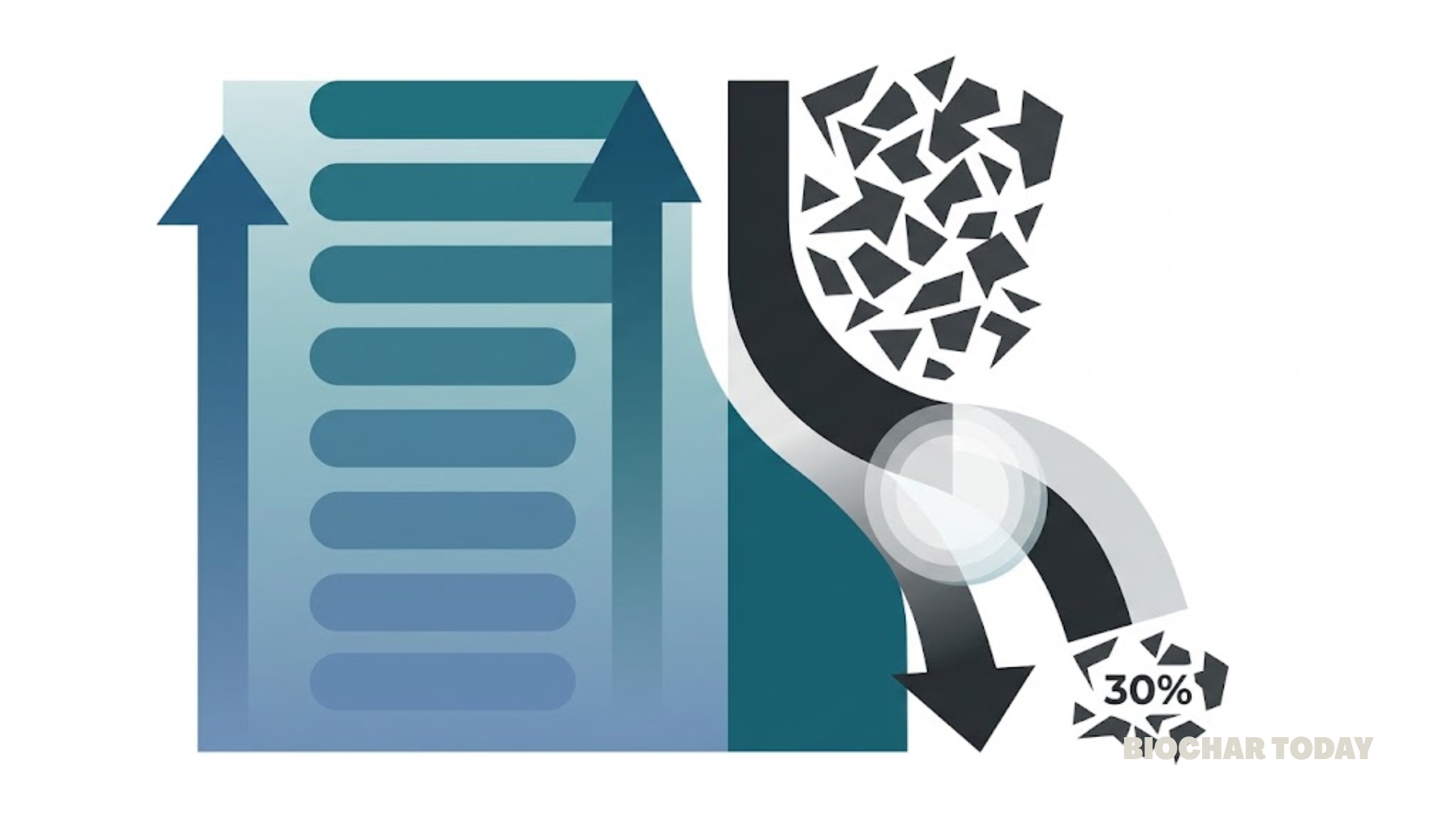
- A moderate-risk, forestry-based portfolio can be effective long-term if it removes about 30% extra CO2 (storing 1.3 tonnes for every 1 tonne offset).
- Extremely high-risk projects (like forests that burn and don’t regrow) are impractical, sometimes requiring 900% (9 tonnes) of extra removal to be effective.
As companies and countries race to meet “net-zero” goals, they are investing billions in carbon dioxide removal (CDR) projects. But a crucial question often gets glossed over: are all carbon offsets created equal? Is planting a tree, which can burn down in a wildfire, the same as injecting CO2 deep underground, where it turns to stone? A new study in the journal Joule by Conor Hickey, Stuart Jenkins, and Myles Allen argues that they are not, but that we can still use riskier options effectively—if we manage them in smart “portfolios”.
The core problem is permanence. Engineered solutions, like direct air capture with geological storage, lock away CO2 for millennia but are currently expensive and scarce. Natural climate solutions, like forestry, are more available and affordable but face “reversal risks.” A forest planted to offset emissions can be destroyed by fires, droughts, or land-use changes, releasing all that stored carbon back into the atmosphere. The study shows that portfolios relying heavily on these high-risk storage types, when used alone, simply cannot stabilize global temperatures over the long term. Even a mixed portfolio fails if it only offsets one tonne of CO2 for every one tonne emitted, as the inevitable leakage means the planet still warms.
The authors propose a solution: the “risk-adjusted portfolio,” which works like an insurance buffer pool. Instead of storing 1 tonne of CO2 to offset 1 tonne of emissions, the portfolio is designed to store extra CO2 from the start. This “collective buffer” compensates for future, expected leakage from the riskier parts of the portfolio. The goal is to ensure that the net amount of CO2 removed from the atmosphere stays above a safe threshold, one that has a negligible impact on global temperature over centuries. The study tested this model by setting a stringent leakage threshold: no more than 5% of the total stored CO2 could leak back out over a 1,000-year period.
So, how much extra CO2 is needed? The results provide a practical guide. For a portfolio that is “primarily geological” (80% geological storage), only a small extra buffer of 6-10% is needed to meet the 1,000-year goal. More importantly, a “moderate-risk” portfolio, even one still dominated by forestry (80% forestry, 10% biochar, 10% geological), can be effective. This portfolio would need to remove 30% extra CO2 (storing 1.30 tonnes for every 1 tonne offset sold), assuming the forests are managed for regrowth after a fire. A “balanced” portfolio (split evenly between the three types) needs a 45-69% buffer.
This approach has its limits. The study warns that “high-risk” portfolios, like forests planted in high-fire areas with no plan for regrowth, are ineffective. To make these projects viable, they would require impractically large buffers—in some cases, 900% (9 tonnes) or more of extra removal. For most moderate portfolios, however, the authors note that a 1-to-1 buffer (storing 2 tonnes per offset) would be sufficient. This research provides a data-driven path for carbon markets, showing that we can use temporary, nature-based storage, but only if we stop pretending it’s the same as permanent storage and properly account for the risk by removing more.
Source: Hickey, C., Jenkins, S., & Allen, M. (2025). Carbon storage portfolios for the transition to net zero. Joule, 9, 102164.




Leave a Reply