
Key Takeaways
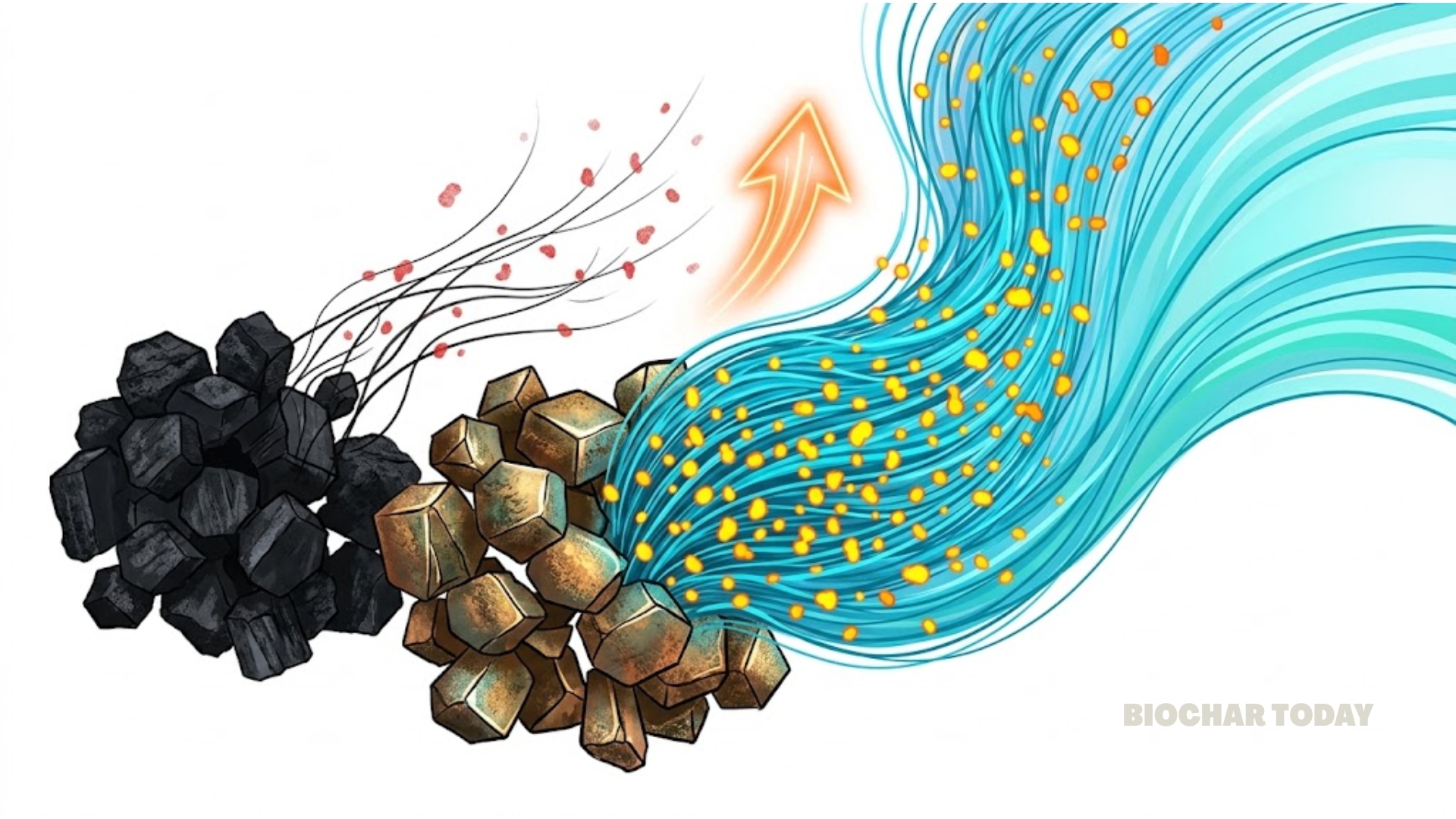
- Adding biocharBiochar is a carbon-rich material created from biomass decomposition in low-oxygen conditions. It has important applications in environmental remediation, soil improvement, agriculture, carbon sequestration, energy storage, and sustainable materials, promoting efficiency and reducing waste in various contexts while addressing climate change challenges. More to fields helps store more carbon from dead microorganisms in the top layer of soil.
- The positive effects of biochar on soil carbon storage actually get stronger over ten years after it is first applied.
- While the top layer of soil improves, the deeper soil underneath loses some of its stored microbial carbon.
- Fungi play a bigger role than bacteria in building up this stable soil carbon when biochar is present.
- Biochar works best for increasing carbon in soils that are naturally sandy or currently low in organic matter.
The study, published in the journal Biochar by Kaiyue Song and colleagues, investigates how long-term biochar application influences the storage of microbial necromass carbon across different soil depths. Microbial necromass carbon consists of the remains of dead bacteria and fungi, which are now recognized as the primary building blocks of stable organic matter in the ground. While many previous experiments on biochar have lasted only a few months or years, this research provides a rare look at the twelve-year legacy of a single biochar application in two distinct types of agricultural land in China. The researchers examined a carbon-rich soil and a carbon-poor soil to determine if the benefits of biochar are universal or dependent on the initial health of the land.
The findings demonstrate a striking contrast between the upper and lower layers of the soil profile. In the topsoil, where the biochar was originally mixed, there was a substantial increase in the accumulation of dead microbial remains. This was particularly evident in the carbon-poor soil, where the total necromass carbon rose by thirty-nine percent. This increase was largely driven by a boost in fungal remains rather than bacterial ones. The researchers suggest that the porous structure of biochar provides a protective habitat and a better supply of nutrients like nitrogen and phosphorus, which encourages microorganisms to grow and eventually leave behind stable carbon when they die. Furthermore, biochar appears to make the soil community more efficient, meaning microbes spend less energy on basic survival and more on building biomassBiomass is a complex biological organic or non-organic solid product derived from living or recently living organism and available naturally. Various types of wastes such as animal manure, waste paper, sludge and many industrial wastes are also treated as biomass because like natural biomass these More.
However, the results for the subsoil, located twenty to forty centimeters below the surface, tell a different story. In both types of soil studied, the amount of microbial carbon in the deeper layer actually decreased after the biochar treatment. This suggests that while biochar is excellent at trapping nutrients in the topsoil, it may inadvertently starve the deeper layers of the nutrients they need to maintain their own carbon stocks. Without enough nitrogen moving down from the surface, subsoil microbes may begin to mine the existing organic matter for nutrients, leading to a loss of stored carbon. This highlights a potential trade-off in soil management that has been largely overlooked in shorter-term studies focusing only on the surface.
To see if these results held true on a broader scale, the team also conducted a global analysis of twenty-three different studies. This larger review confirmed that biochar typically increases topsoil microbial carbon by an average of about ten percent globally. The analysis revealed that the benefits of biochar are most pronounced in sandy soils, which often struggle with water and nutrient retention. It also showed that the accumulation of this microbial carbon is a slow process that peaks around a decade after the biochar is first added. This indicates that biochar is a viable tool for long-term climate change mitigation, but its implementation must consider the entire soil depth to avoid depleting carbon in the deep earth.
Source: Song, K., Liu, Z., Ma, R., Yi, Q., Zheng, J., Bian, R., Cheng, K., Xia, S., Liu, X., Zhang, X., & Li, L. (2026). Depth-dependent microbial necromass carbon accumulation responses to long-term biochar amendment in croplands. Biochar, 8(78).



Leave a Reply