
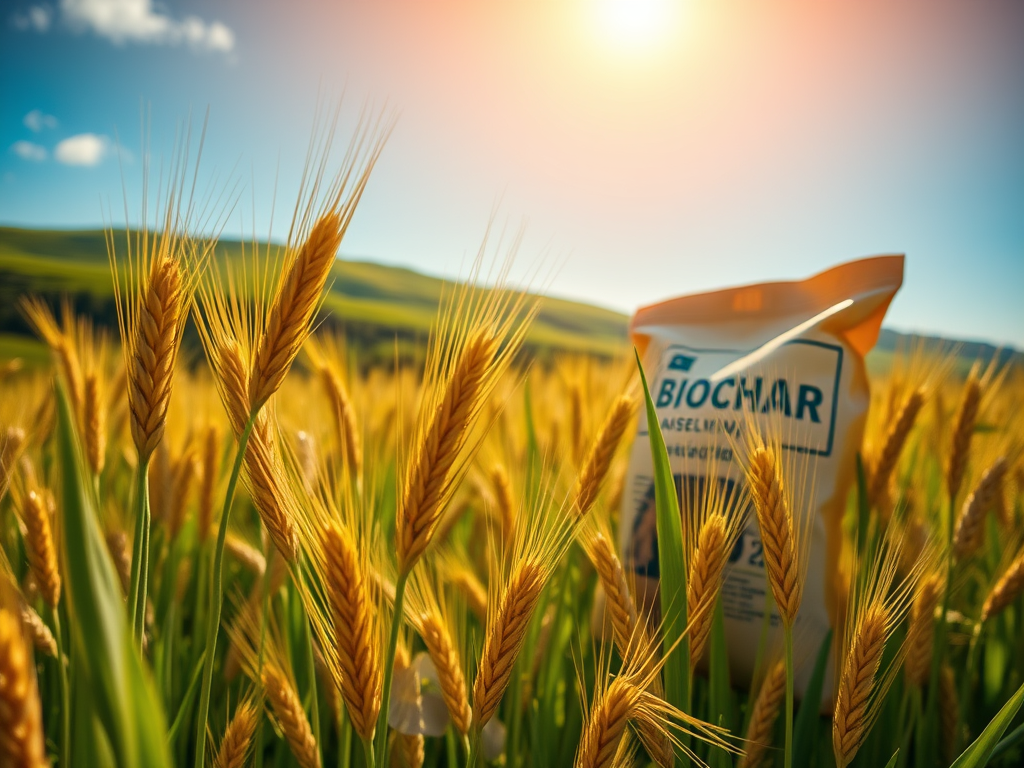
In a significant stride towards sustainable agriculture, a study published in Scientific Reports by Ghulam Murtaza, Najmaldin Ezaldin Hassan, and their colleagues, investigates a dual approach to combat lead (Pb) pollution and salinity in agricultural soils: the combined application of Broussonetia papyrifera-derived biocharBiochar is a carbon-rich material created from biomass decomposition in low-oxygen conditions. It has important applications in environmental remediation, soil improvement, agriculture, carbon sequestration, energy storage, and sustainable materials, promoting efficiency and reducing waste in various contexts while addressing climate change challenges. More (BP-BC) and selenium nanoparticles (SeNPs). This research addresses a critical global concern, as approximately 17% of the world’s croplands, or 242 million hectares, are affected by toxic heavy metals like lead. Such contamination severely impacts plant health and crop yield, posing substantial threats to food security and public health.
The study’s field trials in Pb-polluted saline soils revealed remarkable improvements in soil physicochemical properties and barley plant performance. The application of BP-BC alone significantly reduced soil pHpH is a measure of how acidic or alkaline a substance is. A pH of 7 is neutral, while lower pH values indicate acidity and higher values indicate alkalinity. Biochars are normally alkaline and can influence soil pH, often increasing it, which can be beneficial More by 5.98% and exchangeable sodium percentage (ESP) by 29.71% compared to the control group. Furthermore, BP-BC enhanced microbial biomassBiomass is a complex biological organic or non-organic solid product derived from living or recently living organism and available naturally. Various types of wastes such as animal manure, waste paper, sludge and many industrial wastes are also treated as biomass because like natural biomass these More by 149.11%. SeNPs, when applied individually at 20 mg L−1, reduced lead accumulation in barley shoots by 60.39% and in seeds by 49.40%.
The synergistic effect of BP-BC and SeNPs was even more impressive. The combined treatment led to a substantial reduction in lead buildup in barley shoots by 73.88% and in seeds by 59.89%. This powerful combination also significantly increased the activity of antioxidant enzymes, with ascorbate peroxidase (APX) rising by 55.21% and catalase (CAT) by 36.30%. These enzymatic boosts indicate an enhanced ability of the barley plants to counter the oxidative stress induced by lead and salinity.
Beyond mitigating toxicity, the combined application profoundly impacted barley yield. The yield of barley grain increased by 39.11% with sole BP-BC application and by a remarkable 80.20% with the combination treatment of SeNPs and BP-BC. This highlights the efficacy of this approach as an environmentally sustainable soil amendmentA soil amendment is any material added to the soil to enhance its physical or chemical properties, improving its suitability for plant growth. Biochar is considered a soil amendment as it can improve soil structure, water retention, nutrient availability, and microbial activity. More for contaminated agricultural lands. The researchers noted that while individual applications showed benefits, the integrated use of BP-BC and SeNPs resulted in optimal enhancements of both soil characteristics and plant performance. For instance, the combined use of BP-BC at 10 t ha−1 and SeNPs at 10 mg L−1 resulted in a 170.59% increase in microbial biomass.
The improved soil health can be attributed to several factors. Biochar enhances soil structure, water retention, and aeration, while SeNPs stimulate beneficial microbial growth and enzyme activity. The porous structure of biochar adsorbs and retains nutrients, reducing leachingLeaching is the process where nutrients are dissolved and carried away from the soil by water. This can lead to nutrient depletion and environmental pollution. Biochar can help reduce leaching by improving nutrient retention in the soil. More and making them more available to plants. The SeNPs, with their antioxidant and antimicrobial properties, further bolster microbial activity and improve the soil’s overall biological health. This synergistic interaction creates a more favorable environment for plant growth, leading to enhanced nutrient uptake, improved photosynthetic efficiency, and ultimately, higher yields.
This research provides a viable and environmentally benign approach for enhancing barley yield in lead-polluted and saline soils, offering a pathway for sustainable agriculture in affected regions. Future studies will focus on optimizing application rates, assessing long-term environmental impacts, and expanding this technology to other crops and contaminants.
Source: Murtaza, G., Hassan, N. E., Usman, M., Zaman, Q. U., Rizwan, M., Deng, G., … & Gancarz, M. (2025). Combine effects of Broussonetia papyrifera-derived biochar and selenium nanoparticles for lead-polluted saline soils remediation during barley cultivation. Scientific Reports, 15(1), 26837.



Leave a Reply