
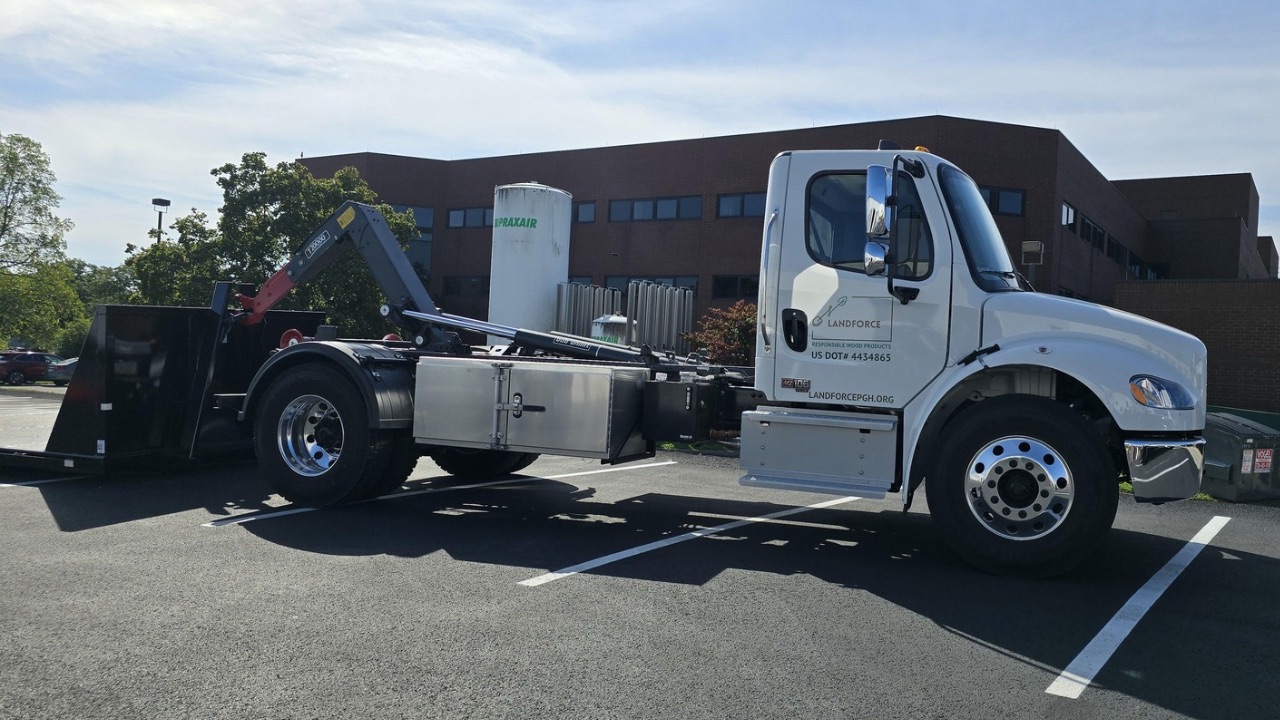
Landforce, a nonprofit focused on combining environmental stewardship with workforce development, recently opened “The Mill,” a 10,000-square-foot facility in Pittsburgh. The operation transforms salvaged and fallen urban trees into valuable wood products, including high-quality lumber, pallet parts, tree stakes, and biocharBiochar is a carbon-rich material created from biomass decomposition in low-oxygen conditions. It has important applications in environmental remediation, soil improvement, agriculture, carbon sequestration, energy storage, and sustainable materials, promoting efficiency and reducing waste in various contexts while addressing climate change challenges. More.
The Mill addresses both ecological and social needs by diverting over 1,000 logs—approximately 340 tons of material—from landfills each year. This material is then processed to yield 100,000 board feet of lumber and 28 tons of biochar annually. Beyond its environmental benefits, the facility serves as a vital training center, creating jobs and career pathways for individuals who have encountered significant obstacles to employment, such as those affected by the criminal legal system, poverty, and housing instability.
Participants at The Mill gain hands-on training in advanced manufacturing, arboriculture support, blueprint reading, and equipment operation. Trainees earn essential, industry-recognized certifications, including OSHA safety and chainsaw safety. This educational component, paired with individualized career coaching and comprehensive wraparound supports, helps participants secure stable, family-sustaining employment in the manufacturing, landscaping, and green industries.
The project demonstrates a successful approach to merging climate action and social equity. With support from the U.S. Environmental Protection Agency, the PA Department of Conservation and Natural Resources, and others, The Mill is projected to generate over $500,000 in earned revenue annually within the next few years. This sustainable revenue stream will support ongoing training and employment, strengthening a local circular economy by systematically turning urban wood waste into opportunity.





Leave a Reply