
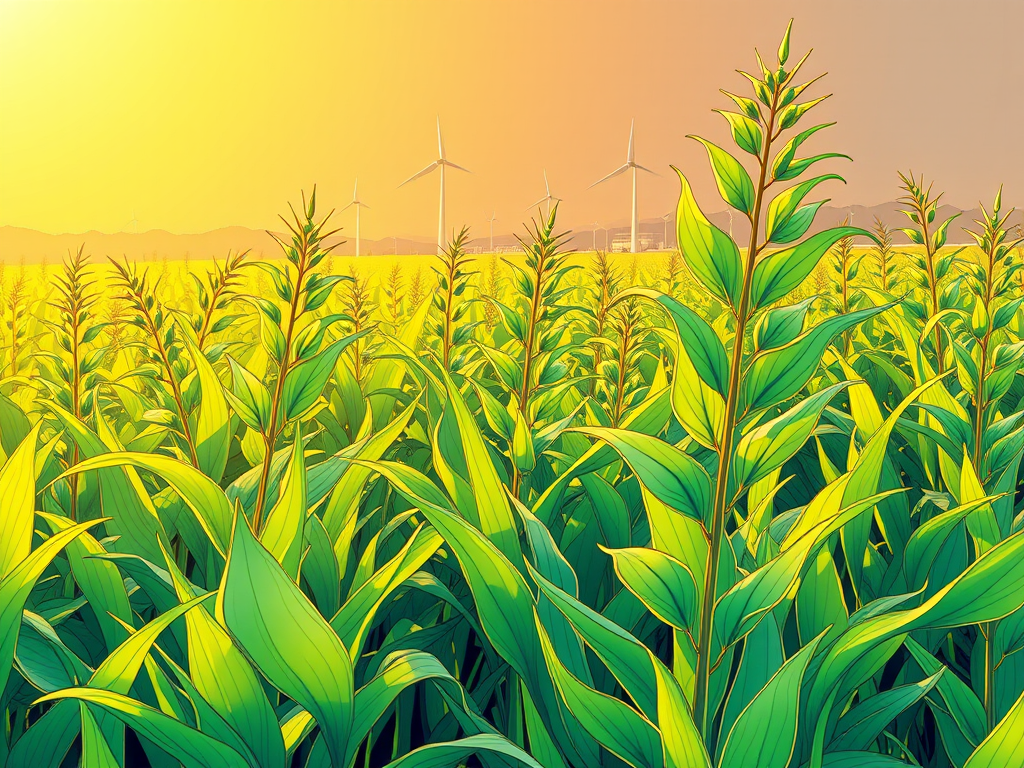
In a recent study published in Carbon Letters, Ju-Hwan Kim, Dong-Shin Jo, Yoong Ahm Kim, Byung-Joo Kim, and Hye-Min Lee explored the potential of kenaf-derived activated carbons for use in high-power density electric double-layer capacitors (EDLCs). The research highlights that kenaf, a biomassBiomass is a complex biological organic or non-organic solid product derived from living or recently living organism and available naturally. Various types of wastes such as animal manure, waste paper, sludge and many industrial wastes are also treated as biomass because like natural biomass these More with high production yield and rapid growth rate, can be effectively processed into activated carbons with high specific surface area and mesoporous properties. These characteristics are crucial for enhancing the electrochemical performance of EDLCs, which are vital components in hybrid energy systems for electric vehicles.
The scientists used thermogravimetric analysis (TGA) and derivative thermogravimetric analysis (DTG) to examine the pyrolysisPyrolysis is a thermochemical process that converts waste biomass into bio-char, bio-oil, and pyro-gas. It offers significant advantages in waste valorization, turning low-value materials into economically valuable resources. Its versatility allows for tailored products based on operational conditions, presenting itself as a cost-effective and efficient More behavior of kenaf under different phosphoric acid stabilization conditions. The textural properties of PK-AC were characterized using N2/77 K adsorption-desorption isotherms, revealing specific surface areas ranging from 1570 to 2400 m2/g and mesopore volume ratios from 7.7% to 44.5%. X-ray diffraction was employed to study the crystalline structure of PK-AC, confirming the successful preparation of activated carbons with desirable structural features.
A key finding of the research is that phosphoric acid stabilization is an effective method for producing biomass-derived activated carbons with high specific surface area and mesoporous structures. PK-AC demonstrated superior performance compared to commercial coconut-derived activated carbonActivated carbon is a form of carbon that has been processed to create a vast network of tiny pores, increasing its surface area significantly. This extensive surface area makes activated carbon exceptionally effective at trapping and holding impurities, like a molecular sponge. It is commonly More (YP-50F), with certain samples showing approximately 35% improvement in specific capacitance at a higher current density of 10.0 A/g. This enhanced electrochemical performance indicates that kenaf-derived activated carbons have significant potential for application as electrode active materials in high-power EDLCs.
The study concludes that kenaf is a promising alternative to coconut shells for activated carbon production, offering advantages such as high production yield, rapid growth rate, and high CO2 absorption. The use of kenaf-derived activated carbons can contribute to the development of more efficient and sustainable energy storage solutions, which are crucial for the advancement of electric vehicles and other green technologies.
SOURCE: Kim, J.-H., Jo, D.-S., Kim, Y. A., Kim, B.-J., & Lee, H.-M. (2025). Kenaf-derived mesoporous activated carbons and its application as a high-power density electric double-layer capacitor electrode. Carbon Letters, 25(2), 1-17.



Leave a Reply