
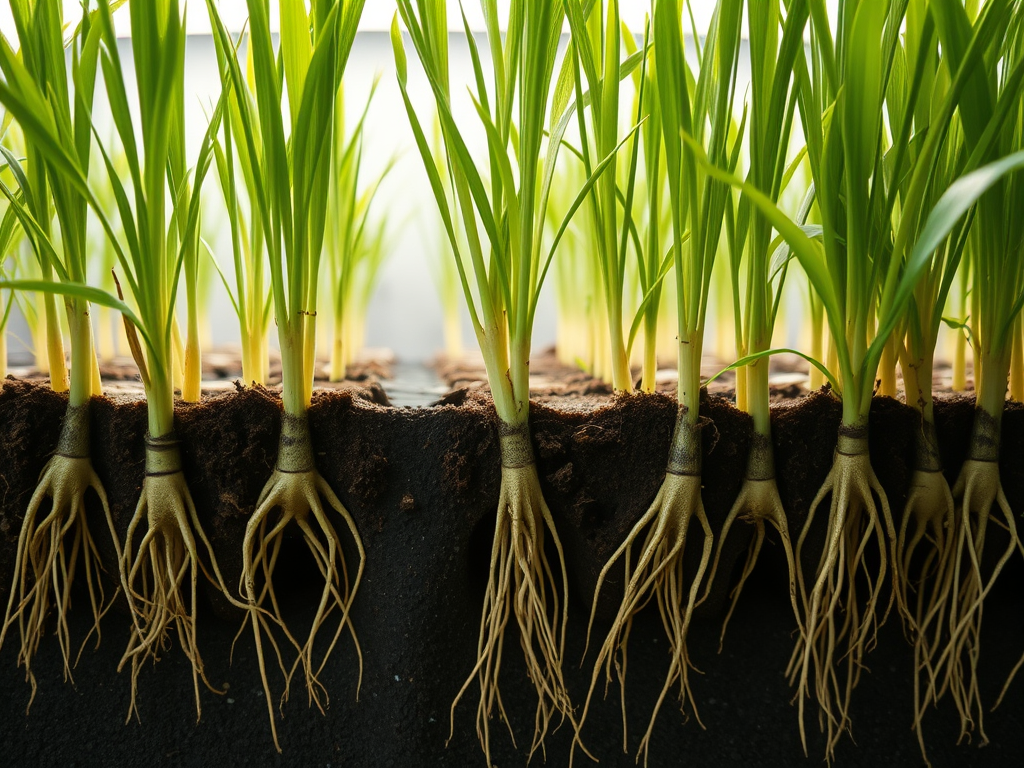
In a recent study published in the journal BMC Plant Biology, a team of researchers led by Renyan Duan investigated the effectiveness of iron-modified biocharBiochar is a carbon-rich material created from biomass decomposition in low-oxygen conditions. It has important applications in environmental remediation, soil improvement, agriculture, carbon sequestration, energy storage, and sustainable materials, promoting efficiency and reducing waste in various contexts while addressing climate change challenges. More (FeBC) in combating antimony (Sb) contamination in rice. Antimony is a toxic heavy metal that poses a significant health risk because of its ability to accumulate in plants and enter the food chain. While modified biochar has shown promise in ecological remediation, a systematic understanding of its specific mechanisms in mitigating antimony accumulation and promoting plant growth has been lacking. This research sheds light on how FeBC can be a valuable tool for sustainable agriculture in polluted areas.
The researchers created both pristine biochar (BC) and iron-modified biochar (FeBC) from pomelo peel flesh. They then evaluated the effects of these materials on rice plants grown in a hydroponic system with a high concentration of antimony (30 mg/L). Their findings showed that both biochar types improved rice root growth and reduced antimony accumulation, but FeBC was significantly more effective. Specifically, the FeBC treatment increased root length by 84.6% and decreased the antimony concentration in the roots by 28.03% compared to the control group. The pristine biochar also had a positive impact, increasing root length by 35.04% and reducing antimony by 25.79%.
To understand the underlying mechanisms, the study employed a metabolomic analysis of the rice roots. The results showed that the FeBC treatment caused a distinct metabolic shift in the rice plants. When compared to the pristine biochar, FeBC significantly altered the levels of several key metabolites. For instance, FeBC decreased p-coumaroylagmatine, silibinin, and osmanthuside A levels by 75%, 37%, and 37%, respectively. Conversely, it increased the levels of (S)-actinidine, phaeophorbide A, and 2-keto-6-acetamidocaproate by 187%, 156%, and 122%, respectively.
These changes in metabolites were linked to five crucial metabolic pathways: phenylalanine, tyrosine, and tryptophan biosynthesis; phenylalanine biosynthesis; lysine degradation; tryptophan metabolism; and pantothenate and CoA biosynthesis. The activation of these pathways is known to help plants cope with stress. Phenylalanine, tyrosine, and tryptophan, for example, are essential for protein synthesis and act as precursors for cell wall components, which help plants strengthen their defenses against environmental stressors. Similarly, the phenylpropanoid pathway, which was also affected by the FeBC, produces phenolic compounds that neutralize harmful reactive oxygen species. The stimulation of the lysine degradation pathway enhances the activity of antioxidant enzymes, and the biosynthesis of pantothenate and CoA can improve a plant’s overall resilience. Tryptophan metabolism, another pathway influenced by the FeBC, plays a vital role in the plant’s immune system and promotes growth by regulating hormones.
The researchers propose that FeBC mitigates antimony accumulation through three integrated mechanisms. First, the iron modification enhances the biochar’s surface, increasing its specific surface area and the number of adsorption sites, which improves its ability to bind to heavy metals. Second, the unique hierarchical pore structure of FeBC facilitates antimony adsorption and can even induce the formation of an iron plaque, a physical barrier on the roots that limits the amount of soluble antimony the plant can absorb. Finally, FeBC alters the root’s metabolic processes, improving the plant’s tolerance to stress and regulating its defense mechanisms.
The study’s findings provide a methodological basis for developing eco-friendly remediation technologies for antimony-contaminated soils, which could lead to safer and more sustainable rice production. This approach holds particular promise for developing regions where rice is a dietary staple and soil contamination is a major concern.
Source: Duan, R., Meng, F., Yang, H., Du, Y., Dai, Q., & Zhang, Y. (2025). Iron-modified biochar modulates root metabolism, mitigates antimony accumulation and enhances growth in rice (Oryza sativa). BMC Plant Biology, 25(1037), 1-14.



Leave a Reply