

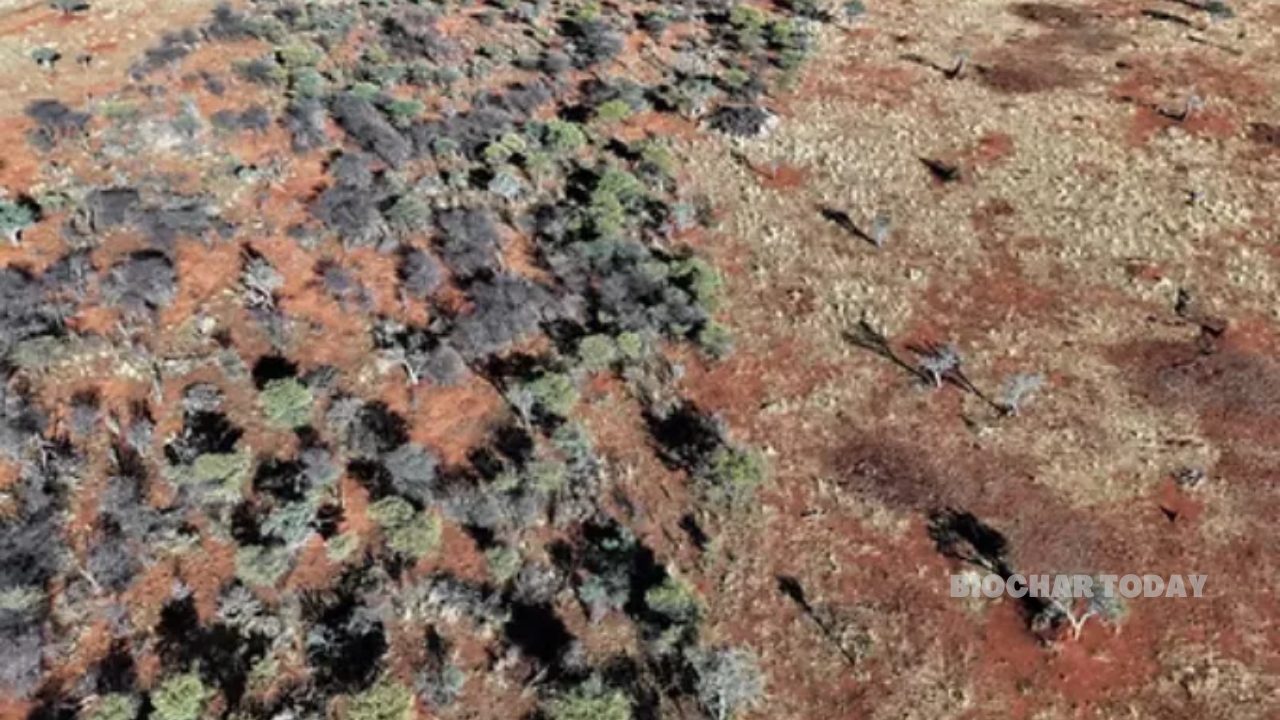
BiomassBiomass is a complex biological organic or non-organic solid product derived from living or recently living organism and available naturally. Various types of wastes such as animal manure, waste paper, sludge and many industrial wastes are also treated as biomass because like natural biomass these More Projects is set to build the world’s largest biocharBiochar is a carbon-rich material created from biomass decomposition in low-oxygen conditions. It has important applications in environmental remediation, soil improvement, agriculture, carbon sequestration, energy storage, and sustainable materials, promoting efficiency and reducing waste in various contexts while addressing climate change challenges. More production facility on a 225,000-hectare plot in Pilbara, Western Australia, which is overrun with mesquite, a significant weed. This project aims to pyrolyse 10.5 million tonnes of biomass over 20 years, removing 10.2 million tonnes of CO₂, equivalent to the emissions from 2.2 million cars or the electricity used in 2 million homes annually. The mesquite will be converted into high-grade biochar, improving soil fertility and water retention, thereby restoring the ecosystem.
The project’s carbon sequestration potential, with biochar storing carbon for about 1000 years, is vital for reducing global warming. Biomass Projects aims to produce 1 million tonnes of metallurgical char annually, offering a sustainable alternative to coal in steel production. This can help reduce the steel industry’s greenhouse gas emissions, which currently account for about 8 percent of global emissions.
The first project, the Mardie Char Project, is in partnership with the Wirrawandi Aboriginal Corporation and aims to replicate this model across regional Australia. This initiative will create job opportunities, with over 60 percent of the workforce expected to be Indigenous. Jobs will include site clearing, catering, accommodation, bulk transport, station management, and various trades.
The project also aims to enhance access to traditional lands and improve habitats for native species by removing the dense, prickly mesquite. With a 25-year lease on Mardie Station and exclusive access to the mesquite biomass, operations are expected to commence in 2025, marking a significant step towards sustainable land rehabilitation and carbon sequestration.
READ MORE: This trailblazer turns destructive weed into a replacement for coal



Leave a Reply