
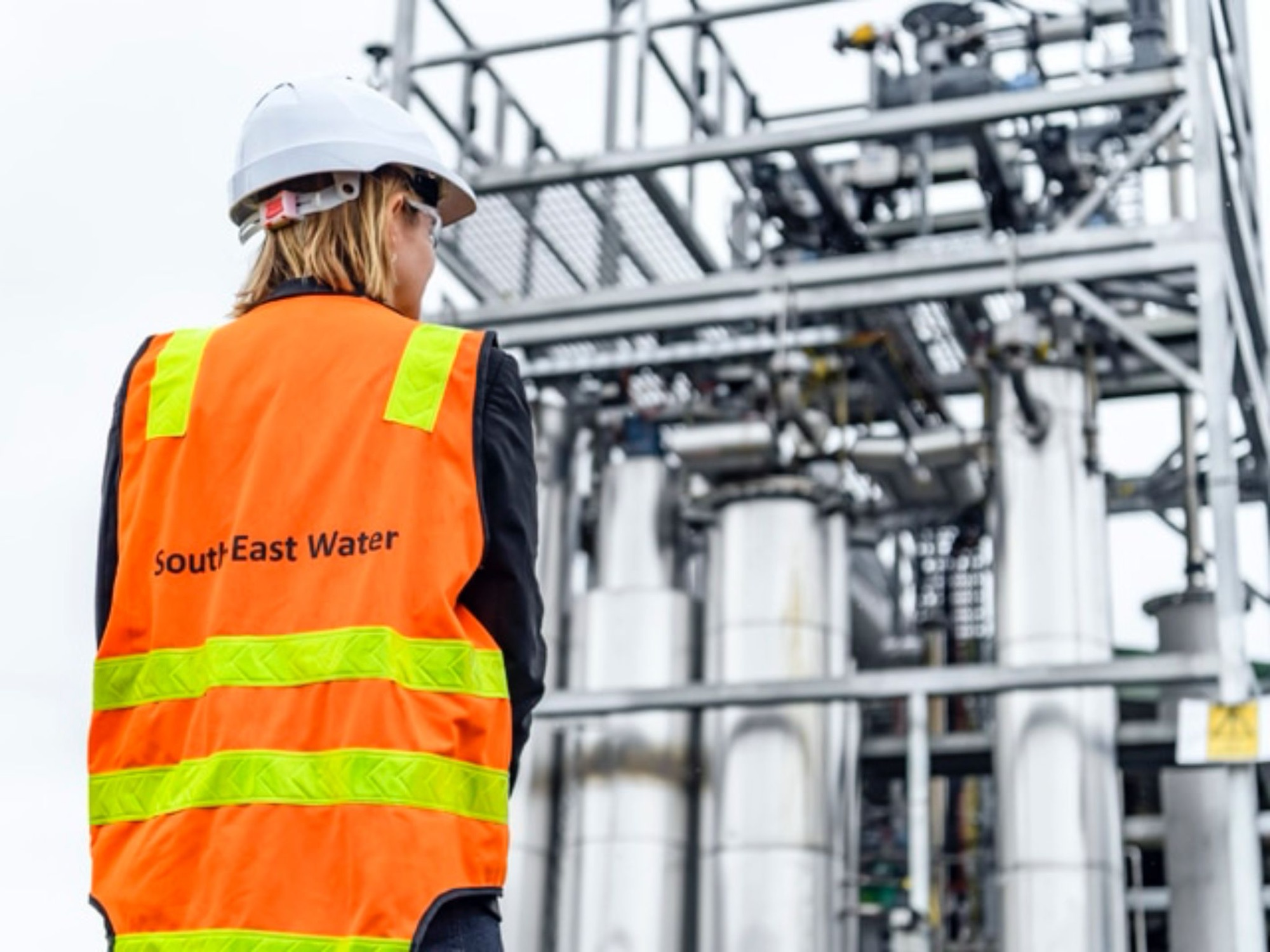
South East Water, in collaboration with RMIT University and Manipal University, is pioneering a sustainable approach to wastewater management through a groundbreaking technology called pyrolysisPyrolysis is a thermochemical process that converts waste biomass into bio-char, bio-oil, and pyro-gas. It offers significant advantages in waste valorization, turning low-value materials into economically valuable resources. Its versatility allows for tailored products based on operational conditions, presenting itself as a cost-effective and efficient More. This process transforms biosolids, a by-product of wastewater treatment, into biocharBiochar is a carbon-rich material created from biomass decomposition in low-oxygen conditions. It has important applications in environmental remediation, soil improvement, agriculture, carbon sequestration, energy storage, and sustainable materials, promoting efficiency and reducing waste in various contexts while addressing climate change challenges. More, a carbon-rich substance with various applications, aligning with sustainability and circular economy principles.
Every year, Australians produce over 300,000 tons of wastewater biosolids. While treated water is commonly recycled, finding uses for biosolids has been challenging. Pyrolysis offers a promising solution by converting these biosolids into biochar, a stable and porous material ideal for numerous uses including agriculture, construction, and energy production.
Professor Kalpit Shah of RMIT University developed a specialized pyrolysis method known as PYROCO, which utilizes fluidized bed pyrolysis. This technique involves heating biosolids at high temperatures (500–700°C) in a fluidized bed reactor, optimizing heat and mass transfer, thereby reducing costs and enhancing the quality of the biochar produced. PYROCO distinguishes itself by its simplicity in design, minimal moving parts, and flexibility to handle varied feedstockFeedstock refers to the raw organic material used to produce biochar. This can include a wide range of materials, such as wood chips, agricultural residues, and animal manure. More qualities, making it superior to conventional technologies like auger or rotary kiln systems.
Currently, South East Water and its partners are trialing this technology at the Melton Recycled Water Plant. The initiative is driven by the need to reduce waste volume, lower carbon emissions, and create valuable materials from waste. This technology not only helps meet greenhouse gas emission targets but also transforms waste into a form of inert carbon, which is crucial for climate goals.
We need to rethink wastewater treatment facilities as manufacturing plants that produce consistent, high-quality materials for advanced applications like batteries and electronics. This shift in perspective could dramatically increase the adoption of such technologies across the water utility sector, marking a significant step towards sustainable and cost-effective waste management.
READ MORE: Revolutionising biochar production with new pyrolysis technology



Leave a Reply