
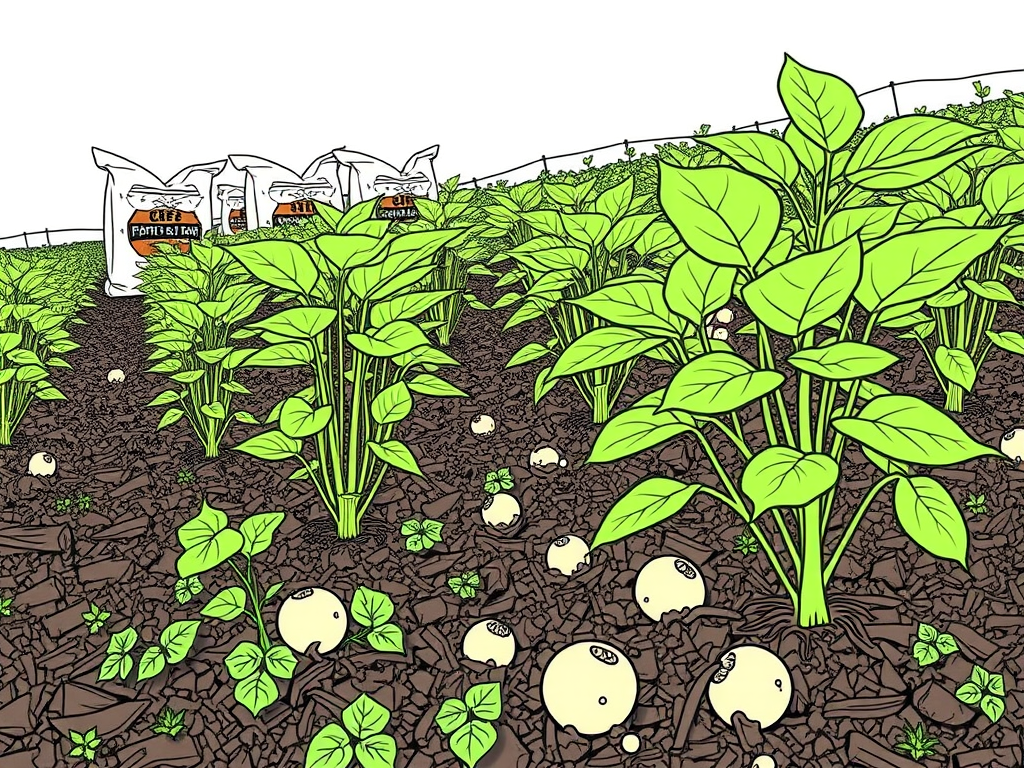
Soil acidity and low fertility are significant barriers to agricultural productivity in Southwestern Ethiopia, leading to stunted crop yields. Addressing these challenges, a recent case study by Bewuketu Haile, published in Current Trends in Agronomy & Agricultural Research, investigated the combined application of coffee husk biocharBiochar is a carbon-rich material created from biomass decomposition in low-oxygen conditions. It has important applications in environmental remediation, soil improvement, agriculture, carbon sequestration, energy storage, and sustainable materials, promoting efficiency and reducing waste in various contexts while addressing climate change challenges. More and inorganic fertilizers to enhance soil properties and potato productivity in these acidic soils.
The research tested various levels of biochar (0, 2.5, 5, and 7.5 tons per hectare) in conjunction with different rates of inorganic nitrogen and phosphorus fertilizers (0, 75%, 100%, and 125% of recommended rates). The findings revealed that an integrated approach significantly improved soil health and potato yields.
Specifically, combining 7.5 tons of biochar per hectare with recommended nitrogen and phosphorus fertilizer (165 kg N and 60 kg P per hectare) led to remarkable improvements in soil properties. Soil pHpH is a measure of how acidic or alkaline a substance is. A pH of 7 is neutral, while lower pH values indicate acidity and higher values indicate alkalinity. Biochars are normally alkaline and can influence soil pH, often increasing it, which can be beneficial More, initially at 4.87, increased to 6.47, representing a 32% rise over the control. This combination also boosted organic matter content by 71%, cation exchange capacity by 52.58%, total nitrogen by 39.28%, and available phosphorus by an impressive 133.2% compared to using inorganic fertilizer alone. Notably, applying inorganic fertilizers by themselves had no significant effect on soil pH.
These soil improvements directly correlated with enhanced potato productivity. The combined application of 7.5 tons per hectare of biochar with recommended NP fertilizer resulted in the highest total tuber yield of 42.64 tons per hectare. This represents a significant 28.99% increase over using recommended NP fertilizer alone and a substantial 76.6% increase compared to the control plots. Marketable tuber yield also saw a rise of 30.85% with this integrated approach compared to inorganic fertilizer alone. The harvest index and total dry biomassBiomass is a complex biological organic or non-organic solid product derived from living or recently living organism and available naturally. Various types of wastes such as animal manure, waste paper, sludge and many industrial wastes are also treated as biomass because like natural biomass these More yield also showed substantial increases.
The study emphasizes that biochar’s high alkalinity, porosityPorosity of biochar is a key factor in its effectiveness as a soil amendment and its ability to retain water and nutrients. Biochar’s porosity is influenced by feedstock type and pyrolysis temperature, and it plays a crucial role in microbial activity and overall soil health. Biochar More, and nutrient content contribute to these synergistic effects, improving soil conditions and enhancing fertilizer use efficiency. This approach aligns with sustainable intensification goals in tropical agriculture. The author recommends applying coffee husk biochar at 7.5 tons per hectare alongside recommended inorganic fertilizers for optimal soil improvement and crop yield. Biochar acts as an effective liming agent and improves nutrient retention, making it a valuable long-term soil improvement strategy. This research highlights the broader implications for sustainable development, contributing to zero hunger, responsible consumption and production, and life on land by improving soil health and restoring degraded agricultural lands.
Source: Haile, B. (2025). Biochar and Inorganic Fertilizers for Acidic Soil Management: Improving Soil Properties and Potato Productivity in Ethiopia. Current Trends in Agronomy & Agricultural Research, 1(2), 1-5.




Leave a Reply