
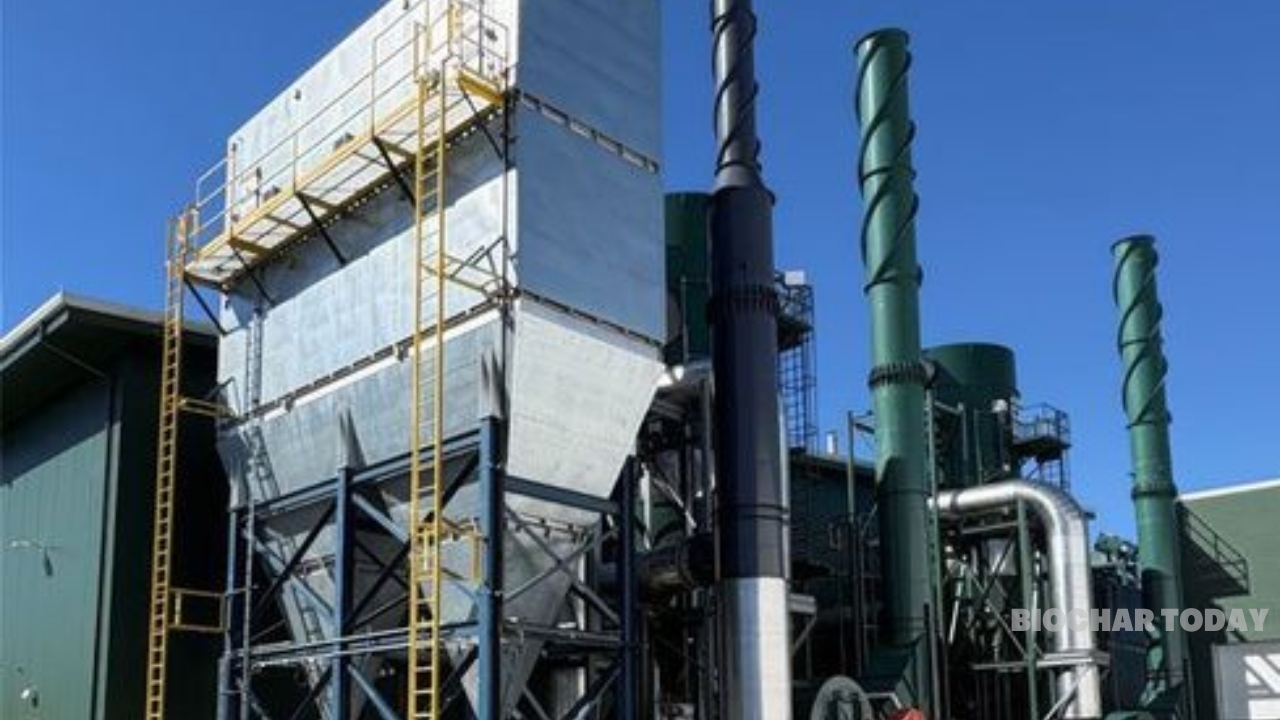
Industrial Accessories Company (IAC) has designed and implemented specialized particulate collection and nuisance dust control systems tailored for advanced thermal biomassBiomass is a complex biological organic or non-organic solid product derived from living or recently living organism and available naturally. Various types of wastes such as animal manure, waste paper, sludge and many industrial wastes are also treated as biomass because like natural biomass these More applications. Prominent field deployments include supplying high-efficiency baghouse installations to a major steel producer utilizing wood-chip pyrolysisPyrolysis is a thermochemical process that converts waste biomass into bio-char, bio-oil, and pyro-gas. It offers significant advantages in waste valorization, turning low-value materials into economically valuable resources. Its versatility allows for tailored products based on operational conditions, presenting itself as a cost-effective and efficient More to generate highly pure injection and charge carbon for electric arc furnace operations. Additionally, IAC engineered dust collection infrastructure for a Rhode Island developer to capture fly ashAsh is the non-combustible inorganic residue that remains after organic matter, like wood or biomass, is completely burned. It consists mainly of minerals and is different from biochar, which is produced through incomplete combustion. Ash Ash is the residue that remains after the complete More produced during the combustion of pyrolysis gas and biomass waste clippings.
The principal challenge addressed by IAC involves mitigating the unique, highly volatile combustion and operational hazards associated with thermally processed biocarbon dust. Unlike conventional white wood pellet dust, biocarbon generated via oxygen-limited pyrolysis exhibits elevated fixed-carbon fractions exceeding 75% to 85%, finer particle sizes, and minimal hygroscopic dampening. These properties significantly accelerate ignition, lower minimum ignition energy requirements, and intensify deflagration severity. Standard nonthermally treated biomass emission controls fail to provide a compliant engineering basis due to these fundamentally different chemical and physical hazard profiles.
To resolve these hazards, IAC implements customized baghouse fabric filter collectors featuring engineered protections in strict compliance with NFPA 660 requirements. The solution integrates context-specific safety features including upstream spark detection and suppression systems, explosion vent panels, proper equipment grounding, and flameless venting mechanisms. To counter fine particle re-entrainment and structural moisture condensation, the systems utilize low air-to-cloth ratios, conservative pulse-jet cleaning cycles, insulation, duct preheating, and polytetrafluoroethylene (PTFE) membrane-coated filter media to prevent blinding and clogging.
The deployment of IAC’s advanced air filtration systems successfully ensures operational safety, regulatory compliance, and material recovery across high-temperature biomass ecosystems. By effectively capturing fine, reactive particulates at localized point-of-generation transfer zones, the technology prevents fugitive dust dispersion and spontaneous silo oxidation. Ultimately, these engineering interventions enable facility operators to safely reclaim collected biocharBiochar is a carbon-rich material created from biomass decomposition in low-oxygen conditions. It has important applications in environmental remediation, soil improvement, agriculture, carbon sequestration, energy storage, and sustainable materials, promoting efficiency and reducing waste in various contexts while addressing climate change challenges. More and biocarbon fines, directly supporting circular economy frameworks through the reintroduction of recovered materials into industrial manufacturing or agricultural soil amendmentA soil amendment is any material added to the soil to enhance its physical or chemical properties, improving its suitability for plant growth. Biochar is considered a soil amendment as it can improve soil structure, water retention, nutrient availability, and microbial activity. More markets.





Leave a Reply