
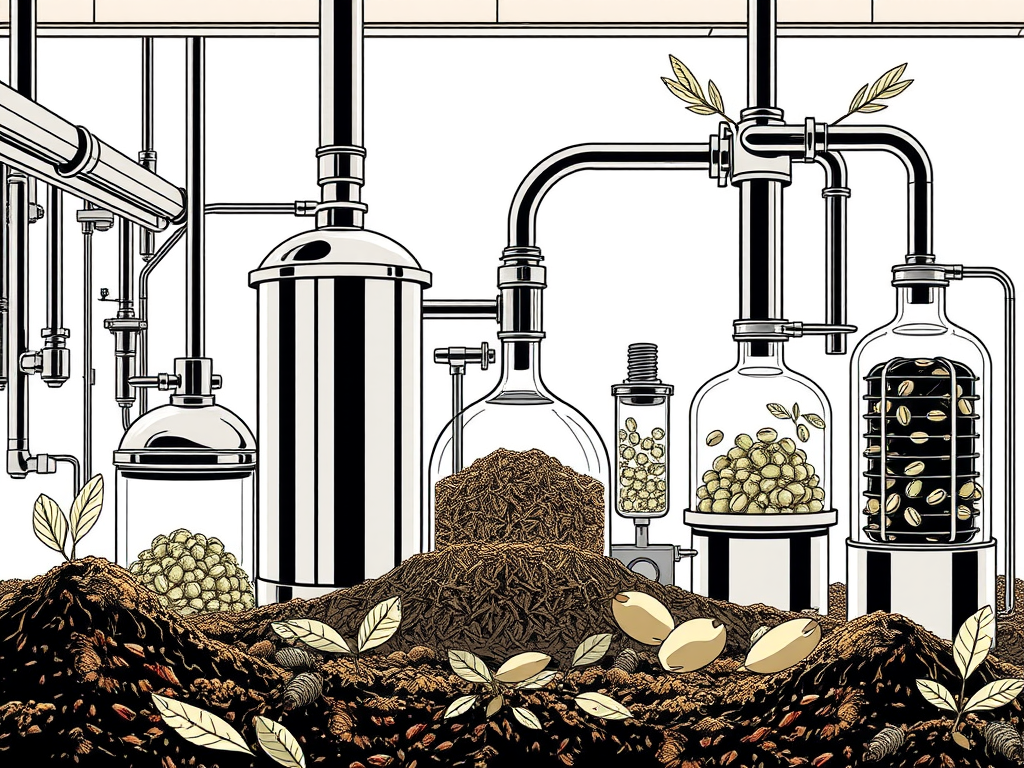
The olive oil industry generates millions of tons of agricultural residues each year, with crude olive pomace (COP) being one of the most abundant byproducts. A recent study published in Journal of Analytical and Applied PyrolysisPyrolysis is a thermochemical process that converts waste biomass into bio-char, bio-oil, and pyro-gas. It offers significant advantages in waste valorization, turning low-value materials into economically valuable resources. Its versatility allows for tailored products based on operational conditions, presenting itself as a cost-effective and efficient More by Luis Cutz and colleagues investigates the potential of hydrothermal liquefaction (HTL) to convert COP into valuable biofuels and biocharBiochar is a carbon-rich material created from biomass decomposition in low-oxygen conditions. It has important applications in environmental remediation, soil improvement, agriculture, carbon sequestration, energy storage, and sustainable materials, promoting efficiency and reducing waste in various contexts while addressing climate change challenges. More. By using a transition metal catalyst and advanced optimization techniques, the researchers successfully enhanced the yield and quality of bio-oil, offering a sustainable solution for bioenergy production.
This study optimized HTL conditions using a central composite design (CCD) approach, systematically varying temperature, residence timeResidence time refers to the duration that the biomass is heated during the pyrolysis process. The residence time can influence the properties of the biochar produced. More, and catalyst loading to maximize biofuel output. Biochar, a byproduct of HTL, also demonstrated potential for environmental applications. At optimal conditions, biochar yield reached 16.49%, with key minerals like CaO, SiO2, and P2O5, suggesting its suitability for soil amendmentA soil amendment is any material added to the soil to enhance its physical or chemical properties, improving its suitability for plant growth. Biochar is considered a soil amendment as it can improve soil structure, water retention, nutrient availability, and microbial activity. More or adsorption processes. Non-catalytic biochars showed higher inorganic content, making them promising candidates for agricultural and industrial use.
While HTL presents a promising route for valorizing olive pomace, challenges remain in scaling up production and refining bio-oil for direct fuel applications. Future research should explore upgrading techniques to enhance bio-oil stability and expand its commercial viability. As the world seeks renewable energy alternatives, converting agricultural waste like olive pomace into biofuels and biochar offers a sustainable pathway to reducing waste and enhancing energy security.
Source: Cutz, L., Misar, S., Font, B., Al-Naji, M., & de Jong, W. (2025). Hydrothermal liquefaction of Spanish crude olive pomace for biofuel and biochar production. Journal of Analytical and Applied Pyrolysis, 188, 107050.


Leave a Reply