
Key Takeaways
- Char Type is Critical for Climate: Not all carbon amendments are equal. The study found hydrochar is better than biocharBiochar is a carbon-rich material created from biomass decomposition in low-oxygen conditions. It has important applications in environmental remediation, soil improvement, agriculture, carbon sequestration, energy storage, and sustainable materials, promoting efficiency and reducing waste in various contexts while addressing climate change challenges. More at fighting climate change by restricting N2O emissions, a powerful greenhouse gas.
- Biochar Increases Pollution: Biochar, when used with standard nitrogen fertilizer, increased cumulative N2O emissions by 1.56 times compared to the un-amended, fertilized control.
- Hydrochar Promotes Soil ‘Cleanup’: When used without fertilizer, hydrochar was observed turning the soil into an N2O ‘sink’, meaning the soil actively absorbed the greenhouse gas from the atmosphere.
- Char Can Reduce Crop Yield: Biochar harmed the growth of timothy grass, resulting in a significantly lower yield than the control. This is because biochar’s highly porous structure locked away the fertilizer, making it unavailable to the plants.
- Hydrochar Supports Long-Term Carbon Storage: Hydrochar did a better job of helping the soil stabilize recalcitrant carbon (a stable, long-lasting form of carbon), suggesting better long-term carbon sequestration potential than biochar.
Nitrous oxide (N2O) is a potent greenhouse gas, and agriculture is its main source. Farmers and environmentalists are keen to find sustainable ways to cut these emissions without hurting crop yields. A recent mesocosm study published in the International Journal of Hydrogen Energy by Hem Raj Bhattarai, Ella Honkanen, and colleagues investigated the effects of two forms of carbon—biochar (produced via conventional pyrolysisPyrolysis is a thermochemical process that converts waste biomass into bio-char, bio-oil, and pyro-gas. It offers significant advantages in waste valorization, turning low-value materials into economically valuable resources. Its versatility allows for tailored products based on operational conditions, presenting itself as a cost-effective and efficient More) and hydrochar (produced via hydrothermal carbonization)—on greenhouse gas fluxes, nitrogen cycling, and biomassBiomass is a complex biological organic or non-organic solid product derived from living or recently living organism and available naturally. Various types of wastes such as animal manure, waste paper, sludge and many industrial wastes are also treated as biomass because like natural biomass these More yield in a typical boreal legume-forage grassland. The core takeaway is that the char type matters significantly.
N2O emissions were much lower with hydrochar amendments compared to biochar, highlighting a path toward more sustainable nitrogen management in cold climates. The researchers from the Natural Resources Institute Finland and Western University designed a three-month mesocosm study using birch-derived biochar (produced at 600°C) and hydrochar (produced at 220°C) on nutrient-poor, acidic boreal soil. They ran experiments from two perspectives: adding chars at a uniform rate with standard nitrogen (N) fertilizer (RAR), which mimics common farming practice; and adding chars based on a uniform carbon (C) amount without N fertilizer (RCC).
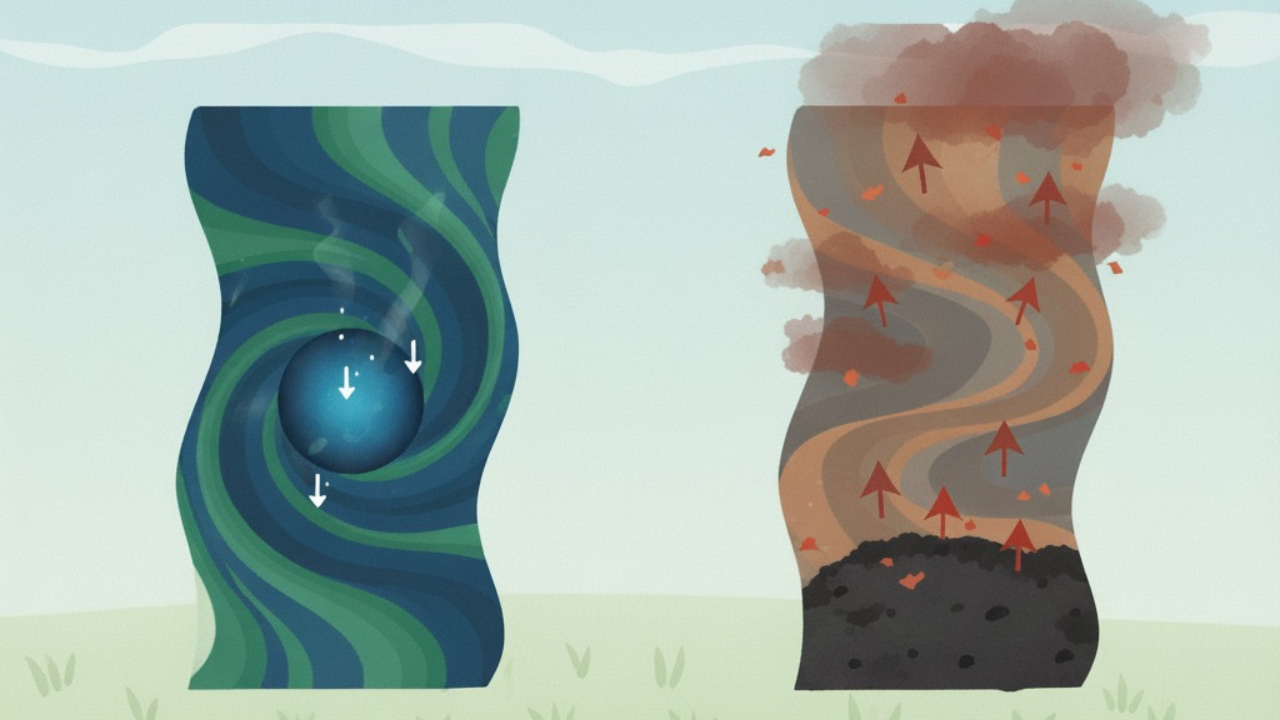
The most impactful finding was the differential effect of the chars on N2O emissions. When both char types were used with N fertilizer (NB and NH treatments), biochar significantly increased cumulative N2O emissions (1.56-fold higher than control), whereas hydrochar restricted N2O emissions, resulting in 1.4-fold higher than control. Crucially, when compared directly in the RAR treatments, cumulative N2O was significantly higher in biochar (NB) than in hydrochar (NH). The research suggests biochar’s large surface area and high porosityPorosity of biochar is a key factor in its effectiveness as a soil amendment and its ability to retain water and nutrients. Biochar’s porosity is influenced by feedstock type and pyrolysis temperature, and it plays a crucial role in microbial activity and overall soil health. Biochar More increase soil aeration and nitrifier activity (specifically gross nitrification), thus promoting the production of N2O, an oxic process. Hydrochar, with its smaller surface area, appears to promote N2O reduction via denitrification mechanisms, making it a potentially superior climate-mitigation soil amendmentA soil amendment is any material added to the soil to enhance its physical or chemical properties, improving its suitability for plant growth. Biochar is considered a soil amendment as it can improve soil structure, water retention, nutrient availability, and microbial activity. More.
The climate benefits of hydrochar extended even further when fertilizer was excluded. The hydrochar-only treatment (H) showed a notable potential to turn the soil into an N2O sink, with uptake rates reaching up to −4.02 µg N m−2h−1kg−1charC on certain measurement days. This observed soil N2O uptake is a novel and encouraging result in boreal legume-forage systems. In contrast, neither biochar nor hydrochar had a significant effect on cumulative carbon dioxide (CO2) emissions or methane (CH4) uptake, which contradicts the researchers’ initial hypothesis.
In terms of soil health and plant growth, the total biomass yield of the timothy grass and red clover mixture remained statistically unaffected by either char type. However, biochar (NB) significantly reduced the yield of timothy grass compared to the control. This is attributed to biochar’s high surface area immobilizing fertilizer nitrogen and making it temporarily unavailable for the grass, indicating a negative impact on the grass’s nutrient utilization efficiency. The stability of long-term soil carbon was also impacted by the char type: hydrochar promoted the stabilization of more recalcitrant carbon (MAOC) by increasing microbial biomass carbon (Cmic). Conversely, biochar decreased microbial biomass and showed a significantly lower content of recalcitrant carbon pools per unit of char C compared to the initial soil, suggesting it may slow down the formation of this crucial, stable soil carbon. These findings underscore the complex, interconnected nature of char properties (like surface area) and soil dynamics (like microbial activity and nitrogen cycling), suggesting that hydrochar is a more effective climate-mitigation amendment for boreal legume grasslands.
Source: Bhattarai, H. R., Honkanen, E., Ruhanen, H., Soinnie, H., Gil, J., Saghir, S., Lappalainen, R., & Shurpali, N. J. (2025). Effects of biochar, hydrochar and nitrogen fertilization on greenhouse gas fluxes, soil organic carbon pools, and biomass yield of a boreal legume g rassland.Biochar, 7(114).





Leave a Reply