
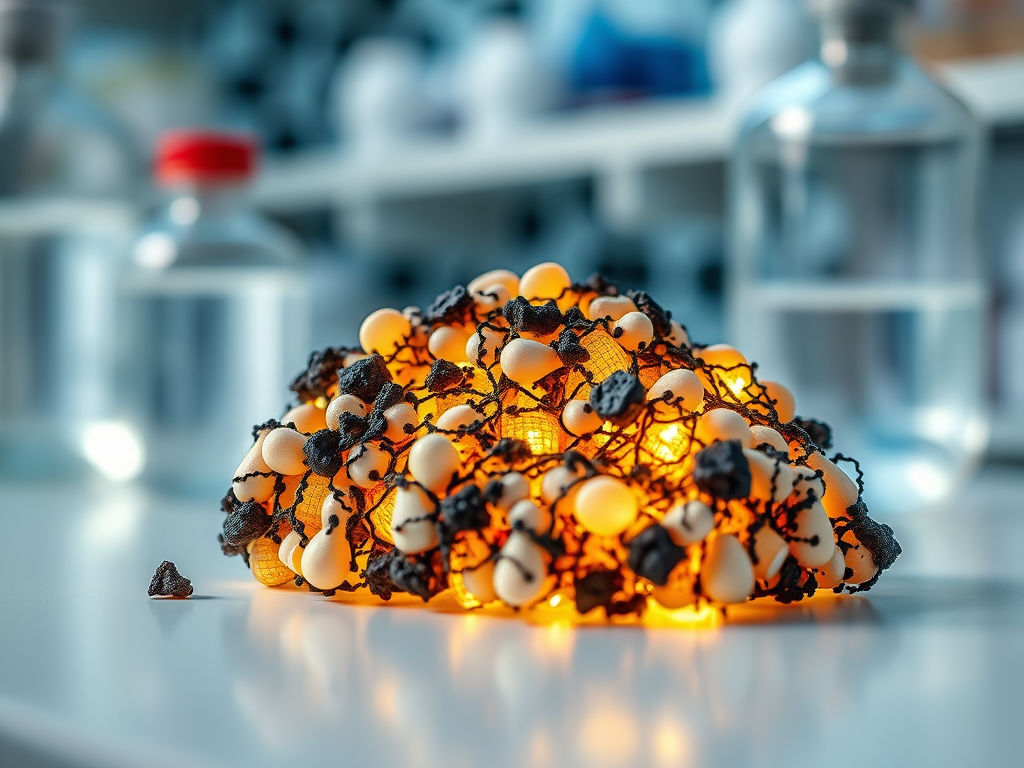
In the realm of environmental remediation, the effective removal of pharmaceutical micropollutants from wastewater is a pressing concern. A recent study published in Materials Research Express by Ijlal Idrees and colleagues at COMSATS University Islamabad, Lahore, Pakistan, explores a promising solution: a hybrid photocatalyst composed of biocharBiochar is a carbon-rich material created from biomass decomposition in low-oxygen conditions. It has important applications in environmental remediation, soil improvement, agriculture, carbon sequestration, energy storage, and sustainable materials, promoting efficiency and reducing waste in various contexts while addressing climate change challenges. More and graphitic carbon nitride (g-C3N4 or GCN) for the enhanced degradation of ciprofloxacin (CIP), a widely used antibiotic. This innovative approach combines the unique properties of both materials to create a highly efficient and sustainable system for water purification.
The researchers synthesized the composite photocatalyst by combining biochar derived from waste eggshells with GCN. Biochar, a charcoal-like material produced from the pyrolysisPyrolysis is a thermochemical process that converts waste biomass into bio-char, bio-oil, and pyro-gas. It offers significant advantages in waste valorization, turning low-value materials into economically valuable resources. Its versatility allows for tailored products based on operational conditions, presenting itself as a cost-effective and efficient More of biomassBiomass is a complex biological organic or non-organic solid product derived from living or recently living organism and available naturally. Various types of wastes such as animal manure, waste paper, sludge and many industrial wastes are also treated as biomass because like natural biomass these More, is known for its high surface area and porosityPorosity of biochar is a key factor in its effectiveness as a soil amendment and its ability to retain water and nutrients. Biochar’s porosity is influenced by feedstock type and pyrolysis temperature, and it plays a crucial role in microbial activity and overall soil health. Biochar More, which provide ample sites for the adsorption of pollutants. GCN, a polymeric semiconductor, exhibits excellent photocatalytic activity under visible light irradiation, generating reactive oxygen species that can degrade organic pollutants.
The hybrid material demonstrated significantly enhanced photocatalytic activity compared to pure GCN, achieving a remarkable 75% removal of CIP. This improvement can be attributed to several factors, including the increased surface area provided by biochar, which facilitates better adsorption of CIP molecules. Additionally, the synergistic interaction between biochar and GCN promotes efficient charge separation and transfer, leading to increased generation of reactive oxygen species responsible for CIP degradation.
This study highlights the potential of biochar-GCN composite photocatalysts as a cost-effective and environmentally friendly solution for wastewater treatment. The use of waste eggshells as a biochar source further adds to the sustainability of this approach. By utilizing renewable resources and harnessing solar energy, this technology offers a promising avenue for addressing the growing challenge of pharmaceutical contamination in water bodies.
SOURCE: Idrees, I., Zafar, M., Umer, M. A., Mir, A., Rehman, F., Faisal, A., Razzaq, A., & Kim, W. Y. (2025). Hybrid Biochar-Graphitic Carbon Nitride (g-C3N4) composite Photocatalyst: A Facile Strategy for Enhanced degradation of Ciprofloxacin (CIP). Materials Research Express. https://doi.org/10.1088/2053-1591/adb9bc




Leave a Reply