

Key Takeaways
- Producing biocharBiochar is a carbon-rich material created from biomass decomposition in low-oxygen conditions. It has important applications in environmental remediation, soil improvement, agriculture, carbon sequestration, energy storage, and sustainable materials, promoting efficiency and reducing waste in various contexts while addressing climate change challenges. More at very high temperatures creates a product that can store carbon in the ground for over one thousand years.
- Biochar made at lower temperatures is better at holding onto water and nutrients, making it a superior tool for improving soil health.
- There is a natural trade-off between making a biochar that lasts forever and making one that provides the most help to plants and crops.
- Farmers and policymakers should use specific types of biochar based on whether their main goal is fighting climate change or improving farm yields.
- Mixing long-lasting biochar with compost or manure can help bridge the gap by adding back the soil benefits that high-heat processing removes
In a recent perspective published in the journal Biochar, authors Robert W. Brown, David R. Chadwick, and Davey L. Jones address a growing concern within the environmental science community regarding the inconsistent classification of biochar products. The researchers observe that as biochar becomes a dominant force in the global carbon market, there is a frequent and problematic conflation between the stability of the carbon and the additional benefits provided to the soil. This distinction is critical because biochar currently accounts for a significant majority of delivered carbon credits globally, despite receiving a relatively small fraction of total carbon dioxide removal funding. The authors argue that the industry must move away from viewing biochar as a single, uniform substance and instead recognize that different production methods yield vastly different environmental outcomes.
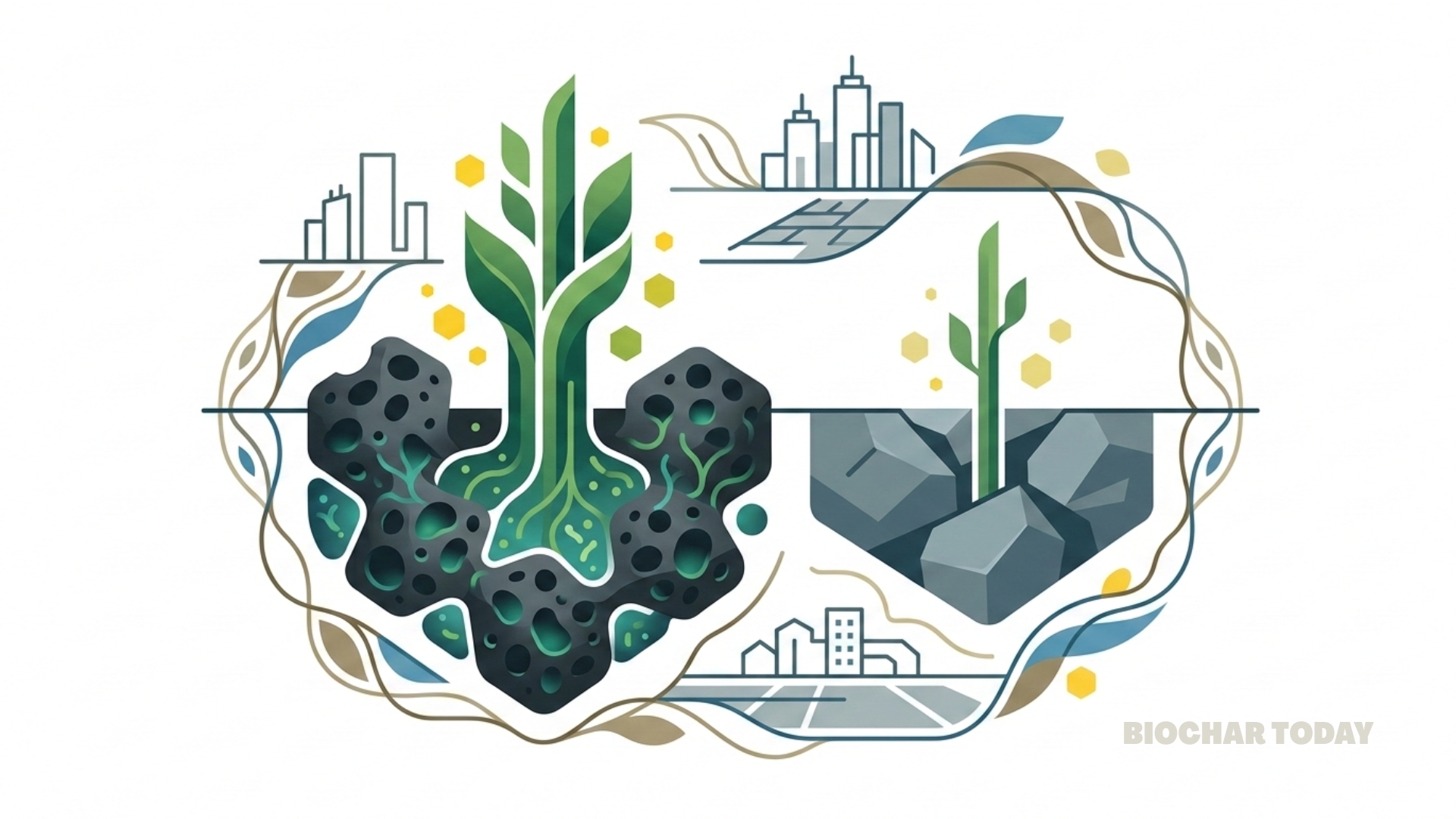
The core of the findings centers on the chemical transformation that occurs during the pyrolysisPyrolysis is a thermochemical process that converts waste biomass into bio-char, bio-oil, and pyro-gas. It offers significant advantages in waste valorization, turning low-value materials into economically valuable resources. Its versatility allows for tailored products based on operational conditions, presenting itself as a cost-effective and efficient More process, where organic waste is heated in a low-oxygen environment. When biomassBiomass is a complex biological organic or non-organic solid product derived from living or recently living organism and available naturally. Various types of wastes such as animal manure, waste paper, sludge and many industrial wastes are also treated as biomass because like natural biomass these More is subjected to high-temperature pyrolysis, typically exceeding 700 degrees Celsius, it develops a high density of stable polycyclic aromatic carbon structures. These structures are incredibly durable, with estimated residence times in the soil exceeding 1,000 years. This makes high-temperature biochar the gold standard for long-term carbon storage and greenhouse gas removal. However, this extreme heat also strips away the oxygen-containing functional groups on the surface of the material. These surface groups are exactly what allow biochar to interact with the environment by holding onto water, capturing nutrients, and aiding in the exchange of ions within the soil.
Conversely, the study highlights that biochar produced at lower temperatures, generally between 350 and 500 degrees Celsius, retains more of these functional surface groups. While this type of biochar may only persist in the soil for 100 to 300 years—a significantly shorter period than its high-heat counterparts—it offers much greater potential as a soil conditioner. These lower-temperature biochars are more effective at adsorbing heavy metals and organic pollutants, thereby reducing ecological risks. The researchers emphasize that there is an inherent trade-off: as you increase the temperature to maximize carbon durability, you simultaneously decrease the material’s capacity for environmental interaction and immediate agricultural benefit. This creates a situation where the most stable carbon products may offer the least amount of “additionality” in terms of boosting crop yields or soil fertility.
To address this trade-off, the authors advocate for the development of designer biochar, where the product is specifically tailored to the needs of the end user. For instance, in temperate climates where soils are already highly productive and well-fertilized, the primary goal of biochar application should likely be carbon storage rather than further yield increases. In contrast, highly weathered or degraded soils in tropical regions stand to benefit immensely from the soil-conditioning properties of lower-temperature biochar. For those who require both long-term storage and soil benefits, the study points to promising methods of surface activation. By coating high-stability biochar with compost, manure, or fertilizers, practitioners can introduce nutrients and microbes back onto the chemically inert surface, essentially using the durable biochar as a physical scaffold for biological activity.
The implications of these findings are particularly significant for the integrity of carbon markets. If researchers and companies fail to communicate the difference between carbon stability and soil benefits, they risk undermining public and investor confidence by overstating what a specific batch of biochar can achieve. Current reporting often fails to include key variables like production temperature or the chemical ratios that indicate stability. Moving forward, the authors call for much greater clarity in how biochar properties are documented and marketed. By providing transparent information about the capabilities and limitations of different products, the industry can ensure that resources are allocated effectively to combat climate change while simultaneously supporting global food security.
Source: Brown, R. W., Chadwick, D. R., & Jones, D. L. (2026). Clarifying the conflation of biochar carbon stability and its soil co-benefits. Biochar, 8(67).


Leave a Reply