
Key Takeaways
- BiocharBiochar is a carbon-rich material created from biomass decomposition in low-oxygen conditions. It has important applications in environmental remediation, soil improvement, agriculture, carbon sequestration, energy storage, and sustainable materials, promoting efficiency and reducing waste in various contexts while addressing climate change challenges. More can be designed for two different goals: either to store carbon for a long time or to help plants grow better.
- Toughening biochar to last longer in the ground often makes it less useful for holding onto water and nutrients for crops.
- Woody materials and high heat create the best biochar for permanently removing greenhouse gases from our atmosphere.
- Adding natural materials like compost or manure to long-lasting biochar can help it provide better benefits to the soil.
- Market experts and researchers must clearly state what a specific biochar is made for to avoid confusing buyers and policymakers.
The journal Biochar recently featured a perspective by Robert W. Brown, David R. Chadwick, and Davey L. Jones that addresses a growing issue in environmental science and carbon markets. The researchers highlight that not all biochar is created equal, pointing out a frequent confusion between how long biochar stays in the soil and how much it actually helps the environment. As the world seeks rapidly scalable ways to remove carbon dioxide from the atmosphere, biochar has emerged as a leader, accounting for ninety-four percent of delivered carbon credits globally in 2023. However, the authors warn that failing to distinguish between carbon durability and soil co-benefits could undermine the integrity of these growing markets.
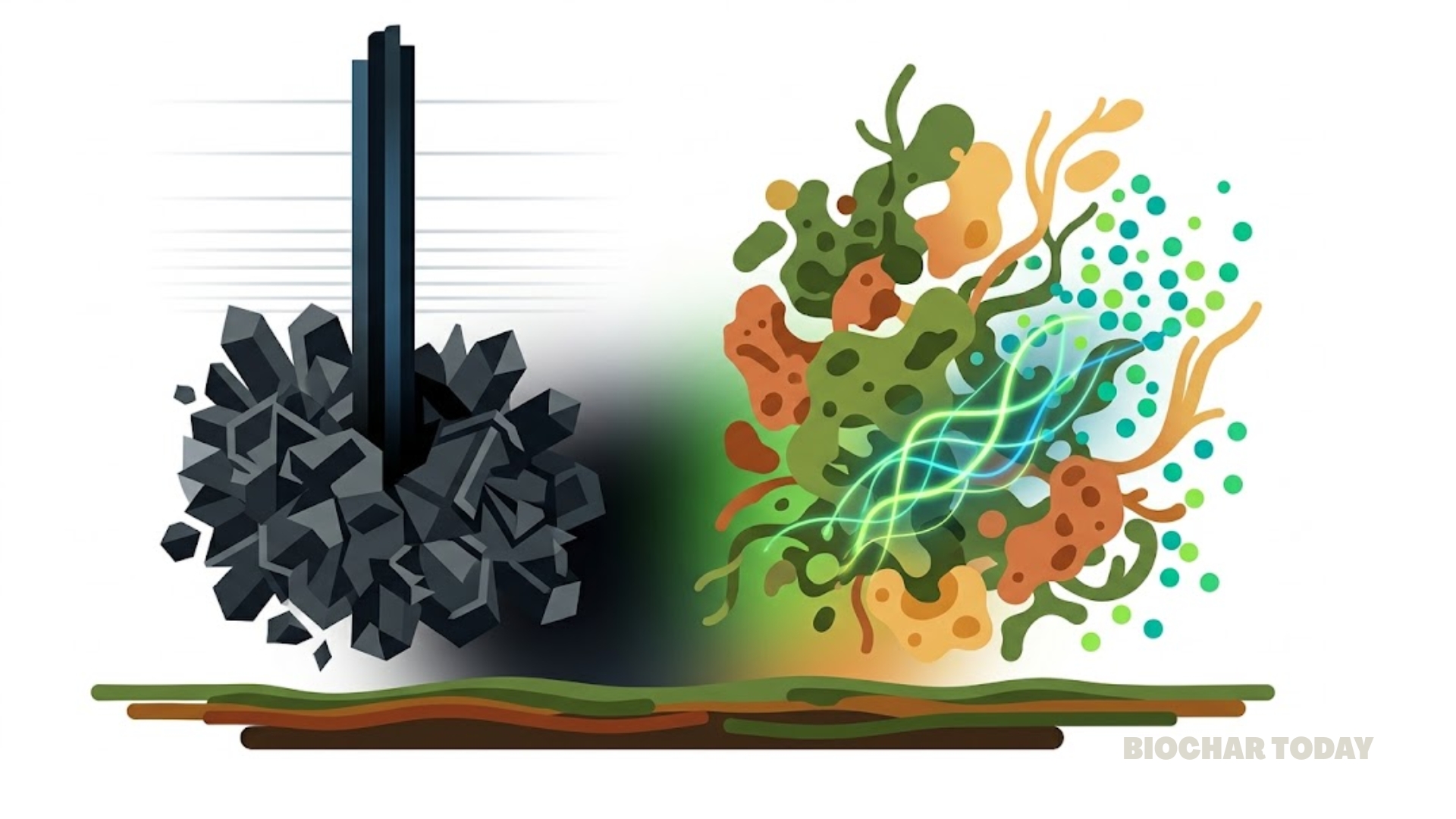
The study finds that the temperature used during production creates a fundamental trade-off between stability and functionality. When organic residues are heated to high temperatures exceeding seven hundred degrees Celsius, the resulting biochar becomes extremely stable and resistant to decay, with estimated residence times of over one thousand years. This makes high-temperature biochar the gold standard for long-term carbon removal. The cost of this durability is a loss of surface functional groups that are essential for holding onto water and nutrients. Essentially, the more inert and stable the biochar becomes for carbon storage, the less it interacts with the surrounding soil environment to provide agricultural advantages.
In contrast, biochar produced at lower temperatures, typically between three hundred fifty and five hundred degrees Celsius, retains more chemical groups that improve soil fertility. These lower-temperature varieties are superior as soil conditioners because they possess higher surface areas and porosityPorosity of biochar is a key factor in its effectiveness as a soil amendment and its ability to retain water and nutrients. Biochar’s porosity is influenced by feedstock type and pyrolysis temperature, and it plays a crucial role in microbial activity and overall soil health. Biochar More that help stabilize pollutants and retain moisture. The downside is that they decompose much faster in aerobic soil conditions, lasting only one hundred to three hundred years. This significantly reduces their potential for long-term carbon sequestration compared to their high-heat counterparts. This distinction is rarely clarified in current research, which often presents agricultural benefits and sequestration potential together without noting the inherent trade-offs.
To bridge this gap, the authors suggest that high-stability biochar can be improved for soil use through surface activation. By coating or mixing durable biochar with nutrient-rich materials like compost, slurry, or manure, farmers can introduce microbial communities and functional groups that the high-heat process originally removed. These treatments provide a physical scaffold for nutrient exchange and microbial growth, allowing even chemically inert biochar to support soil health. However, the effectiveness of these methods depends on site-specific factors, such as the quality of the compost used and the existing condition of the soil.
The impact of biochar also depends heavily on the geographic location of the application. Soils in tropical regions or degraded lands often see much larger increases in crop yields and productivity compared to fertile temperate soils that are already well-managed. Regardless of the immediate yield gains, the authors advocate for the use of designer biochar tailored to specific goals, emphasizing that carbon should be stored in all climates to combat climate change. They conclude that transparent communication about what different biochar products can realistically deliver is essential for the future of the industry. Without such clarity, there is a serious risk of overstating environmental benefits and misallocating resources in the global effort to reach net-zero goals.
Source: Brown, R. W., Chadwick, D. R., & Jones, D. L. (2026). Clarifying the conflation of biochar carbon stability and its soil co-benefits. Biochar, 8(67).



Leave a Reply