

Key Takeaways
- An activated chestnut shell biocharBiochar is a carbon-rich material created from biomass decomposition in low-oxygen conditions. It has important applications in environmental remediation, soil improvement, agriculture, carbon sequestration, energy storage, and sustainable materials, promoting efficiency and reducing waste in various contexts while addressing climate change challenges. More (ACS) electrode was developed to degrade tetracycline (TC) in wastewater.
- The optimized catalyst (ACS-800-3) achieved a high TC removal efficiency of 90.6% in 200 minutes.
- The exceptional performance is attributed to the material’s ultra-high specific surface area and abundant defect sites, which facilitate the generation of reactive hydroxyl radicals .
- The system demonstrated remarkable stability, maintaining a high TC removal rate of 86.7% even after 20 repeated degradation cycles.
- The high TOC removal of 90% within 360 minutes proves the successful mineralization of the antibiotic into inorganic substances.
The pervasive issue of antibiotic contamination in water bodies, stemming from human medicine and aquaculture, poses a serious public health threat by fostering bacterial resistance. Tetracycline (TC) is a particularly problematic and widely used antibiotic, known for its high chemical stability, water solubility, and resistance to natural decomposition. Traditional wastewater methods are often limited by high cost or the risk of secondary pollution. In a study published in RSC Advances, researchers Jianan Zhang, Mengshuang Chai, Jinwei Zhang, Shijie Zhang, Shengrui Wang, and Qin Zhou present a highly efficient and sustainable solution using an electrocatalytic advanced oxidation process (EAOP).
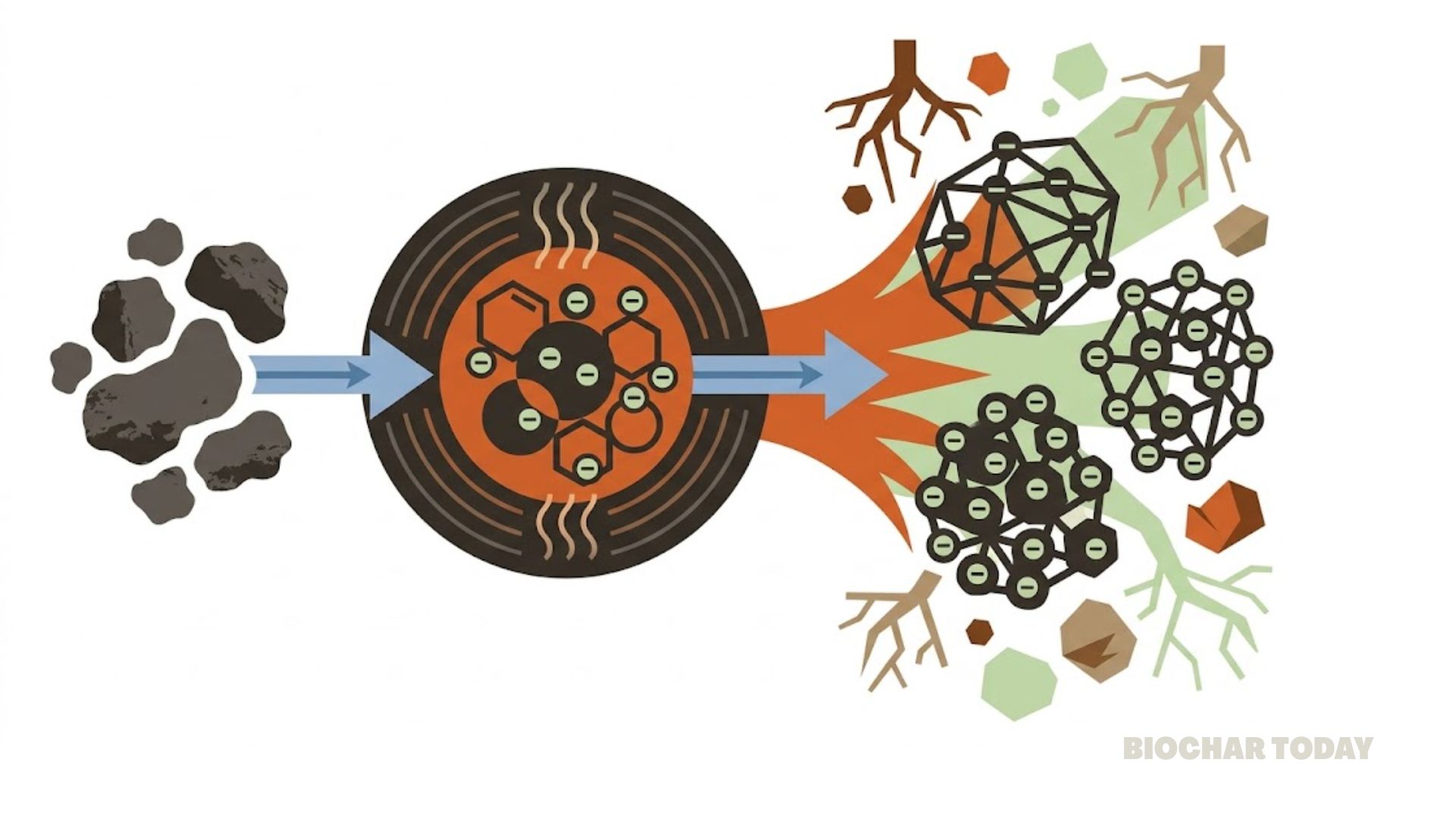
The key innovation is the cathode material: activated chestnut shell biochar (ACS) coated onto a stainless steel electrode. Chestnut shells, an abundant agricultural waste in China, are naturally rich in organic components and can be processed into biochar with highly desirable properties. The material used in the optimal configuration, labeled ACS-800-3, was prepared by pyrolysisPyrolysis is a thermochemical process that converts waste biomass into bio-char, bio-oil, and pyro-gas. It offers significant advantages in waste valorization, turning low-value materials into economically valuable resources. Its versatility allows for tailored products based on operational conditions, presenting itself as a cost-effective and efficient More with a 1:3 ratio of KOH to chestnut shell. This preparation method is crucial; resulting in an ultra-high specific surface area and a large pore volume . This highly developed porous structure is superior to biochar derived from other common precursors like rice husk or sawdust, creating an ideal platform for mass transport and providing maximum exposure for active sites.
In the electrochemical system, the ACS electrode efficiently catalyzes the two-electron oxygen reduction reaction, generating hydrogen peroxide in situ. This is then converted into highly oxidative hydroxyl radicals , which are the primary species responsible for breaking down the TC molecules. The high catalytic activity of ACS-800-3 is also strongly linked to its highly defective carbon structure. Raman spectroscopy revealed that ACS-800-3 had the highest ratio (1.008), indicating a significant level of disorder that enhances electron transmission and provides abundant reaction sites.
Through systematic optimization of parameters, the best performance was achieved with ACS-800-3 under the following conditions: initial pHpH is a measure of how acidic or alkaline a substance is. A pH of 7 is neutral, while lower pH values indicate acidity and higher values indicate alkalinity. Biochars are normally alkaline and can influence soil pH, often increasing it, which can be beneficial More of 3, an applied current density of 40 mA cm-2 and an initial TC concentration of 25 mg L-1. Under these optimal conditions, the TC degradation efficiency reached 90.6% in 200 minutes. The efficiency declined at higher pH and subsequent hydroxyl radical formation. Similarly, excessively high current densities reduced efficiency by promoting side reactions that consume the OHprecursors.
Beyond high degradation efficiency, the system demonstrated excellent long-term stability and effective mineralization. The TC removal efficiency remained remarkably high at 86.7% after 20 consecutive recycling cycles, indicating the durable nature of the ACS electrode. Furthermore, 90% of the total organic carbon (TOC) was removed within 360 minutes, which proves that the process achieves full mineralization of the TC into inorganic substances such as water and carbon dioxide, effectively eliminating the pollution load. The performance was maintained even when tested using real water samples like tap water and Songhua River water, underscoring its potential for practical wastewater treatment applications.
Source: Zhang, J., Chai, M., Zhang, J., Zhang, S., Wang, S., & Zhou, Q. (2025). High-efficiency electrochemical removal of tetracycline using a stainless steel electrode coated with activated chestnut shell biochar. RSC Advances, 15, 44668.


Leave a Reply