

Chinese researchers at the Institute of Environment under the Hefei Comprehensive National Science Center successfully developed and deployed a breakthrough high-pressure biomassBiomass is a complex biological organic or non-organic solid product derived from living or recently living organism and available naturally. Various types of wastes such as animal manure, waste paper, sludge and many industrial wastes are also treated as biomass because like natural biomass these More carbonization technology. Officially recognized by an national expert panel, this technological advancement enables the large-scale conversion of agricultural and forestry waste into high-value functional materials. The development represents a decade of dedicated research focused on upgrading abundant domestic biomass resources to replace fossil fuels. Project leaders confirmed that the industrialized technology is currently operational across multiple Chinese cities, aligning with the nation’s broader carbon peaking and carbon neutrality mandates.
The primary challenges confronting traditional large-scale production methods in the country have long centered on poor operational efficiencies and systemic environmental liabilities. Standard processing methods frequently suffer from low product yields, inconsistent quality control, high parasitic energy consumption, and secondary environmental pollution during thermal conversion. These structural bottlenecks have historically restricted agricultural residue processing plants from achieving the economies of scale necessary to compete effectively against conventional fossil fuels. Furthermore, managing high volumes of volatile organic compounds and maintaining uniform thermal distribution across massive biomass feedstocks remained economically prohibitive for industrial facilities.
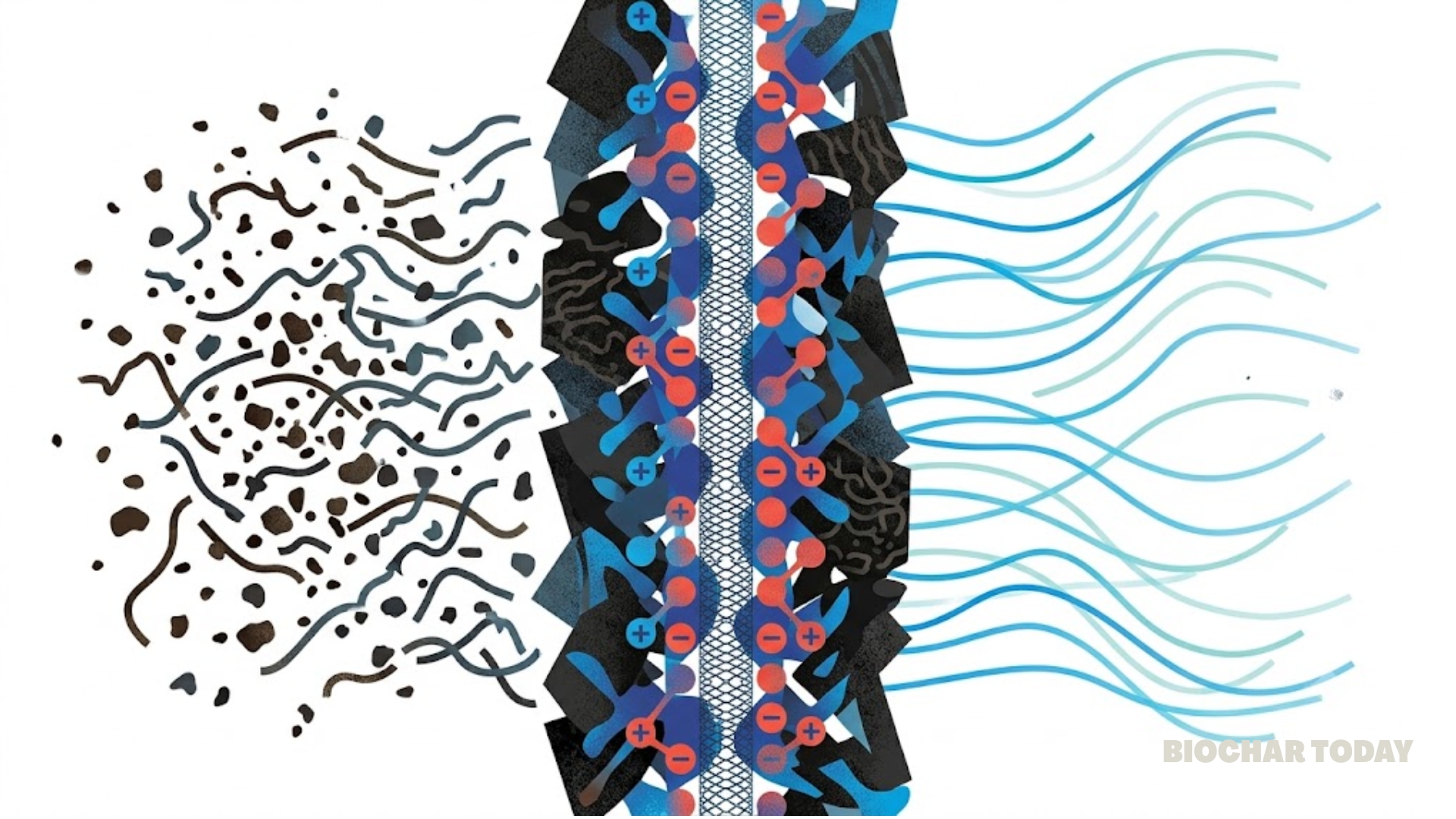
To overcome these historical limitations, the research team engineered an innovative one-step catalytic dry processing system. This engineering configuration utilizes a single specialized high-pressure carbonization unit capable of executing rapid, uniform thermochemical transformation under strictly managed atmospheric conditions. The integrated catalytic process accelerates the decomposition of complex lignocellulosic structures without requiring external moisture inputs or multi-stage thermal processing. Beyond stabilizing primary production, the institute expanded the technology’s utility by developing derivative functional materials engineered specifically for applications in energy storage, environmental adsorption, and specialized chemical catalysis.
The deployment of this industrialized system achieved unprecedented throughput capacities, with a single operational unit now producing over 50,000 metric tons of high-value biocharBiochar is a carbon-rich material created from biomass decomposition in low-oxygen conditions. It has important applications in environmental remediation, soil improvement, agriculture, carbon sequestration, energy storage, and sustainable materials, promoting efficiency and reducing waste in various contexts while addressing climate change challenges. More annually. The commercial implementation of this technology has generated documented economic, social, and environmental benefits across several municipal deployment sites. Notably, in the city of Bozhou within Anhui Province, the high-yield carbonization system is directly supplying a commercial project designed to synthesize green aviation fuel from biochar feedstocks. This successful industrial integration demonstrates a viable pathway for converting regional agricultural liabilities into high-demand industrial commodities.




Leave a Reply