
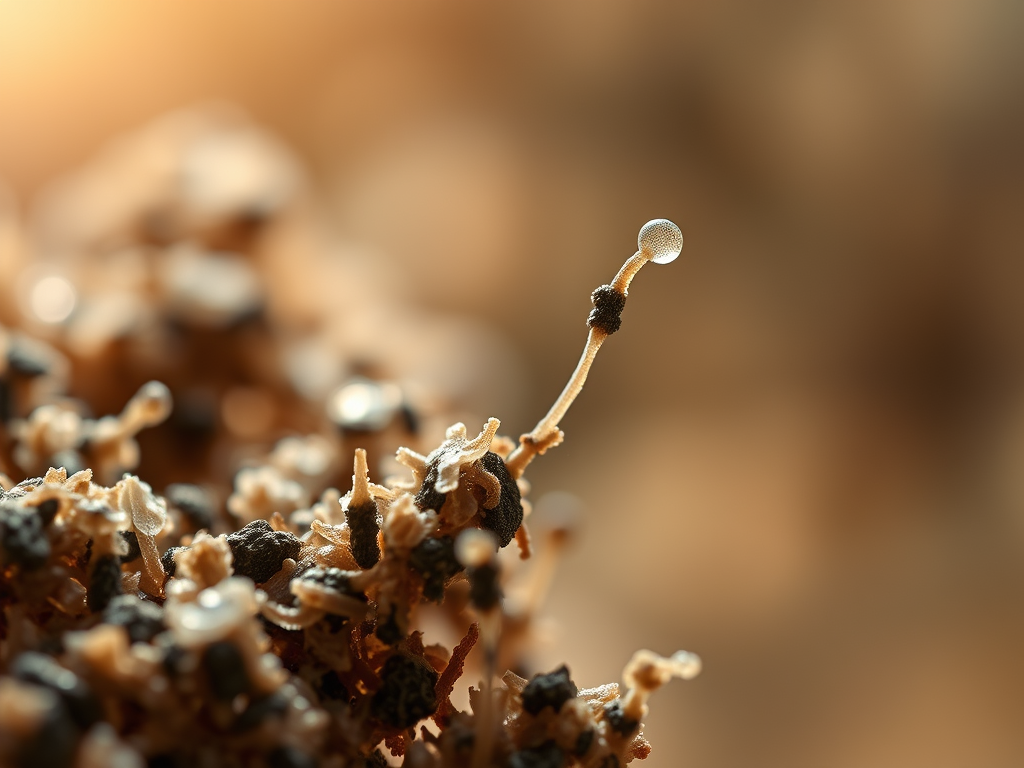
The soil environment is a complex ecosystem, and a critical challenge in agriculture is the scarcity of bioavailable phosphorus. This nutrient is vital for plant growth, and its deficiency often leads to the excessive use of artificial fertilizers, which can degrade water quality and contribute to algal blooms. A promising, sustainable solution involves using phosphate-solubilizing bacteria (PSB), microorganisms that can convert inaccessible phosphorus into a form that plants can absorb. The effectiveness of these bacteria, however, often depends on their delivery method. In a recent paper published in the journal BiocharBiochar is a carbon-rich material created from biomass decomposition in low-oxygen conditions. It has important applications in environmental remediation, soil improvement, agriculture, carbon sequestration, energy storage, and sustainable materials, promoting efficiency and reducing waste in various contexts while addressing climate change challenges. More, authors Zhe Wang, Bing Chen, Yiqi Cao, Sufang Xing, Baiyu Zhang, Shuguang Wang, and Huifang Tian shed light on how to create a more effective carrier for these beneficial bacteria. Their research delves into the intricate interfacial dynamics between two strains of PSB and a type of biochar derived from cotton straw, demonstrating how specific biochar properties can be optimized to improve bacterial immobilization.
The study aimed to uncover the underlying mechanisms that govern how PSB adhere to biochar, a porous, carbon-rich material produced from agricultural waste. Biochar serves as a protective habitat, shielding the bacteria from environmental stressors and enhancing their viability. The researchers produced biochar from cotton straw at temperatures ranging from 200°C to 700°C. They then compared the phosphate-solubilizing capacity of two PSB strains, Acinetobacter pittii and Bacillus subtilis, with a common benchmark strain, Bacillus megaterium. They found that A. pittii and B. subtilis were significantly more effective, with solubilizing capabilities of 194.85 mg L⁻¹ and 183.52 mg L⁻¹ respectively, surpassing the 102.61 mg L⁻¹ of B. megaterium over a five-day period. This finding highlights the potential of these two strains for use in soil inoculants.
The central part of the research focused on how the biochar’s properties, which are altered by the pyrolysisPyrolysis is a thermochemical process that converts waste biomass into bio-char, bio-oil, and pyro-gas. It offers significant advantages in waste valorization, turning low-value materials into economically valuable resources. Its versatility allows for tailored products based on operational conditions, presenting itself as a cost-effective and efficient More temperature, influence bacterial adhesion. Through a series of experiments using atomic force microscopy (AFM), the team was able to quantify the adhesive forces at a nanoscale level. They found a strong correlation between the biochar’s properties—such as surface area and surface charge—and bacterial adhesion. The most critical finding was that the strongest adhesion for both bacterial strains occurred on biochar that was pyrolyzed at 700°C. This higher-temperature biochar provided the most favorable surface for the bacteria to attach and form biofilms. In fact, high-temperature biochar was found to increase bacterial immobilization and adhesion, which also boosted the production and stability of extracellular polymeric substances (EPS).
The study also provided insights into the multi-stage process of bacterial immobilization. Using adhesion-distance spectroscopy and a theoretical model called the extended Derjaguin-Landau-Verwey-Overbeek (XDLVO) model, the researchers identified four distinct phases: planktonic interaction, secondary minimum entrapment, primary barrier transcendence, and initial reversible adherence. This final phase, initial reversible adherence, was found to be particularly important for the formation of a biofilm—a crucial step for long-term bacterial survival and function. The researchers observed a positive correlation between this initial adhesion and the production of proteins and polysaccharides, which are key components of the EPS matrix. This highlights the symbiotic relationship between the bacteria and the biochar: the biochar’s physical and chemical properties facilitate bacterial attachment, and the bacteria, in turn, form a protective biofilm that further strengthens the bond and increases their functional efficacy.
Ultimately, these findings provide a deeper understanding of the mechanisms behind PSB-biochar interactions. By unraveling these dynamics, we can improve the effectiveness of soil inoculants and enhance phosphorus availabilityPhosphorus is another essential nutrient for plant growth, but it can sometimes be locked up in the soil and unavailable to plants. Biochar can help release phosphorus from the soil and make it more accessible to plants, reducing the need for chemical fertilizers. More in soil, a crucial factor for promoting plant growth and supporting environmental sustainability. This research not only offers a clear strategy for optimizing biochar production for agricultural applications but also provides a scientific foundation for repurposing agricultural waste into a valuable tool for nutrient cycling and environmental remediation. The study marks a significant step toward developing more sustainable agricultural practices that benefit both crop yields and the environment.
Source: Wang, Z., Chen, B., Cao, Y., Xing, S., Zhang, B., Wang, S., & Tian, H. (2025). Insights into the interfacial dynamics and interaction mechanisms between phosphate-solubilizing bacteria and straw-derived biochar. Biochar, 7(55).



Leave a Reply